Alert
Alerts
Méricourt-l'Abbé: Along the Prisoners of War Route
Monument aux morts de Méricourt-l'Abbé
Monument aux morts de Méricourt-l'Abbé
Description
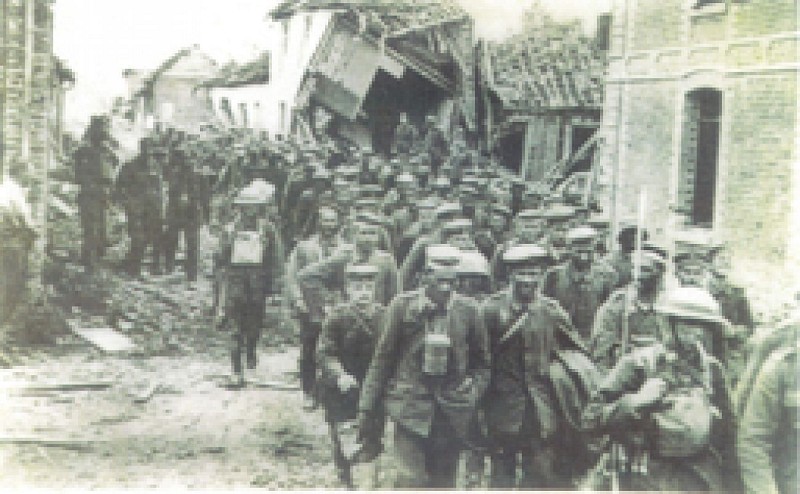
When the Allies resumed their offensive in the summer of 1918, many Germans were taken prisoner. In the first photograph, we can see a column of prisoners marching up Rue de Vaux, to the left of the war memorial, and heading towards the village square.
These men were then transported to prisoner-of-war camps such as those at Baizieux or Villers-Bretonneux, for example. They were used as labourers, even after the war, to clear the former battlefields.
In the background, we can also see the extensive damage suffered by the village.
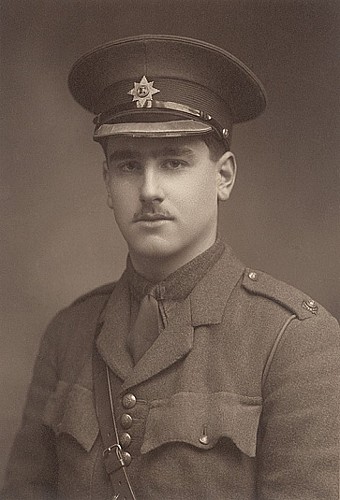
Following the death of his son on 25 September 1915, Rudyard Kipling recounts the history of the regiment to which he belonged. In his writing, he describes the ‘2nd Irish Guards’ passing through the village in May 1917 enjoying the return of fine weather. The soldiers lived alongside the residents who had remained in the village. This provided an opportunity for them to forge bonds, some of which would endure beyond the war.
Technical Information
Altimetric profile
Data author
