Alert
Alerts
Lavoir de Bonnebosq
Description
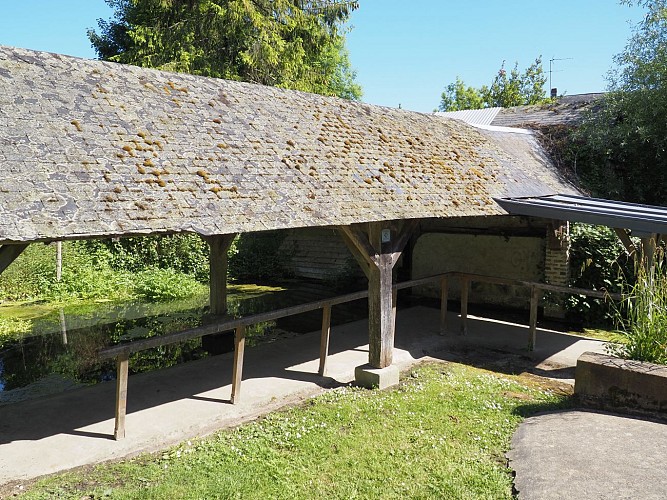
The Bonnebosq washhouse is one of the largest in the area. It has a very large L-shaped basin with a cement washboard on one side. The washhouse has a slate roof. A section of the roof, extending slightly over the basin, was used to protect the washerwomen. In addition, a lean-to roof made of zinc sheeting has been added above the small canal that drains the water into the brick basin in front of the wash-house. The framework of the wash-house is made of wood and rests on four posts fixed to concrete flashings to hold it all together. There are drying racks opposite the basin. There is also a brick and timber building with a frame and roof connected to the washhouse. It is thought that this building once served as a laundry room for the washerwomen. The door on the side, which now overlooks the water, was used as an entrance.
The washhouse is fed by the Saint-Christophe fountain located on a neighbouring plot. The system of pipes and drains, which is quite old, is ingenious. The water from the large basin drains into a small canal, leading to a lock, before flowing into the small basin downstream, which also receives water from the Dorette. The lock was used to drain the water from the basin. Farmers used to go to the washhouse every Friday evening and Saturday to clean their pomace cloths. The water was drained once a week to keep the water clean for washing clothes.
Set in an unspoilt market town, this washhouse offers a remarkable natural setting, with a wealth of vegetation. The originality of the place bears witness to a certain engineering that should not be missed during your walk. The washhouse is easily accessible on foot, by bike or by car (parking nearby) and is located close to the church.
Technical Information
Altimetric profile
Additional information
Data producer
This information is provided by OT Terre d'Auge Tourisme
Data author
