Alert
Alerts
Lavoir de Beaumont-en-Auge (lieu-dit Les Mercanderies)
Description
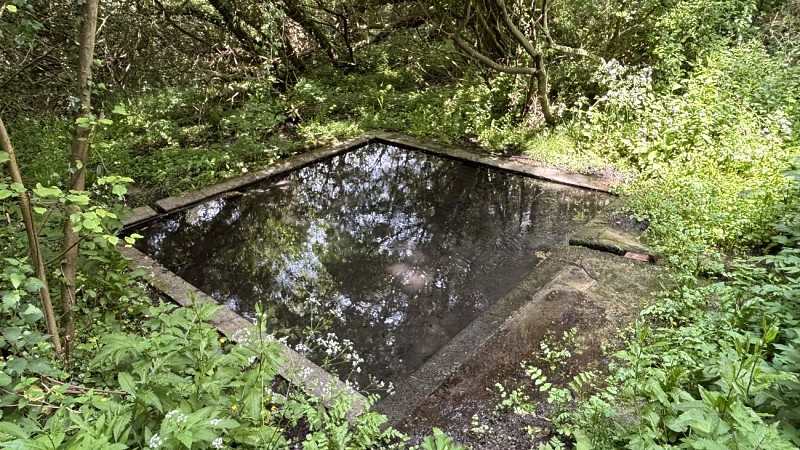
The washhouse at Beaumont-en-Auge (lieu-dit les Mercanderies), which is almost entirely period, is a typical example of the first washhouses built in the 19th century. Its shape is very simple and inexpensive for its time: the basin is square without being covered. The materials used here are cement and brick, with a dirt floor. There is also a washboard on all sides. It is also an important example of a type of washhouse that is regularly found in the area: the fountain-washhouse, where, as the name suggests, the fountain is built directly onto the washhouse. There are fourteen such fountains throughout the Communauté de communes Terre d'Auge, most of them isolated in wooded areas.
The washhouse is fed by the Pinel fountain (formerly known as the Hauchemalte fountain), itself fed by a spring. This fountain is made of brick and the water gushes out naturally into a small rounded basin, connected by a small channel to the washhouse. In this way, the water from the washhouse flows naturally down the right-hand side into the forest. According to eyewitness accounts, the washhouse was used by farmers to clean their marc cloths during the cider-making season.
In a rather mystical, even picturesque atmosphere, you'll find the washhouse below the Drumard wood path. The undergrowth setting, perceived as a "place out of time", offers a natural environment ideal for walks or mountain bike rides.
Technical Information
Altimetric profile
Additional information
Labels
NORMANDIE
Data producer
This information is provided by OT Terre d'Auge Tourisme
Data author
