Alert
Alerts
The parish church Notre-Dame des Fleurs and its presbytery
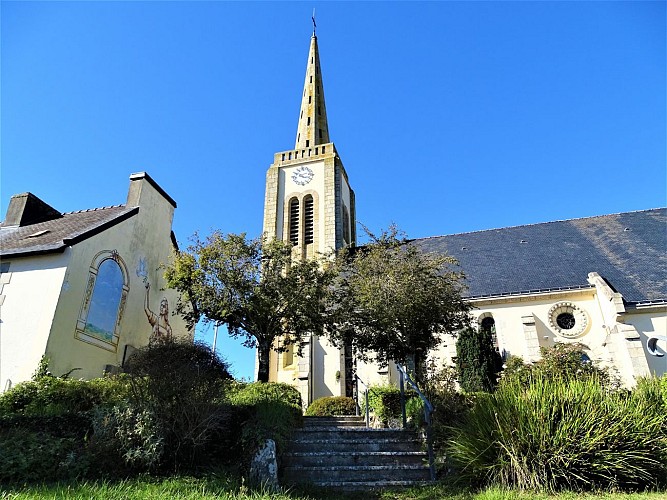
Description
The church of Notre-Dame des Fleurs was built in 1959 reusing the columns from the choir and aisles, the base of the choir and the sacristies of a building destroyed during the war in 1944. The latter was built in 1896 on the site of a Latin cross church from the third quarter of the 17th century which included a porch on the south side and an ossuary for human bones. We do not know its former name, but we do know that in 1773, the new master of Lain, Julien-Louis Monistrol, had his private chapel blessed.
The enclosure from this period remains, formerly around the cemetery, the monumental sculpted cross with Christ dating 1660 and some ruins, around the building and in the presbytery garden: tombstones and fragments of columns. Inside the church, you can also see a 17th-century Holy Family. This carved representation of Joseph, Mary and Jesus, from a long-gone altarpiece, is quite rare in Brittany.
Also not very common, this 17th-century nursing Virgin called N.D. de Kergornet, coming from the chapel of the same name, very famous for its pardon when nursing mothers would come on 1st May to pray to her for Good Milk. With the railway, this pilgrimage, as well as the one to Notre-Dame des Fleurs, was very popular. The moment of the arrival of a train has been immortalized on a 20th-century postcard: a crowd of pilgrims disembarks from the carriages to join the festivities.
Adjacent to the church, the presbytery of the ternary type, was built in 1828, as carved on the lintel over the main door. An inscription on the outbuilding used as a woodshed and built at right angles to the north reads “LA MAISON ND DES FLEURS FAIT PAR P. REMONT”. This priest's house replaces an older building, listed on the 1818 land registry with an oven on the western gable. It was extended by one bay in 1892.
