Alert
Alerts
Le bois du dolmen
Description
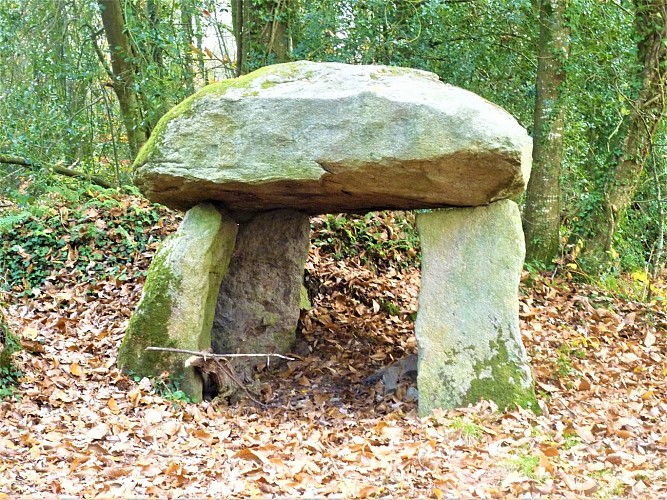
Passing through this wooded area, you will see the characteristic species of the Breton forest; oak and chestnut trees under which grow holly and ferns. But did you know that a forgotten dolmen is hidden at the bottom of this private wood? This stone table, “doal maen” in Breton, dates from the end of the Neolithic period, more than 5000 years ago. It indicates a tomb consisting of a burial chamber.
Formerly called “an tri men” (the three stones), in reference to the three pillars supporting the table, it is also listed by archaeologists under the mysterious name of Lonch-Torrigan or probably Lonch Korrigan, the house of the Korrigan.
Do you know about these Breton elves? Tiny and wrinkled, thin and hairy, with long hair sometimes braided, and a forehead decorated with horns? It is known that there are at least four different populations of korrigans, living in woods, moors, wetlands and abandoned farms. This population obviously belongs to the woods or more likely to the moors that once dominated here.
The elf of the woods is known as a Kornikaned: it usually sings and blows a small horn. From the moors, it’s a Kannerez Noz; a night singer who dances in circles with his comrades in the moonlight. One thing is certain: these little people live under the dolmens where they hide their treasure, according to the sayings.
There are very few chances to see these discrete elves, except, obviously, at a full moon when they come out to have fun. But beware if they invite you to join in, because you will be condemned to sing and dance all night. If you stop, you’ll be cursed. However, if you meet the challenge, you may come away with the gold!
