Alert
Alerts
La Rue du 10 mai 1945
Description
Caudan paid a heavy price in the 1939-1945 war during the German occupation: requisition of buildings, food and livestock, installation of naval artillery and searchlights in several villages, establishment of a German submarine camp in Kersalo, a hospital in Kério, reception of the national gendarmeries, firemen, 2,000 refugees, etc.
From 1943 onwards, it also became a place of combat between the Germans and Resistance fighters, particularly the Caudan front, recruiting and training young people in hiding and supplied by farmers. Aerial bombardments set several hamlets on fire. Roundups, arrests and executions bear witness to the tensions and violence suffered by the population. The Germans destroyed many buildings before retreating to the Lorient pocket, from where they bombed the town on the night of 7 to 8 August 1944. They only surrendered on May 10, 1945.
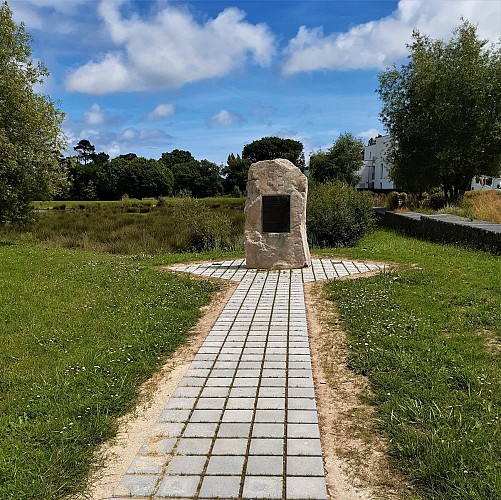
On your left, the Menhir of Surrender recalls that here, two days after the end of the Second World War, the commander of the German troops in Lorient surrendered his arms to the commanders of the American armies and the French Home Office. It is not obvious that the rue du 10 mai 1945 was once lined with embankments leading down to a fountain, now lost in the vegetation, and to a washhouse on the stream. The site is immortalized in a postcard, showing the washerwomen in the foreground around an irregular basin with a few inclined stones for washing, and in the background, country women leading their cows to the field and, in the far background, the bell tower of the old church.
