Alert
Alerts
Kerandiot
Description
The subsoil of Calan, mainly granite and gneiss, especially in this area is incrusted with quartz and mylonite veins. Several quarries, now closed, were in operation in Calan. Mylonite gave the “blue stone” known as Calan stone, for which local quarries were renowned thanks to its high quality as a paving material.
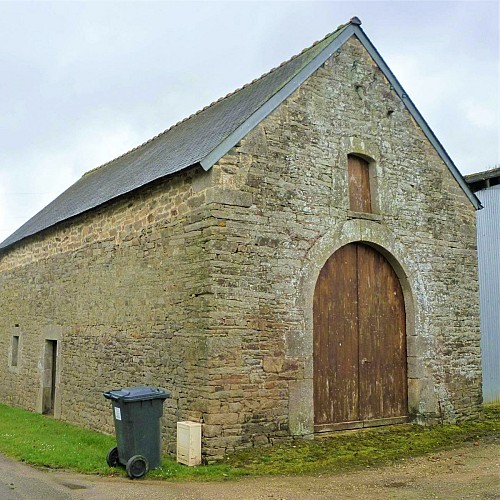
This geological diversity can be found in the old buildings, such as this stone barn with its shades of beige, blue-grey and rust. It is representative with its large arched doorway surmounted by a segmental arched window engraved with a partially erased date. The 1 and 7 are a sign that it was built in the 18th century. Its walls have been raised to accommodate a slate roof. These structures were used as haylofts, sheltered carts and sometimes the press for cider.
Among the fifteen or so buildings visible on the Napoleonic land registry of 1843, the barn was part of one of the hamlet's farms arranged around this courtyard. The two bread ovens have now disappeared, but the dwellings, although altered, show signs of their age: magnificent 16th century ogee-arched doors and segmental arch windows.
