Alert
Alerts
Welcome to the town of Calan
Description
Before being joined to Lanvaudan in 1516, Calan was a large parish in the Middle Ages, as its Romanesque church attests. Its population, from 500 to 700 people from 1800 to the 1960s, dropped to 410 in 1975 before gradually rising again. Located in Lorient’s catchment area, Calan currently has 1,175 inhabitants, 85% of whom are under 60 years old.
This demographic boom has been accompanied by recent construction. Nearly 350 houses, mostly detached and in the town, were built between 1968 and 2015, more than half of them just in the last fifteen years.This renewal has helped to maintain and revive local shops and services.
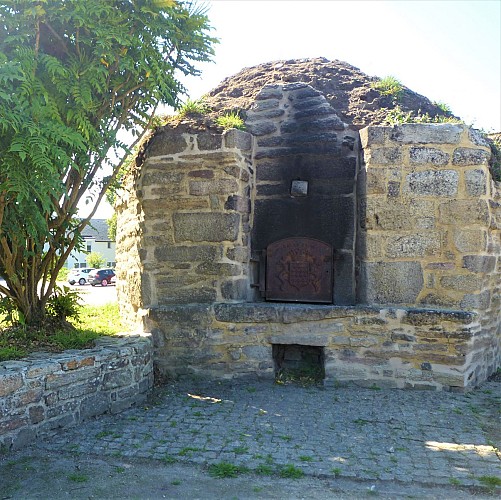
Between modernity and tradition, the heart of the village remains organised around its parish enclosure. Some ancient architectural structures have been restored, such as the bread oven, which was fired up again for events. Low stone walls mark out areas of circulation. The former presbytery has been refurbished as a town hall while the former school hall, built in 1900, houses various town services. On the right, two buildings, once thatched, now house the library. Their segmental-arch doors and ogee arches indicate that they date from the 16th and 17th centuries.
