Alert
Alerts
The Weimar Memorial Stone
Description
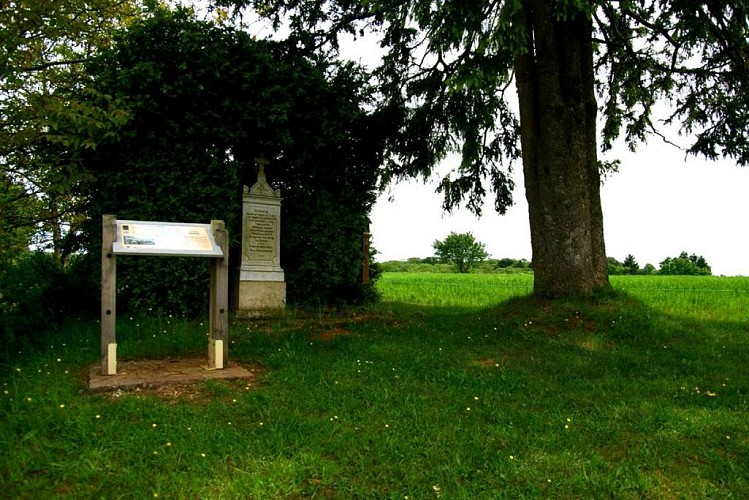
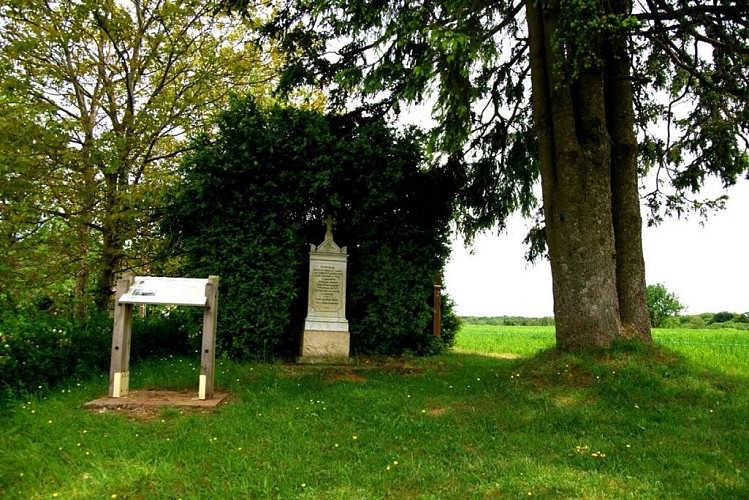
This white marble stele topped with a cross is one of the rare vestiges of the 1870 battlefield to bear an inscription in the German language.
It was erected by veterans of the 94th Infantry Regiment of Weimar, "Grand Duke of Saxony", who, arriving from the Givonne valley, were skirmishing on the western flank of the French cavalry at the time of the charges of the Margueritte Division.
The Prince of Saxony was indeed at the head of one of the two enemy armies whose strategy was to catch the Army of Châlons in a pincer movement: with Bazaine's Army remaining encircled at Metz, Mac-Mahon had only 120,000 men against the armies of the Prince of Prussia and the Prince of Saxony, totalling 240,000 men and an invincible artillery.
While the Prussians and Bavarians seized the left bank of the Meuse, the Saxons in the north drew closer to the right bank, moving behind the French forces.
The German text of this commemorative monument evokes the memory of the Saxon infantrymen who fell in combat on 1 September 1870 and of those who succumbed to their wounds in the field hospitals of Floing, Vrigne-aux-Bois, Saint-Menges and Donchery.
It ends with the words: Friede sei Ihrer Asche Ehre Ihren Andeken (Peace to their ashes, Honour to their memory).
Technical Information
Altimetric profile
Data author
