Alert
Alerts
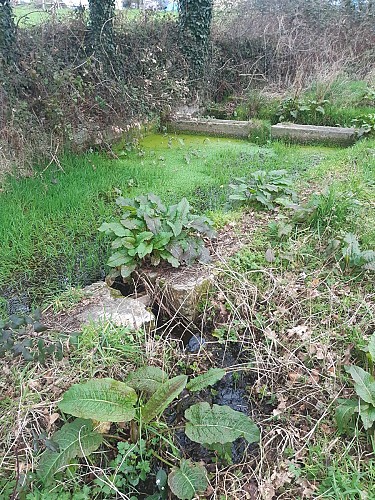
The washhouse in the village of Penquesten
Description
Probably built in the 20th century below the village of Penquesten, this fountain-washhouse is built according to a classic model that became widespread after 1851, when the State subsidized 30% of the construction of public washhouses in order to improve hygiene. Water from the small, square, ashlar fountain flows into a first, narrow basin for rinsing, followed by a second, wider basin for washing.
Although it is no longer used for washing clothes, it now has a new function. Contributing to the protection of amphibians, threatened since the destruction of almost two-thirds of wetlands, it is managed sustainably, in particular during annual maintenance, by leaving more than 50% of its aquatic vegetation. The association “Eau et rivières de Bretagne” has awarded it the “Refuge grenouilles” (frog refuge) label. You can also help save amphibians by creating a pond in your garden with the help of Eau & rivières de Bretagne.
