Alert
Alerts
Piwisi and Primiture
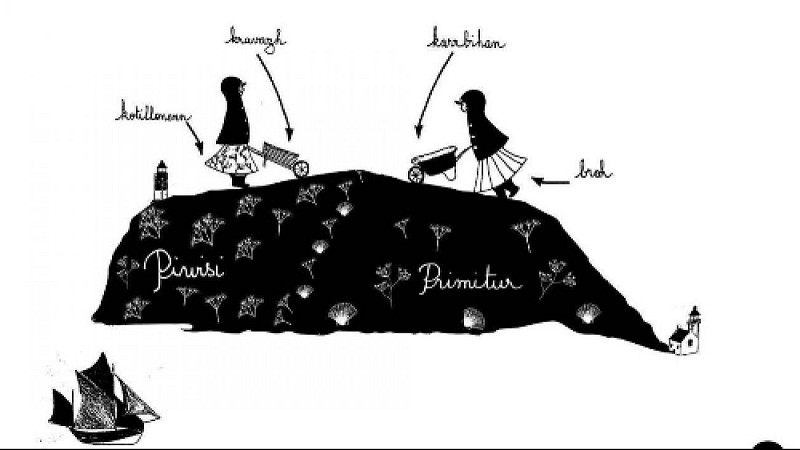
Description
In the 12th century, only the eastern part of the island was inhabited (Locmaria, Lomener, Loctudy) what is called "Primiture". Little by little, families are sent to cultivate the rest of the island, in the west "Piwisy". A document from 1388 details the new farms that will become villages: Kerlard, Kervedan, Kerampoulo
It is said that in Piwisi they spoke 'gravelec', more rustic. In Primiture, long under ecclesiastical tutelage, they spoke more finely, more elegantly. The old boys tell "I knew some boys from the other side only gossiping about a French person polluted with Breton words. They passed, in the eyes of the children of the Bourg for arrears.
Life is easier also on the eastern side which is full of ports and coves, and develops with the fisheries of Locmaria in the 13th century, then with the sardine press of Port-Tudy, in 1670. The west will be equipped later with paved roads and electricity.
Then the idea of two societies is rooted: one more peasant and more rustic in Piwisi, the other more maritime and richer in Primiture. Now, men were sailors both in Primiture and in Piwisi. And everywhere, women worked the land.
Source: History of the island of Groix by P.Leplat and Enguerrand.
