Alert
Alerts
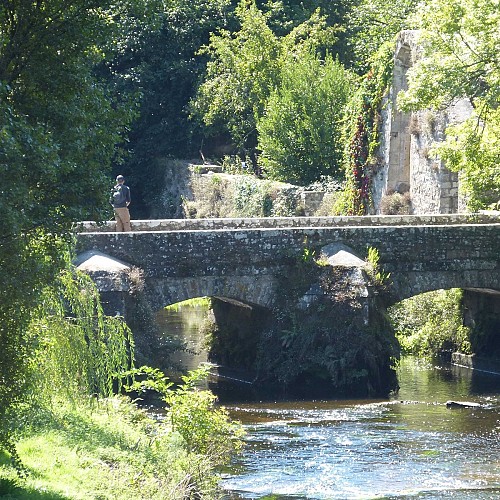
Bridge over the Scorff
Description
Natural border between Pont-Scorff, right bank, and Cléguer, the river of Scorff could be crossed at Bas Pont Scorff at least from Roman times. In the Middle Ages, after the construction of a bridge, a town developed at the bottom of the valley and along the roads. Many heritage sites bear witness to this rich past, such as the wharves and the slipway you have left, built at the end of the 19th century following the extraction of the Puce-Houarn rock, which is dangerous for navigation. These developments facilitated the cabotage with Lorient: transport of wood, food and even linen, washed here by the local washers.
Moreover, strong of this reputation, between 1939 and 1945, the German army established here on the former meadows a complex intended to the washing of the linen of the troops. The industrialization of the site continued after the war, although laundry activity was moved near the Roman bridge. It persists on Pont-Scorff side with the Lorco dairy complex while on Cléguer side, the site was re-qualified as a natural area in 2014. As for cabotage, it ended with the construction of the Arsenal of Lorient, forbidding navigation on the Scorff.
