Alert
Alerts
Pont de la Haie Fouassière
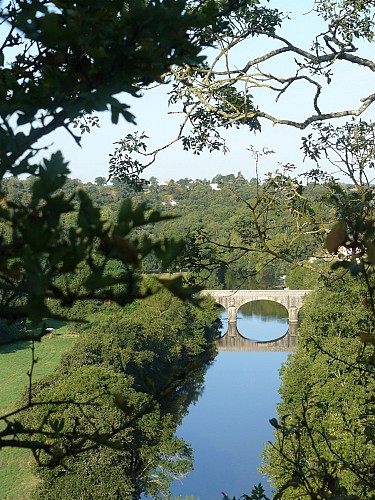
Description
Since ancient times, crossing the Sèvre Nantaise at La Haie-Fouassière has been a major issue for travel and trade. Before a permanent bridge was built, people could cross the river by ford(s) or by ferry, depending on the level of the river. There were several reasons for building a permanent bridge:
- to facilitate commercial exchanges, particularly those linked to the port and river navigation,
- to link the agricultural and wine-growing areas of the Nantes vineyards,
- to ensure the movement of people between the towns along the river.
The bridge was thus an integral part of the economic and social development of the commune, directly complementing the port and craft activities located along the Sèvre.
Over the centuries, the bridge has undergone a number of transformations, due to wear and tear, river flooding and changes in traffic patterns. Materials and shapes have been adapted to meet new uses, particularly with the increase in traffic in the XIXᵉ and XXᵉ centuries.
With the gradual decline of commercial navigation on the Sèvre, the role of the bridge was refocused on land travel and structuring the town. It has become a key feature of the urban landscape, marking the entrance to and identity of La Haie-Fouassière.
From the bridge: magnificent views over the Sèvre Nantaise and the village of St Fiacre sur Maine
Accessible from the road via Rue des Coteaux or the yellow signposted "Heritage and Castles" walking trail.
Technical Information
Altimetric profile
Additional information
Accueil des animaux ?
Animaux acceptés : yes
Contact
Téléphone : 02 40 54 80 23
IGN cards








Data author
