Alert
Alerts
"La Marfée" viewpoint
Description
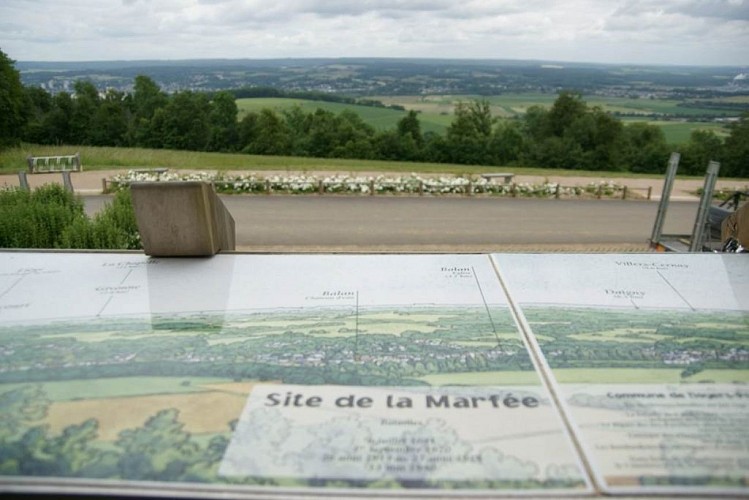
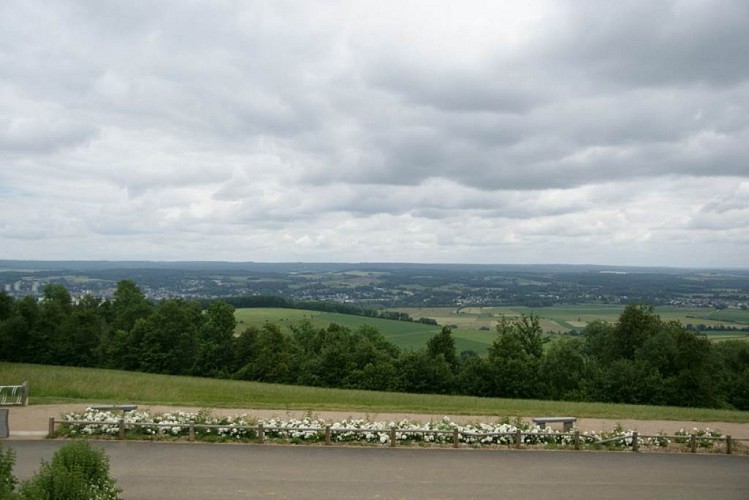
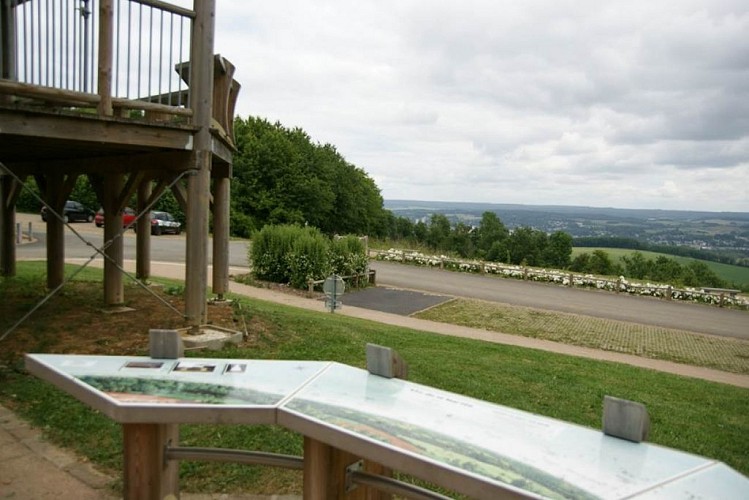
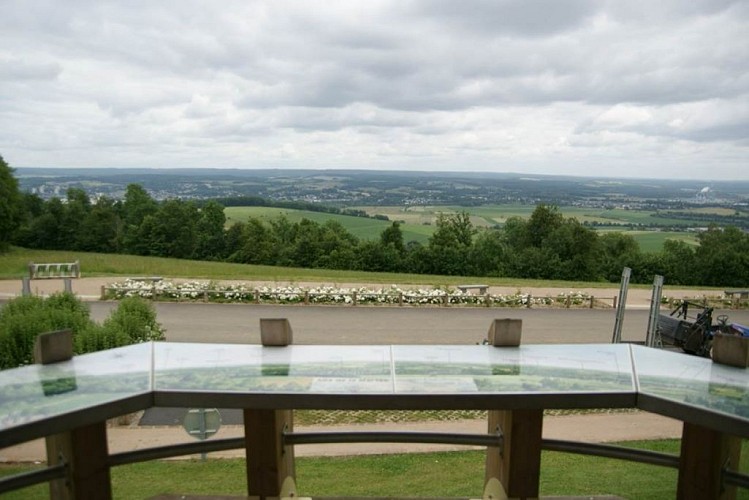
Bordered in the north by the Meuse and in the south by the Bar, La Marfée, which extends east as far as the Croix Piot has been the stage for many a battle. The memory of those fought during the three French-German wars (1870,1914-1918,1939-1945) has never been forgotten.
Today, Noyers, on its summits, is a place of peace and reconciliation.
1870 The inhabitants of Noyers who witnessed, at the end of August, the Germans take hold of the plateau of La Marfée without fighting, realised what kind of tragedy was about to be staged. The army of Châlons, commanded by Mac Mahon, was pushed onto the left bank of the Meuse. Moltke's troops then took control of the left bank from Mouzon to Donchery while in the east, the Saxons came closer to the French forces to trap them in a pincer movement on the Givonne. On the 1 September, the battle raged from Bazeilles to Floing and the German artillery, firing from the hillside of La Marfée and Le Liry, inflicted great losses among the ranks of the Marine troops.
1914 After defending Sedan for 2 days, the 11th Corps of the 4th French Army withdrew onto the left bank of the Meuse on 26 August, at the end of the morning. The men of the 17th corps were then given the responsibility of defending the plateau of La Marfée. The Germans took them by surprise in the middle of the night and made them put up a fight, eventually forcing them to retreat up to Chaumont. At 6am on the 27th, the Bretons and Vendeans struck back, and charging with fixed bayonets, and were able to reach Noyers at 9am, pushing the invaders back onto the banks of the Meuse. On the 28th, Joffre ordered a general withdrawal towards Paris, which, by an incredible reversal of the situation, brought victory to the Marne.
1940 After crossing Belgium and Holland, which were neutral, the German army arrived in Sedan on 12 May. On the 13th, between 11am and 3pm, the German air force relentlessly bombed the French positions of the La Marfée massif.
As a result, the French artillery's firing stopped dead. During the day, assault troops crossed the Meuse and reached Pont-Maugis, Frénois and the Croix Piot, followed the next morning, 14 May, by the armoured vehicles of General Guderian, which launched an attack on the plateau of La Marfée all the way to Bulson. The fighting then moved as far as Stonne where a fierce resistance temporarily held the front.
Technical Information
Altimetric profile
Additional information
Équipements
Parking
Parking autocar
Sentiers balisés
Accès handicapés
Chapô
Free admission. Open all year.
IGN cards






Data author
