Alert
Alerts
Church of Saint-Martin de Cliron
Description
The building was constructed in the first half of the 16th century (according to the choir bays and the north-capital pier in the forechoir bay); the south aisle must have been added a little later. As the pillars and vaults were not built during the first campaign, they were erected in several stages: 1557 for the north aisle (date inscribed on an abutment) and 1622 for the crossing and chancel. The classical-style portal was built in the 17th century and the sacristy in 1717, as the date on the washbasin indicates. It was probably fortified in the late 16th or 17th century.
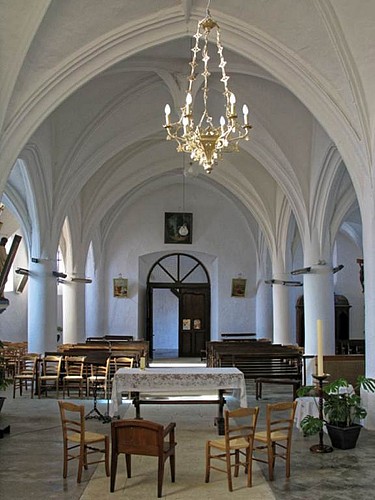
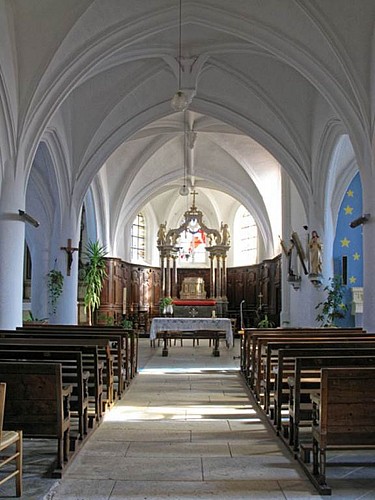
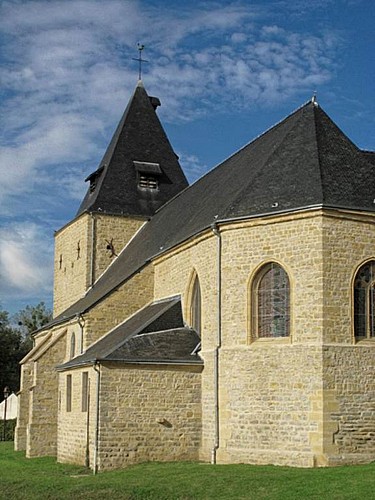
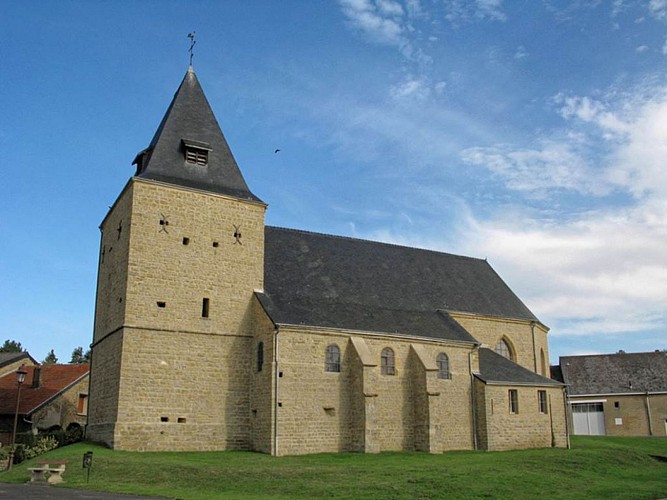
The church of Saint-Martin, located in the centre of the village, has an elongated floor plan. The nave has three aisles and three bays and is preceded by a bell tower. A forechoir bay is flanked by a chapel to the north and a sacristy to the south. The chancel comprises a straight bay and a three-sided apse. The limestone rubble walls have ashlar bays. The central aisle has a limestone flagstone floor, while the choir has a black and red marble chequerboard floor. The walls are pierced with semi-circular and pointed arch windows. The interior is rib-vaulted, with gunshot openings in the walls. The church is covered in slate, with long-sloped roofs for the nave, chapel and choir, and a square spire for the bell tower.
Technical Information
Altimetric profile
Additional information
Équipements
Borne de recharge voiture électrique
Parking
Data author
