Alert
Alerts
One of the sites of the last battles of the 1st World War (1914-1918)
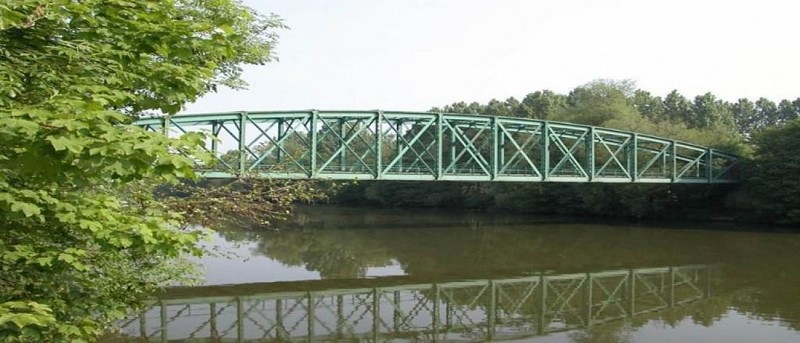
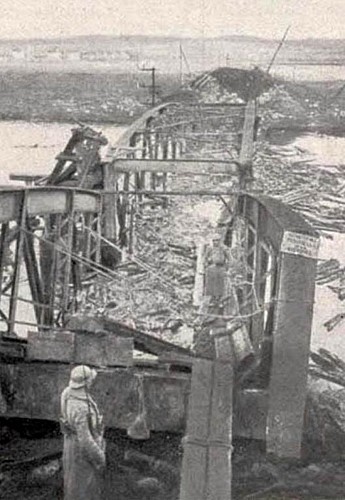
Description
The Ardennes, a frontier department landlocked in Belgium, has always had the sad privilege of suffering the assaults of war during the various conflicts of the last two centuries. On the eve of the Armistice, on 10 and 11 November 1918, Flize was the scene of the last of the battles that resulted in loss of life.On the night of 9 to 10 November 1918, the 163rd Infantry Division was ordered to cross the Meuse: ‘We must cross at all costs. The enemy was reluctant to sign the armistice. They thought they were safe behind the Meuse. We must strike at the enemy's morale with an act of daring. Pass as best you can: if necessary, on the carriages of your convoys, placed across the river. It's a question of morale’.
The bridge took the form of a large metal cage, without a floor, which had also been blasted in two places. The lower part of this cage plunged several metres into the water, but the upper stringers, although badly warped, emerged from the waves. The problem for the engineers was to use planks and timbers found in the factory to build a more or less horizontal floor to allow the infantry to pass. The Meuse was overflowing, more than 70 metres wide, the temperature was around -6°C and 80 metres away, the enemy was lying in wait.At 8.00 am on 10 November, the bridge was completed.The soldiers of the 19th and 142nd R.I. immediately crossed the Meuse in complete silence, but soon found themselves under German machine-gun fire between the river and the ballastière. Difficult fighting continued all day on 10 November.
At 8am on 11 November, the soldiers were told that the war would be over at 11am. At 10.50 a.m. German machine guns opened up with heavy fire. The French responded and the din of war resumed. Suddenly, everything stopped. It was very quiet. It is eleven o'clock on the eleventh day of the eleventh month of the year. The armistice has been sounded.Today, this pedestrian bridge is all that remains of that painful battle.
Technical Information
Altimetric profile
Additional information
Équipements
Parking
Sentiers balisés
Services
Appareil photo autorisé
Ouverture 24/24
Chapô
A bridge that is now pedestrianised
IGN cards




Animals
Yes
Data author
