Alert
Alerts
SAN LOURENZO’S CARBALLEIRA
Description
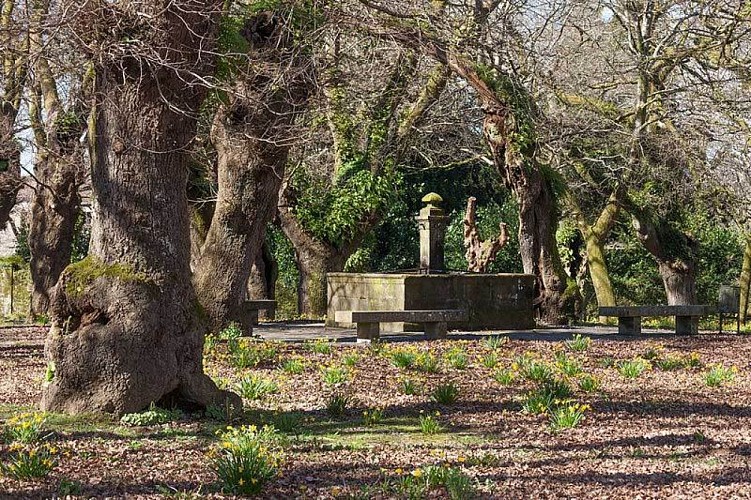
The leafy and somber San Lourenzo’s oak forest is a point of great monumental transcendence, having several examples of centennial oaks that are representative of Galicia. Besides, it’s a historical place of reunion and celebration of parties and pilgrimages, and the protagonist of one of the famous collections of poems of the Galician poetess of the 19th Century, Rosalía de Castro: Follas Novas. The book of poems, which was published in 1880, constitutes a piece of incalculable value for the Galician language in general and for its literature in particular, and in it the poetess reflects on life in the context of a very personal romanticism.
Next to the oak forest we can find the Pazo of San Lourenzo de Trasouto, a convent built in the 13th century by Zamora’s bishop. It was occupied by Franciscans until the 19th century, when it changed to be propriety of the Earls of Altamira, who used it as their home. As a historical fact, it can be mentioned that during Easter Week in 1520 emperor Carlos V stayed there. Now, the pazo, with a beautiful box garden, it’s used to host weddings and ceremonies.
After this point we leave behind the most urban area of Compostela, continuing the Camino in the company of the Sarela River in order to arrive, after having walked 88,139 km, to Fisterra or, 86,337 km, if we stop before in Muxía.
Technical Information
Altimetric profile

Data author
