Alert
Alerts
Stratification of vegetation
Description
Les Houches is the lowest point of the Tour du Mont-Blanc. The hills (at an altitude of 1100 m) are packed to the brim with villages and deciduous forests. The forests are now standing where previously cultivated fields once stood.
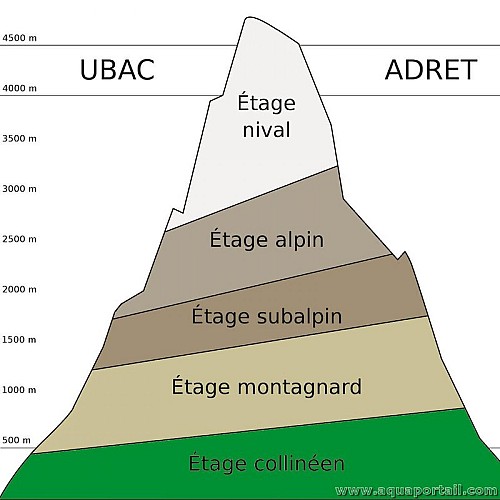
In the mountains, temperature, humidity, duration of snow cover and light levels vary with altitude. The average temperature drops by 0.6°C per 100 m of ascent, and rainfall increases up to 2,500 m and decreases past that. These altitudinal variations in living conditions are at the origin of a phenomenon known as stratification. Here’s a breakdown of various areas as can be seen from the valley to the summits: first comes the hilly area with its fields and broadleaf forests, then the mountain and sub-alpine zones mostly covered by spruce trees around Mont Blanc. As forest thins out, it gives way to heathland, which forms the subalpine zone, up to the snow line where rock and snow predominate.
Technical Information
Altimetric profile
IGN cards




Data author
