Alert
Alerts
Chapel of the Carmes-Déchaux convent
Description
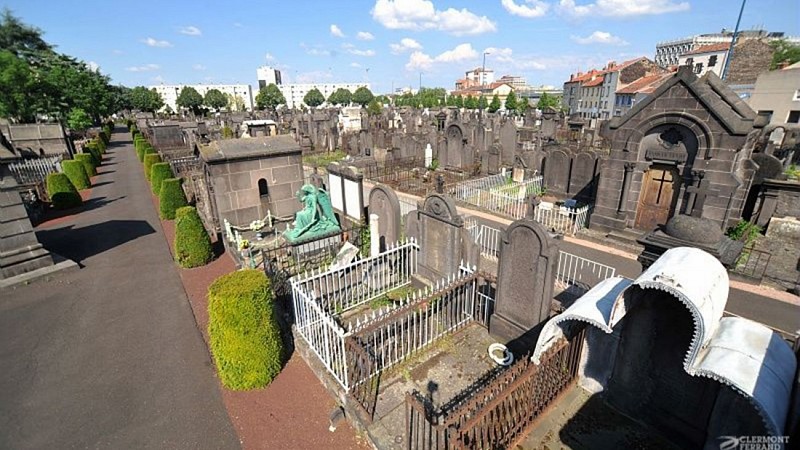
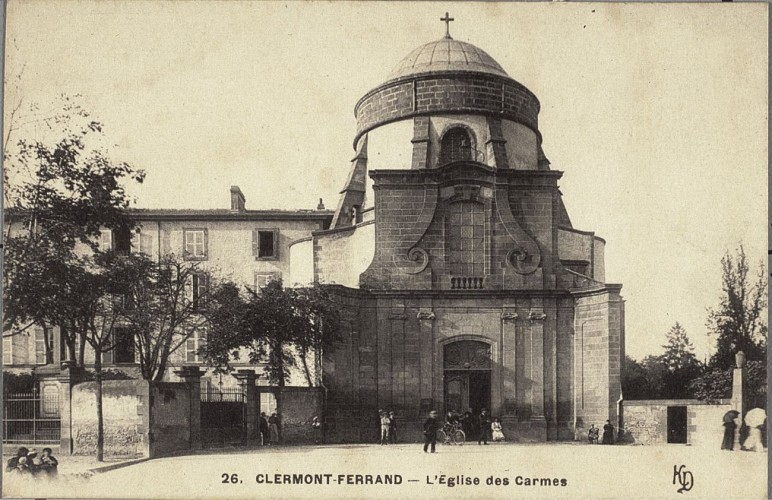
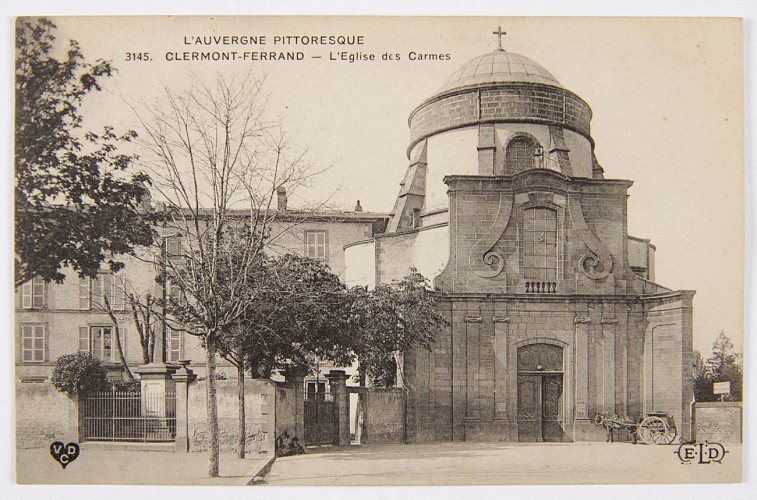
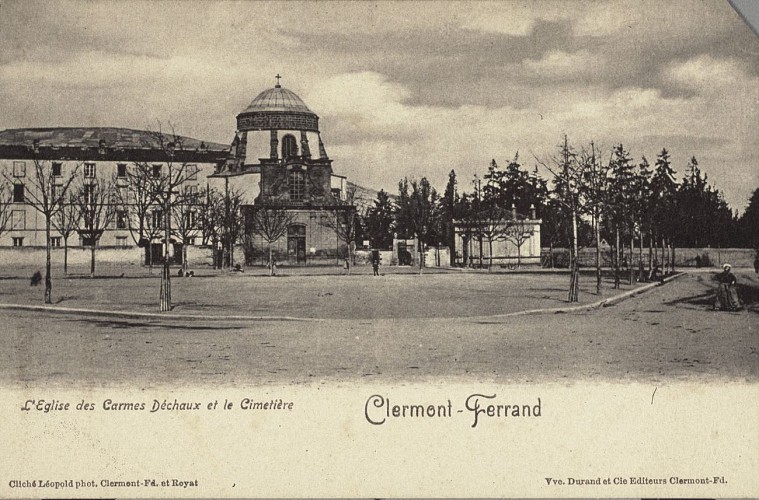
This chapel, unique in the region in its design, dates from the 18th century. It is protected as a Historic Monument. Next to it, the cemetery, considered Clermont’s “Père-Lachaise”, has been awarded the title of “Remarkable Cemetery” by the Association of Significant Cemeteries of Europe.
On the site of a former chapel and cemetery, the canons of Clermont Cathedral founded the Chantoin monastery in the 12th century. In 1631, the Discalced Carmelite Fathers settled there. However, in 1699, the convent and its chapel were destroyed by fire.
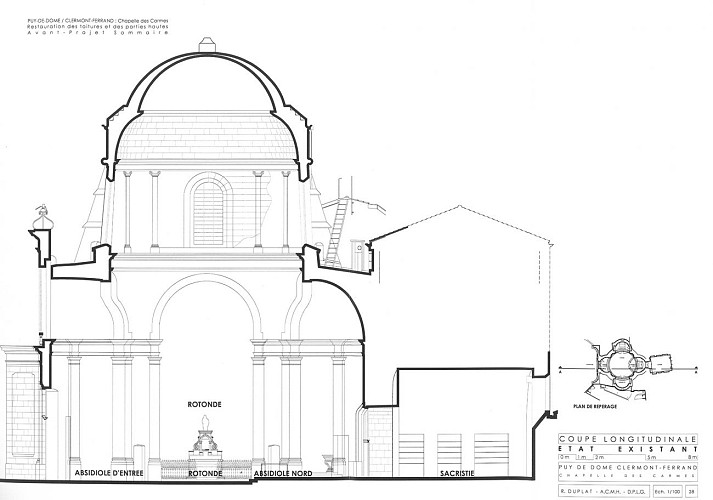
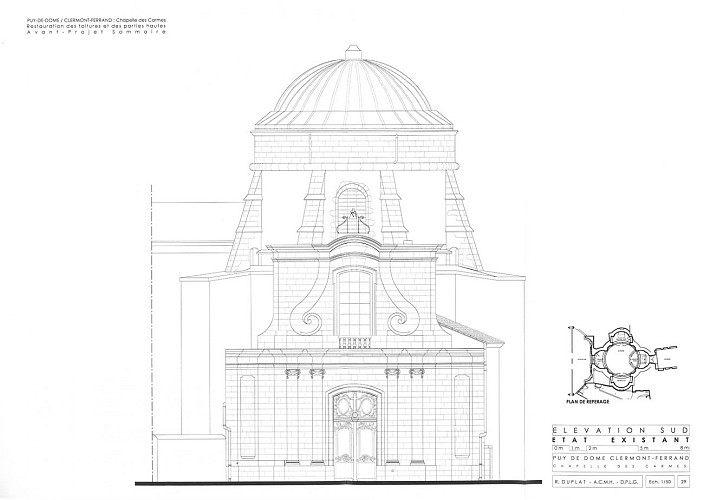
The chapel was rebuilt between 1752 and 1775 to designs by the architect André Peyrat (c. 1695–1752). It has a quatrefoil plan and is topped by a dome, making it a unique example in the region. The main façade, built of Volvic stone, consists of two superimposed levels, crowned by a small wrought-iron belfry. The first, concave level highlights the entrance doorway, framed by two pilasters with Ionic capitals. The Louis XV-style door leaves are surmounted by a wooden tympanum bearing the coats of arms of an archbishop and the city of Clermont-Ferrand. The second level forms a screen wall pierced by a large opening that illuminates the sanctuary. This opening is framed by two scroll-shaped volutes curving inwards, reminiscent of “Roman-style” façades inspired by the Church of the Gesù in Rome.
The chapel has been listed as a Historic Monument since 1976. Although restored in 2017, it remains closed to the public.
The cemetery
The Carmes Cemetery was inaugurated in 1816. Known as Clermont’s “Père-Lachaise”, it contains the graves of many prominent figures from the city, including politicians (Blatin, Charras…), industrialists (Bargoin, Lecoq…), artists (the musicians Onslow and Claussmann, the sculptors Chalonnax, Morel-Ladeuil and Mombur, and the architects Ledru and Jarrier…), scientists (Alluard, Glangeaud…) and intellectuals (Varenne, Mège…). The Carmes Cemetery has been awarded the “Remarkable Cemetery of Europe” label.
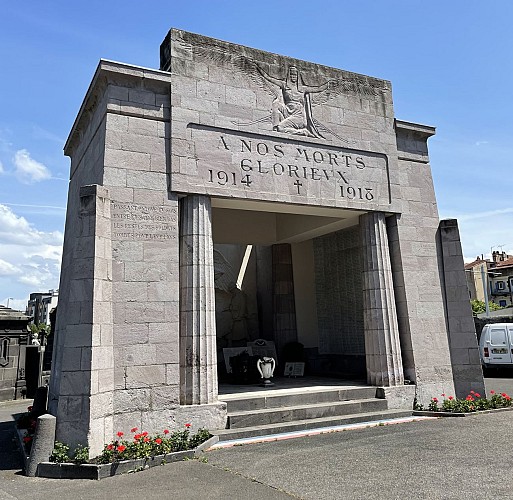
Near the entrance stands a monument dedicated to the people of Clermont who died during the First World War (1914–1918). Designed by the architect André Papillard (1880–1964) and the sculptor Jean Camus (1877–1955), it takes the form of an ancient Egyptian mastaba. It was designed at the same time as the monument in Place Salford, dedicated to the fallen, as part of a joint competition. Inaugurated in 1924, it has been listed as a Historic Monument since 2021.
Technical Information
Altimetric profile
Additional information
Distinctions
Towns and regions of art and history
Price(s)
Free access.
Updated by
Clermont Auvergne Volcans - 05/10/2026
www.clermontauvergnevolcans.com
Report a problem
Data author
