Alert
Alerts
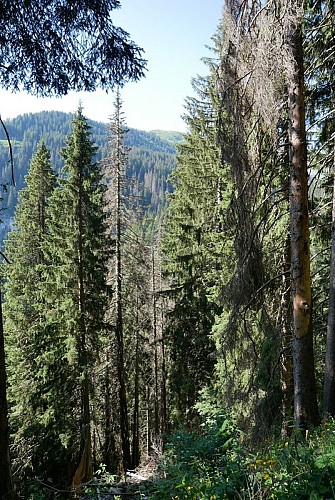
Dehydrated trees: red colour is a sign of trouble
Description
The effects of climate change, water shortage and repeated droughts are weakening trees, particularly spruces and firs. Despite their ability to gradually adapt to the water shortage, several tree species are increasingly dying out. Trees regulate their transpiration by closing the stomates ("pores") in their leaves, thereby curbing their growth. This closure leads to overheating, which can be fatal for the species. Trees, already weakened by these factors, can no longer fend off attacks from parasites. Certain insects (bark beetles) dig burrows under the bark of spruce trees, feeding on the wood and sap, further exacerbating the death rate with alarming intensity. Attacked trees can be identified by the change in colour of their needles, which turn from green to brown. The rate of migration and adaptation of trees (which live for more than a hundred years) is too slow to keep up with the pace of change. Forest managers are experimenting with planting species that are more resistant to climate change.
Technical Information
Altimetric profile
IGN cards







Data author
