Alert
Alerts
Is it a fir or a spruce tree?
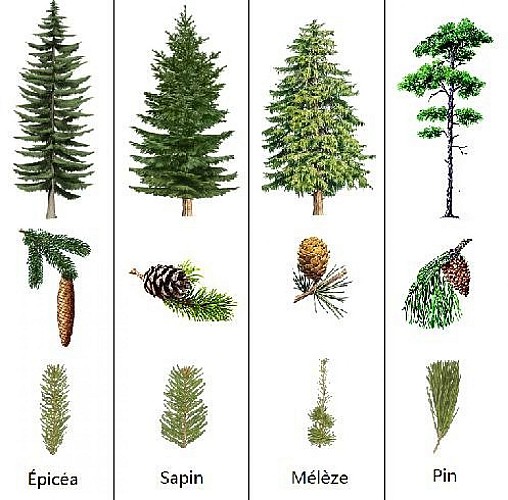
Description
A spruce tree is innately adapted to the high-altitude climate and is not afraid of the cold! It produces pine cones that are prized by many birds and small mammals. The pointed, elongated and pendulous shape of its cones distinguishes it from the fir, which has more rounded, upright cones. Fir cones do not fall off, but they do decay. As a result, only decayed fragments of fir cones do fall off. Therefore, a whole cone found at the foot of the tree is more likely to be that of a spruce. And lastly, the needles. Fir needles do not sting and are very flat. They have one green side and two white stripes on the other. Spruce, on the other hand, has sharp needles. They are not flat, but their cross-section forms a green diamond shape on both sides.
Technical Information
Altimetric profile
IGN cards







Data author
