Alert
Alerts
Thunderstorms in the mountains
Description
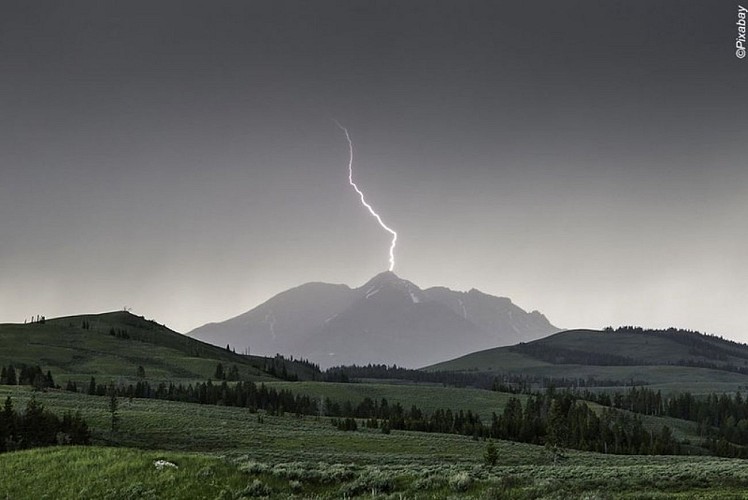
- Avoid elevated spots: ridges, summits, isolated lone trees. In a shelter or in a forest, keep away from walls or tree trunks that can attract lightning. When a lightning strike forms, it takes the shortest route and generally strikes the highest point.
- Wait for the storm to pass: avoid running and moving around, the best pose you can take is squatting with your feet together. Are you familiar with the phenomenon of "step voltage"? If you keep your feet together and firmly placed on the ground while squatting, you can avoid getting electrocuted by a nearby lightning strike, as the current will hit the ground first, before safely passing through your grounded feet.
- Keeping distance: if you can, try to distance yourself from metal objects that you put in your bag (sticks, ice picks, climbing gear, etc.), but also from each other by moving away from each other.
- Here's a hint: You can estimate the distance of a thunderstorm by counting the number of seconds between the flash of lightning and the thunder. Multiply this figure by 300, which is roughly the speed of sound in metres per second. The result is the distance in metres between us and the storm.
Technical Information
Altimetric profile
IGN cards










Data author
