Alert
Alerts
Saint-Georges church (Limburg, medieval town)
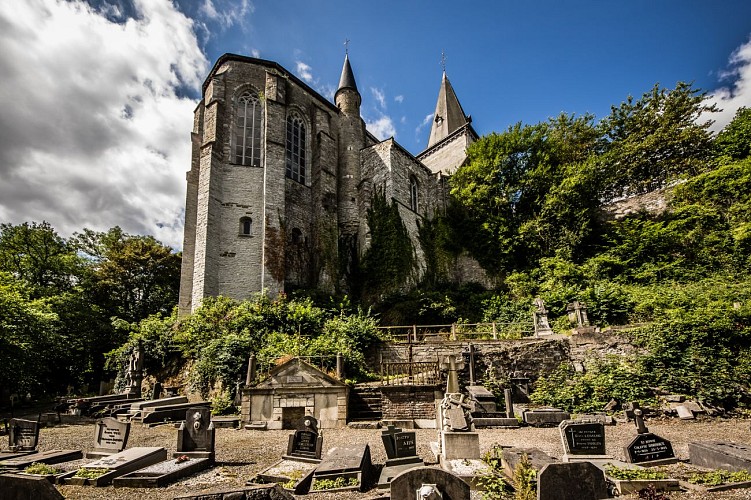
Description
The church, which replaces a former 12th-century castral chapel, rises up from the eastern wall to form an imposing Gothic vessel. As the strategic role of the church grew, so did its size. Enlarged and altered over the centuries, it was damaged by numerous sieges and the fire of 1834.The monumental tower, built around 1301, was clad in limestone at the end of the 19th century. The Gothic portal features twin pointed-arched doors. It features a kneeling figure and Saint George slaying the dragon. A listed building, the church contains a 15th-century Gothic crypt, a monumental stone tabernacle dating from 1520, and a 16th-century baptismal font. The basement is a veritable cemetery, with more than 295 people buried here. Numerous gravestones of notables and clerics are still visible inside and outside along the south gable.
Technical Information
Altimetric profile
Data author
