Alert
Alerts
Le château féodal (Limbourg, ville médiévale)
Description
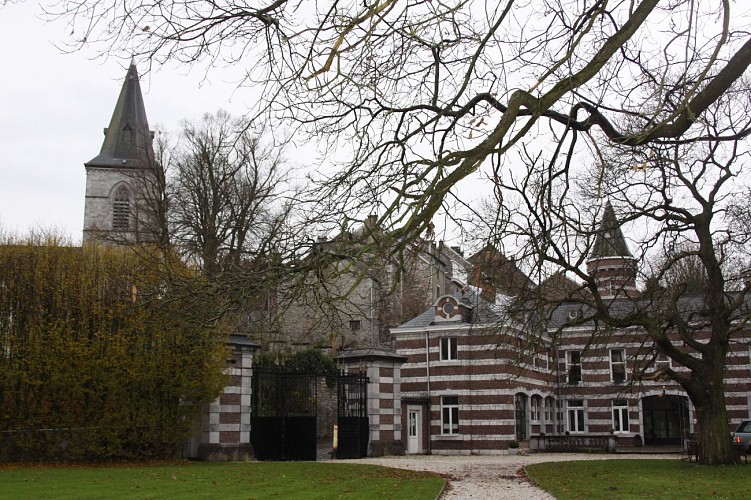
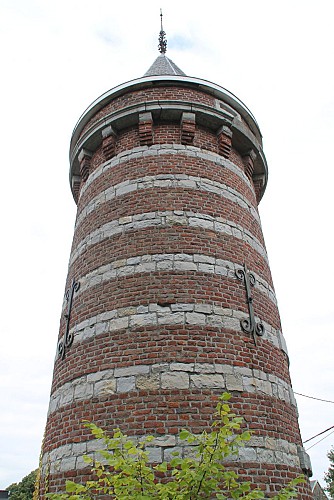
The feudal castle built by Waleran, Duke of Limbourg, must already have been heavily fortified, because in 1101, it put up more than a month's resistance to the army of the German Emperor Henry IV, who had come to lay siege to it. Situated at the northernmost point of the fortified town, towering more than 80 metres above the Vesdre and Dolhain valleys, Limbourg Castle dominated the surrounding area. It was the stronghold of the stronghold. Five large towers occupied the corners of the castle.In 1504, it was almost completely destroyed by fire. It was rebuilt between 1519 and 1530. The defensive system was modified thanks to advances in the art of fortification and artillery. The ruins accumulated by successive sieges increasingly reduced the importance of the castle in the defence of the stronghold.Some of the besiegers:1578: Alexander Farnese commanded the Spanish army1632: Dutch troops1635: Spanish troops again1675: Louis XIV's army. Before handing the castle back to the Spanish, Louis XIV had the old town mined and destroyed.1703: English and Dutch armies commanded by the Duke of Marlborough1715: Charles VI, Emperor of AustriaDuring this century, the castle remained in a state of ruin and was only used as a site for a few defence batteries. The stronghold was definitively decommissioned in 1781. In 1783, the land covered in ruins of the old castle was purchased by the alderman of the High Court, J. J. Ernst.In the 19th century, Julien d'Andrimont became the owner and had a small romantic castle built, which was unfortunately destroyed by the German army on 28 August 1914. Only the buildings to the left of the gate were spared. After the war, the property passed to the architect Jean Lejaer, who installed a pergola in place of the burnt castle. Guy de Potter, a solicitor, later became the owner. He had the various buildings restored and the park landscaped.
Technical Information
Altimetric profile
Data author
