Alert
Alerts
Notre-Dame-des-Neiges du Joseray Chapel
Description
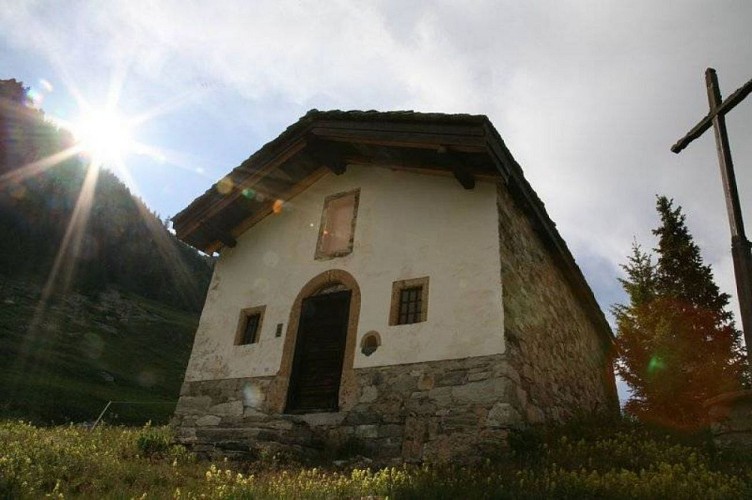
This chapel in Le Joseray, named "our Lady of the Snows", overlooks Le Manchet Valley. Mentioned as far back as 1633, firstly under the name St Michel and then, in 1790, under the name Our Lady of Compassion, it is now referred to as Our Lady of the Snows. In our mountains, whenever the Virgin or Our Lady is described as being "of the Snows", she is called upon to protect from the snow or ward off avalanches. On 5 August, during the Saint’s feast day, Mass used to be held in the chapel after a procession had taken place. In May, Le Joseray’s procession marked the end of the Rogation Days, which were a period when prayers were offered for God’s attention on the fields and harvests, to protect them from bad weather and insects. The fifth Sunday after Easter was Rogation Sunday, after which the “Grand Tour” would begin: Monday in Le Fornet, Tuesday in La Daille. On Wednesday, the third and final day of the Rogation ceremonies, the procession would leave the church while the cleric rang the bells until the parishioners arrived in Le Joseray. At each cross or crossroads, the procession would stop for the vicar to bless the fields. Chapels and churches dedicated to St Michael all feature the same characteristics: they stand out from afar as they are always built on a rocky spur or hillock, overlooking the landscape and reminding us mere mortals that, when the time of death comes, our deeds will be judged! In many places, the livestock would be brought back down from the high mountain pastures on St Michael’s Day: this was known as the démontagnée date. From the early Middle Ages, St Michael’s Day was also an important legal date: payments were due and contracts were renewed. This chapel is the largest of all the rural chapels in Val d’Isère and has a long nave with a barrel vault, culminating in a plain rectangular apse.
Technical Information
Altimetric profile
Data author
