Alert
Alerts
Castle of Pionsat


Description
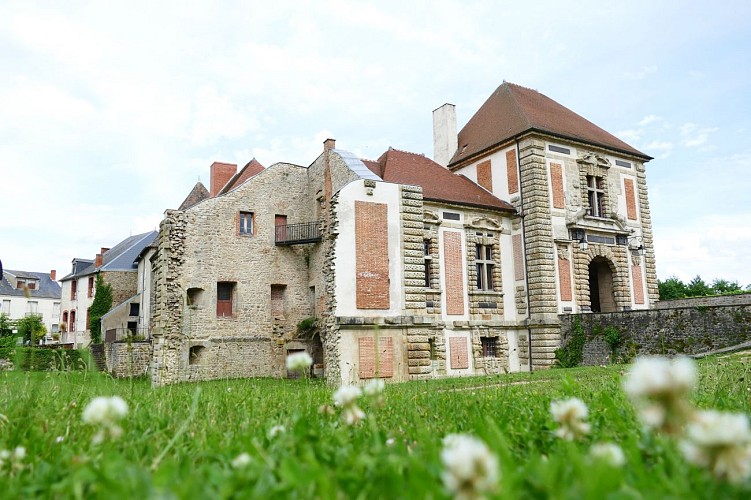
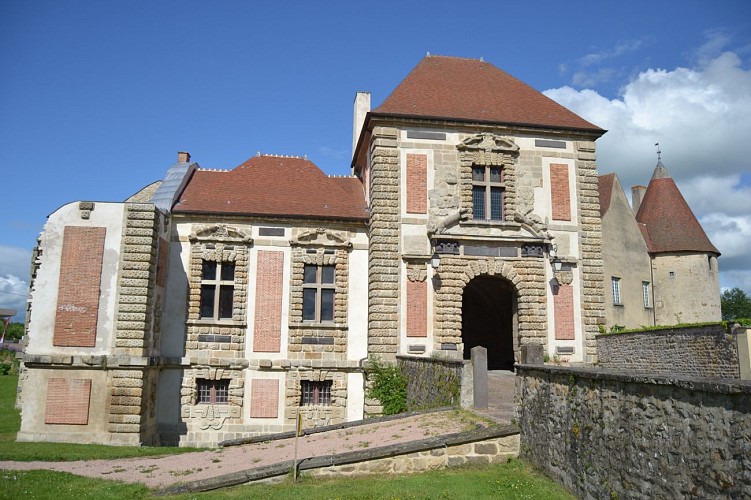
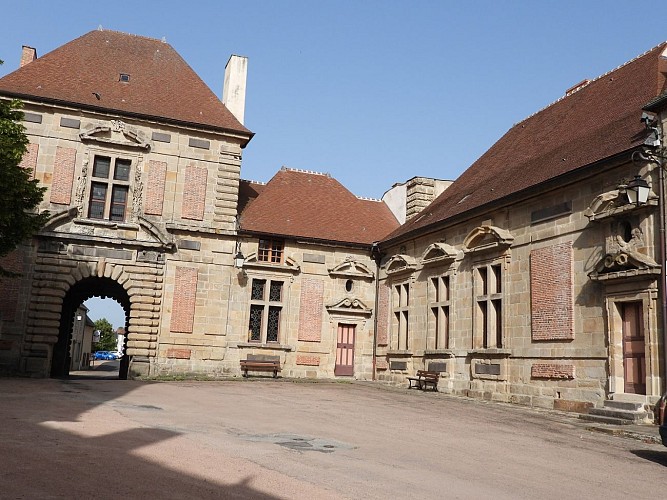
The Château de Pionsat is unique in the Auvergne because it combines two different architectural styles: medieval and Renaissance.
Each main building has been listed as a Monument Historique (Renaissance wing since 1920) and as a Monuments Historiques (medieval wing since 1962).
Château de Pionsat is unique in the Auvergne region for its combination of two different architectural styles: medieval and Renaissance.
A treasure trove of early Arvern coins, mostly gold, bearing the name of Vercingetorix, was found on this land. It was probably Humbert de Beaujeu, Constable of France, who built the first defensive keep in the 12th century to consolidate his power. Bernard de Ventadour subsequently inherited the lands of Pionsat and Montel-de-Gelat, before selling them to Guillaume Aubert (a wealthy financier) around 1345. On the border between the English (now Aquitaine) and French kingdoms, Pionsat and Les Combrailles were at the heart of tensions during the Hundred Years' War. The Auberts were therefore obliged to build a stone castle to protect the population and defend the surrounding territory from the many threats.
In 1482, Gilbert Motier IV de La Fayette (a distant relative of the Auberts) sold Pionsat castle to Jacques II de Chazeron. This was the golden age of the Chazeron family, whose descendants served in the households of several kings of France, right up to Henri IV.
The positions held by the family members with the kings of France brought them substantial income, enabling them to transform the medieval château and build a château in a style that was new at the time, that of the Renaissance.
Few Renaissance castles were built in Auvergne, but many were transformed.
In Pionsat, a new ensemble was created with large proportions and, for the Renaissance part, an original decorative style: "vermiculated bossing", of which Pionsat was the "exclusive" in Auvergne and perhaps beyond. Mullions, pediments, etc. can all be seen.
In 1604, the property passed into the hands of the De Chabanne family until the French Revolution.
Divided up and sold in the 19th century, it's only since the end of the 20th century that the buildings have benefited from renovation and protection work.
The commune of Pionsat, current owner of the Renaissance section, is pursuing studies and investments to safeguard and enhance the cultural and tourist value of this château, a great testament to the audacity of the men of the Combrailles and an architectural jewel of the Auvergne.
Partner of the Route Historique des Châteaux d'Auvergne.
A heritage guide is available for €3 in our four tourist information offices: Saint-Gervais-d’Auvergne, Châteauneuf-les-Bains, Pontgibaud and Les Ancizes-Comps, as well as on our online shop. It presents the history of Pionsat Castle, between its medieval section and Renaissance wing.
Technical Information
Altimetric profile
Additional information
Updated by
Office de Tourisme des Combrailles - 25/08/2026
www.combrailles-auvergne-tourisme.fr/
Report a problem
Price(s)
Free entry for children under 10, accompanying guides, the drivers.
Group rate available for 20 people or more.
Distinctions
Classified
listed
Open period
Closed temporarily.
Contact
Phone :
04 73 85 61 56
06 41 47 38 16
Email : mairie.pionsat.63@wanadoo.fr
Website : https://route-chateaux-auvergne.org/chateau/chateau-de-pionsat/
Facebook : https://www.facebook.com/p/Mairie-Pionsat-100069231428940/
Host portrait
The association HISTOIRE ET PATRIMOINE DE PIONSAT, created in the spring of 2021, has taken on the management of tours of the 2 main buildings of the Château de Pionsat: the medieval and Renaissance parts. With commentary and musical accompaniment, and with the possibility in June of a "time escape game" and a "treasure hunt" for children (booking required), these tours take place throughout the summer. As part of its commitment to combining art and culture, the association also hosts temporary art exhibitions at the château in July and August. The association also honors photography by offering the public a theme each summer, from the uniqueness of the Combrailles landscape to the richness of the local built heritage.
The Château de Pionsat comprises 2 imposing medieval and Renaissance buildings, each with its own protection classification: the medieval part is listed on the Inventaire supplémentaire des Monuments Historiques and the Renaissance part is classified as a Monument Historique.
The medieval part dates from 1345, built at the start of the Hundred Years' War, and the Renaissance part from 1482, recently restored by the municipality.
The commune of Pionsat, current owner of the Renaissance section, is pursuing studies and investments to safeguard and enhance the cultural and tourist value of this castle, a testament to the audacity of the men of the Combrailles and an architectural jewel of the Auvergne.
Sustainable tourism
Visits and activities at Château de Pionsat have no impact on the environment: night-time lighting regulations, ecological management of public green spaces, waste sorting, no polluting vehicles inside the site, no nuisance to the neighborhood. In addition, the local association HISTOIRE ET PATRIMOINE DE PIONSAT, in charge of promoting local heritage, adapts its offer to the season, welcoming individuals and groups of up to 15 people for guided tours throughout the summer, with sliding-scale admission rates to suit the particular circumstances of the public; the château's premises are also available to artists and craftsmen for other events (concerts, fairs, exhibitions), and thanks to the presence of a boutique, visitors can discover local and artisanal products. Finally, having registered the château under an annual agreement with a number of information and promotion centers, such as the Office du Tourisme des Combrailles and the Route Historique des Châteaux d'Auvergne, the association helps to promote not only the commune of Pionsat, but the entire region. The tours and events that bring the château back to life from June to September are also regularly publicized in various communications media: flyers, newspapers, the town hall website and social networks.
Reception complements
A heritage guide is available for €3 in our tourist information offices in Saint-Gervais-d’Auvergne, Châteauneuf-les-Bains, Pontgibaud and Les Ancizes-Comps, as well as on our online shop.
