Alert
Alerts
Saint-Mort Church
Description
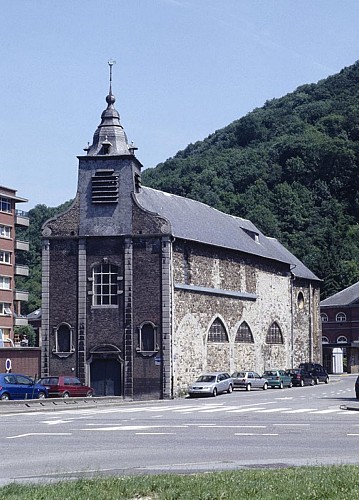
Rebuilt in the 13th century on the site of older buildings (a small funeral chapel and graveyard from the early Middle Ages, Romanesque church from the 11th century, enlarged in the 12th century), the history of this church is very complex. From the 12th century, it took on unusual features inherited from the local topography: a west wall angled against the building and side naves ending irregularly.
The church saw a number of alterations after the Middle Ages. One of these saw the addition of a brick and limestone façade three bays wide added to the sandstone building, a door with chamfered entablature and curved pediment niches and high central window. This façade culminated in side scrolls joining a square tower with low bulbous roof.
The current appearance of the building dates back to 1810 when the south nave and one end of the transept were removed. The interior arches then became windows and were partly walled up. A single pitched roof covered the remaining naves. An arm of the transept separates them from the chancel, which is not so high and has rib vaults, a side chapel - also rib-vaulted - and the sacristy.
The church has a Romanesque tympanum from the 12th century which once adorned the main entrance prior to the alterations. Stone crosses from the 17th and 18th centuries, as well as funerary monuments from the 17th century punctuate the walls of this unusual parish church.
Building listed on 1st August 1933
Technical Information
Altimetric profile
Data author
