Alert
Alerts
Notre-Dame-de-Prospérité church in Montferrand
Description
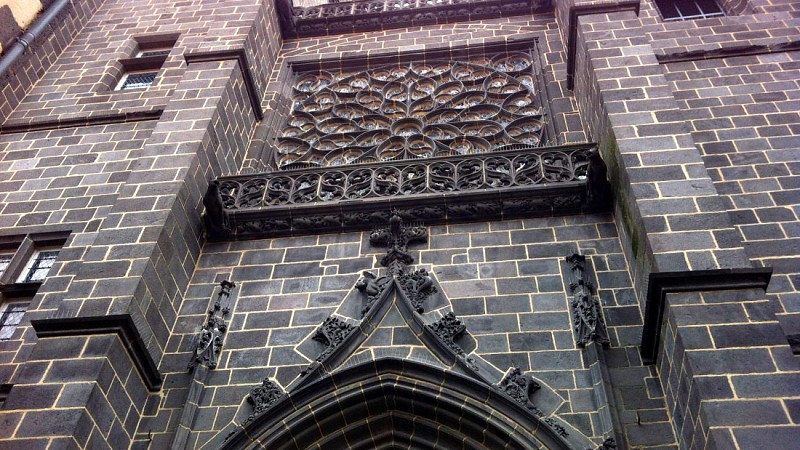
Built of Volvic stone in the Southern GBuilt in the 14th century in response to insecurity, the Church of Notre-Dame-de-Prospérité embodies the Languedoc Gothic style. It houses precious furnishings from Montferrand’s former convents.
This church stands on the site of the former chapel of the Counts of Auvergne’s castle. In the 12th and 13th centuries the residents of Montferrand had to leave the fortified enclosure to attend services at the Saint-Robert monastery, south of the town walls. During the Hundred Years’ War (1337–1453) the threat of attack prompted the inhabitants to build a place of worship within the walls.
Constructed entirely of Volvic stone, the church was begun in the 1340s, but progress was slow because the town’s finances had been depleted by the pillaging of Montferrand in 1388. The northern tower, started in 1472, was completed in 1566 with the addition of the belfry. The southern tower, built in the early 16th century, was demolished during the French Revolution.
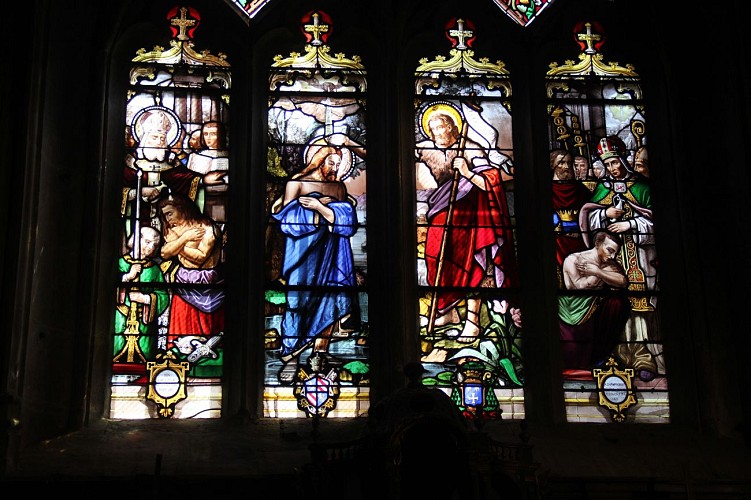
The people of Montferrand chose the Languedoc Gothic style, reflecting their attachment to southern France. The single nave is encircled by fifteen chapels and illuminated by 19th-century stained-glass windows, notably those produced in the workshop of Étienne-Hormidas Thévenot.
To channel rainwater from the terraces, numerous gargoyles were sculpted around the exterior. Among them are fish, wild animals, birds, sighthounds, as well as human and fantastical figures.
The chapels contain woodwork confiscated from Montferrand’s convents (Cordeliers, Ursulines, and Visitandines) and installed here after the French Revolution. The church also preserves a Romanesque stone Virgin and a large 17th-century wooden crucifix.
Technical Information
Altimetric profile
Additional information
Price(s)
Free of charge.
Updated by
Clermont Auvergne Volcans - 01/10/2025
www.clermontauvergnevolcans.com
Report a problem
Open period
All year round daily between 8 am and 6 pm.
History, culture and heritage
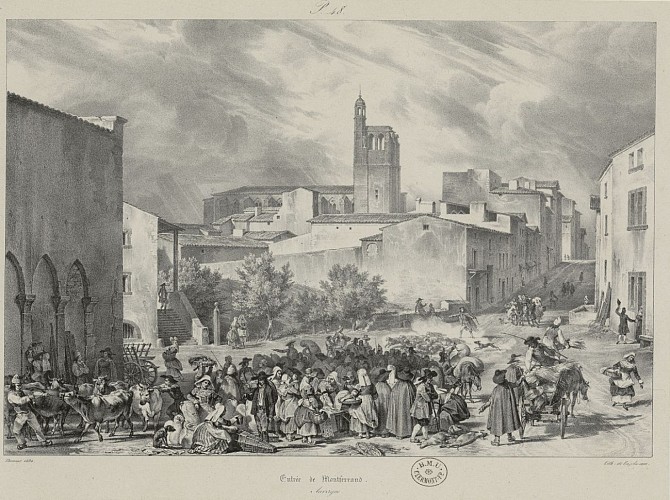
Photo 1: Monument Photo 2: View of Montferrand from Place des Cordeliers, 1829-1833 Photo 3: Stained glass windows by A. Champrobert, 1871
Data author
