Alert
Alerts
Champagne-sur-Seine
Description
Located between Saint-Mammès and Thomery, Champagne-sur-Seine, once renowned for supplying François I with its Chasselas grapes, chose a different path: that of the Industrial Revolution. At the beginning of the 20th century, it became a new town ahead of its time.
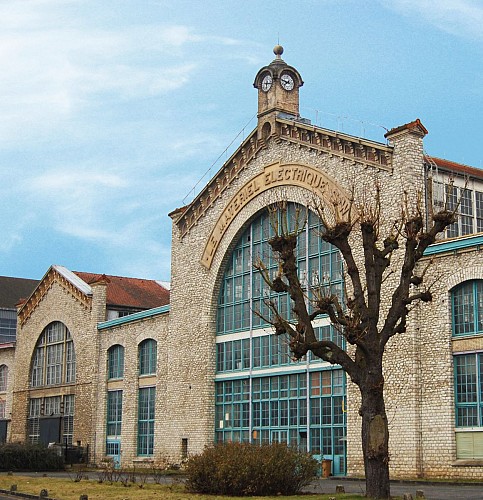
Like its neighbouring towns in the Community of Communes, Champagne-sur-Seine traces its roots back to the 12th century, as evidenced by its Notre-Dame Church. The old village of Champagne, whose distinctive character lies in its buildings perched on steep hillsides, stands alongside the “new” Champagne, which emerged at the dawn of the 20th century, when housing and industrial facilities were developed side by side.
Le Creusot, Schneider, Jeumont, ABB and others: whatever the name of its major companies over the years, the town has developed both physically and socially around them, on sites along the banks of the Seine. Several streets still bear the mark of these powerful industrial companies, which shaped local communities in their own image to meet their production needs. These rows of workers' houses and apartment buildings constructed at the factory gates form part of France's national industrial heritage.
For some urban planners, Champagne-sur-Seine was the first “new town” of the 20th century. Indeed, the workers' housing blocks, built at almost the same time as the factory, created a link between the industrial site and the old village. These blocks also included shops and businesses providing for the everyday needs of the new population.
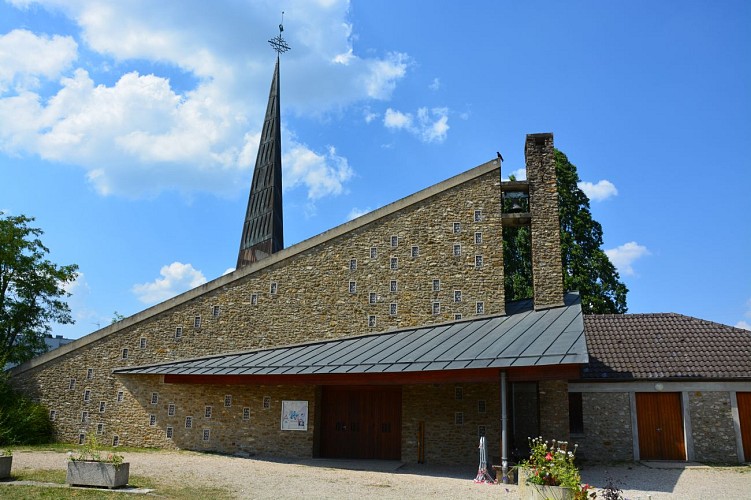
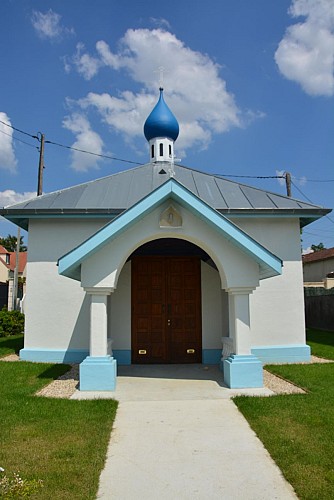
Champagne-sur-Seine was also home to several hundred Russian exiles fleeing the October Revolution, as illustrated by the Russian Chapel of Notre-Dame-de-Toutes-les-Protections. Among the town's notable architectural heritage is the Church of Saint-François-d'Assise, built in 1965, which features a remarkable interior. It was awarded the Patrimoine Remarquable label in 2014.
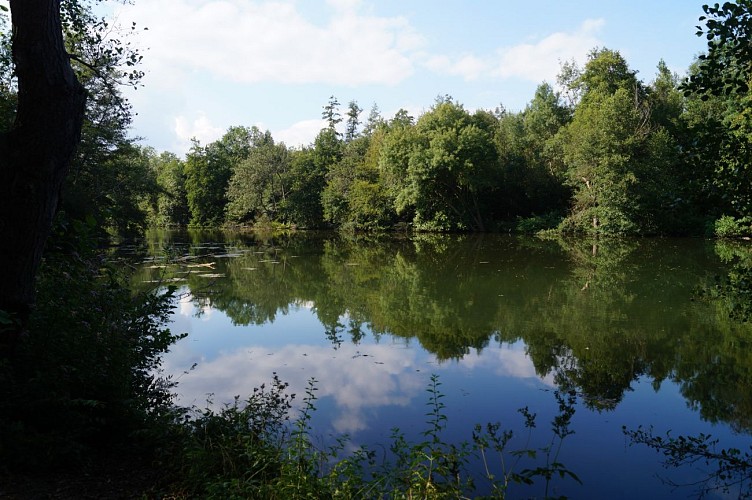
Nature also has a place in Champagne-sur-Seine. Two designated Sensitive Natural Areas are worth discovering: Les Basses Godernes, a pond occupying a former abandoned meander of the Seine, and Le Trou Canard, a remarkable geological site.
The Forest of Champagne is another natural attraction. Crossed by the GR 2 long-distance hiking trail, it is home to the Rocher de Samoreau, its most picturesque landmark, whose rocky scenery is reminiscent of the landscapes of the Forest of Fontainebleau.
Technical Information
Altimetric profile
Additional information
Distinctions
Scandibérique
Price(s)
Free access.
Updated by
Communauté de Communes Moret Seine et Loing - 05/11/2026
www.ccmsl.fr/
Report a problem
Open period
All year round daily.
Contact
Phone :
01 64 69 59 35
01 60 70 41 66
Website :
http://www.champagne-sur-seine.fr
http://www.msl-tourisme.fr
Animals
Yes
Data author
