Alert
Alerts
Hamlet of Le Villard
Description
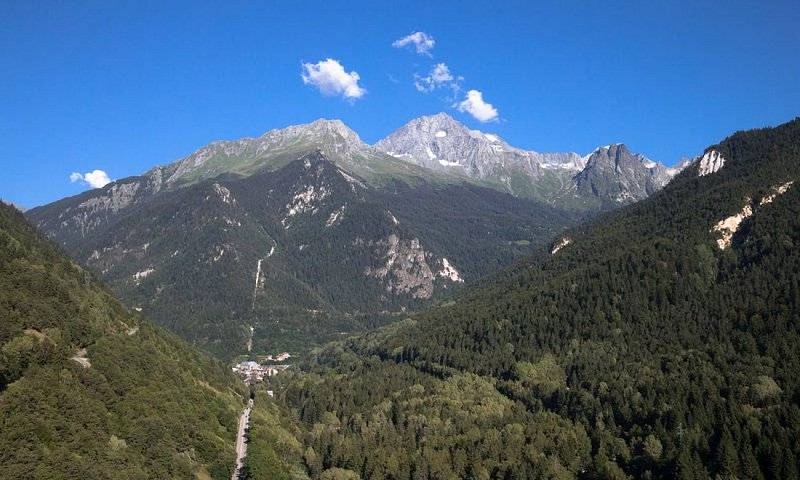
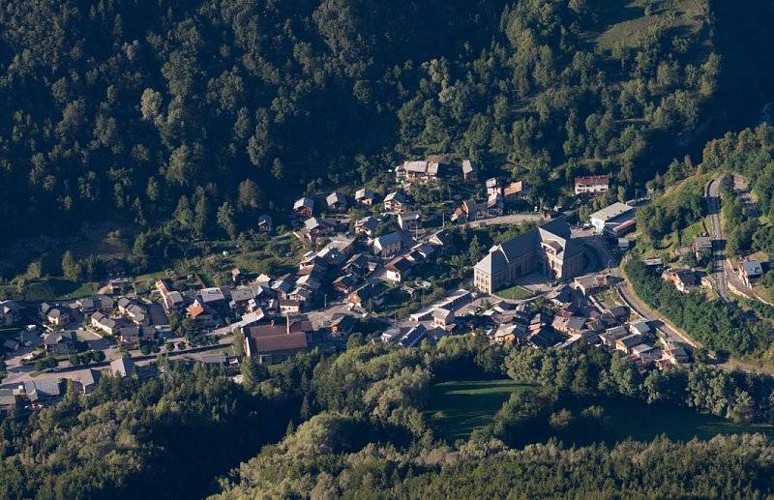
Villard (860m) is the municipality of Planay’s largest village. Located near Bozel, on the road to Pralognan, it is home to Planay’s services and businesses, including the town hall, school, Galerie Hydraulica (Museum) and a few shops.
For almost a century, Villard lived to the rhythm of a metallurgical and chemical factory provided with raw materials by the area’s mines and quarries, and with energy by 3 hydropower plants (still in operation).
Opened in 1898, the factory enabled the entire valley to carry out its own industrial revolution. By the time it closed in 1984, it had left an indelible mark on the hamlet’s physiognomy. At its centre, the hydropower plants, supplied by penstocks, the first of which was installed in 1900 using a technique similar to the one used for the Eiffel Tower. On either side of the Doron de Champagny, the village’s historical heart, with its characteristic houses closely grouped together around Sainte-Marguerite Chapel. Dedicated to the Patron Saint of women in labour, whose feast day falls on 20 July, the chapel's interior decoration bears witness to the Baroque spirit that pervaded Tarentaise. Below the Pralognan plant, this part of Villard rapidly became home to numbers of Italian, Polish and even Moroccan workers. The workers’ canteen downstream has been turned into housing units and the factory itself has given way to a business park. Finally, at the entrance to the hamlet on the Bozel side, partly sheltered from the bygone factory’s emissions and noise, the old neighbourhood of Ilaz that once accommodated the factory’s engineers stands facing the bourgeois houses of its directors.
Find out more about this industrial and human adventure by paying a visit to Galerie Hydraulica: not to be missed out on in order to better understand the Bozel Valley’s recent history, before the advent of “white gold”!
Technical Information
Altimetric profile
IGN cards










Data author
