Alert
Alerts
Reading the landscape
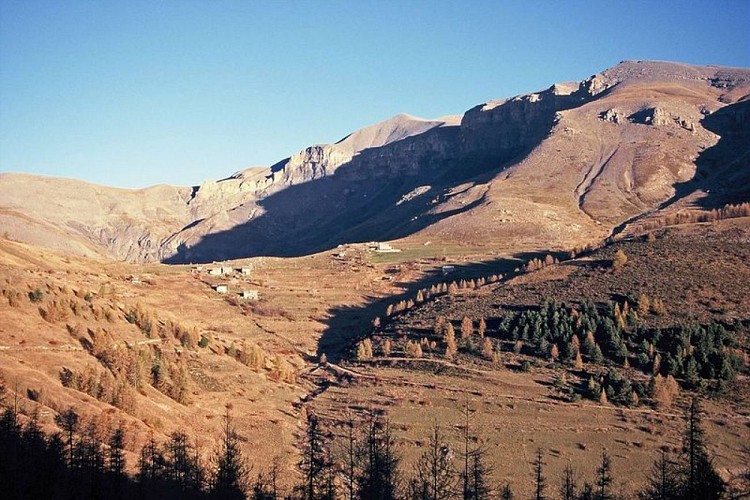
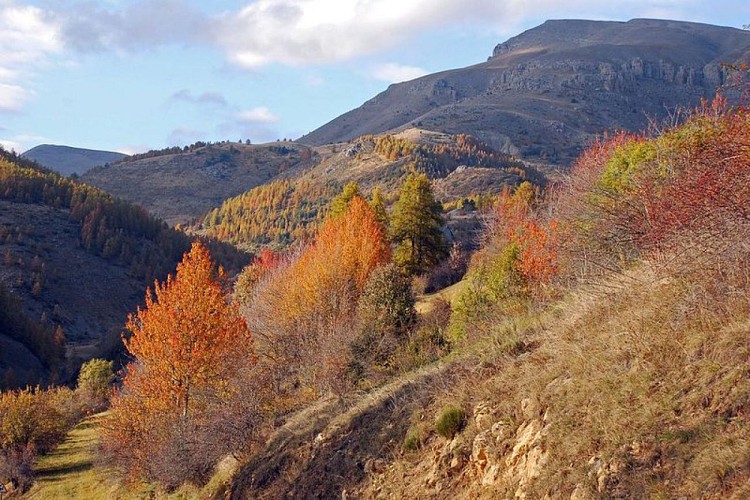
Description
To understand this landscape, one needs to go beyond the appearance and look carefully at it to spot the clues pointing at agricultural life which, throughout the centuries, shaped it. Meadows scattered with fruit trees, barns, pastoral huts and ruins of military camps are so many visual traces of the activities of the past.During the Napoleonic period, many owners shared the irrigated meadows as well as the cultivated land. Little by little, cultivation was abandoned in favour of pasture.In 1954, the Robion family from Beuil still came to cut the hay. And then, pastoralism went into decline. Pasture zones were gradually taken over by broom and, in places, trees such as Scotch pine or larch blocked the access to the former military camp.
Technical Information
Altimetric profile
IGN cards













Data author
