Tours
Activities
Places of interest
Where to eat
Where to sleep

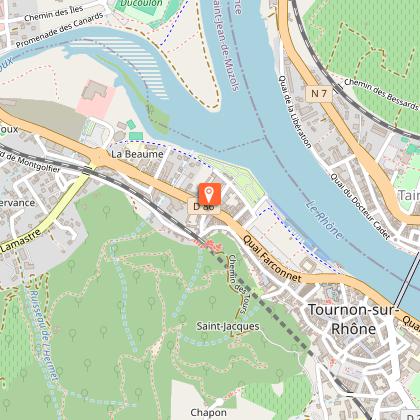
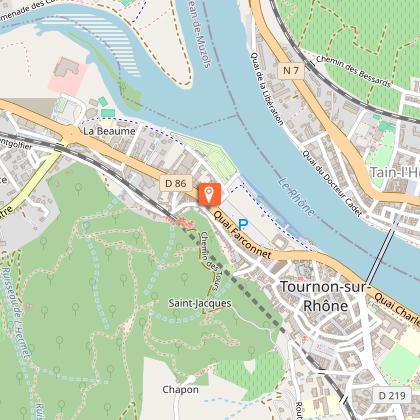
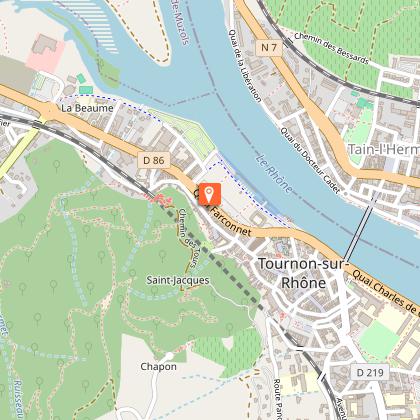
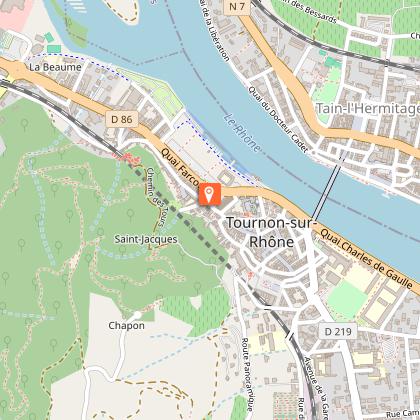
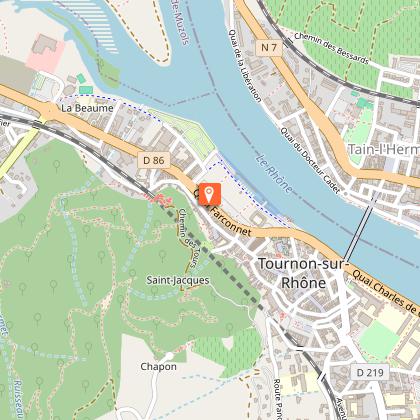
Camping le Rhone ex Camping de Tournon HPA: Discover Tournon-sur-Rhône

Are you the owner?
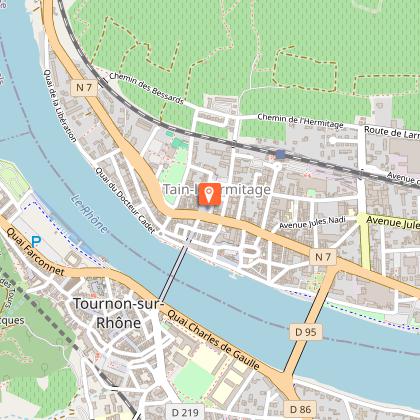
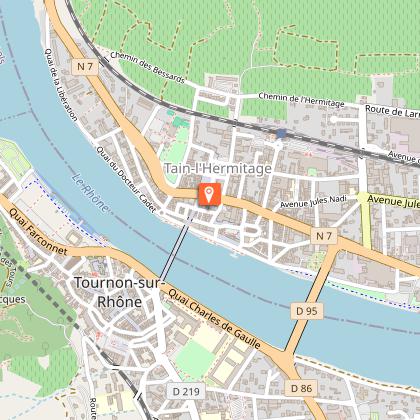
Welcome to Tournon-sur-Rhône, nestled in the heart of Ardèche in Rhône-Alpes, where Camping le Rhone ex Camping de Tournon HPA serves as the perfect launchpad for exploring a myriad of local activities and attractions. Embark on a rewarding adventure with breathtaking landscapes, scenic hikes, and cultural excursions. Discover the Château-Musée de Tournon, a medieval fortress offering panoramic vi...See more

Walking around CAMPING LE RHONE EX CAMPING DE TOURNON HPA

See more suggestions
Take a walk around CAMPING LE RHONE EX CAMPING DE TOURNON HPA.
See more suggestions
What to do in CAMPING LE RHONE EX CAMPING DE TOURNON HPA

See more suggestions
Choose from a variety of activities in CAMPING LE RHONE EX CAMPING DE TOURNON HPA and book your favorites.
See more suggestions

What to visit in CAMPING LE RHONE EX CAMPING DE TOURNON HPA

See more suggestions
Discover the local markets of CAMPING LE RHONE EX CAMPING DE TOURNON HPA.
See more suggestions
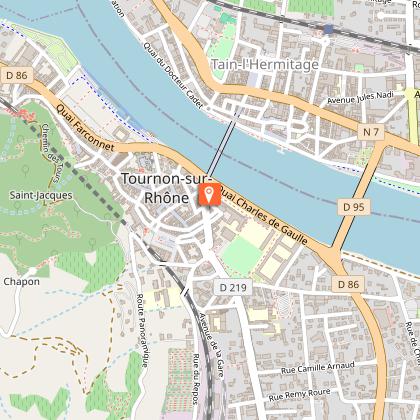
Historical center - Tournon sur Rhône
393 m

Historical center - Tournon sur Rhône

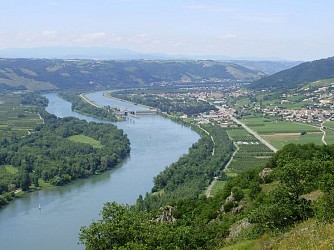
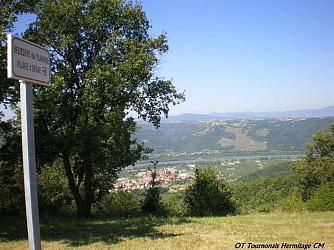
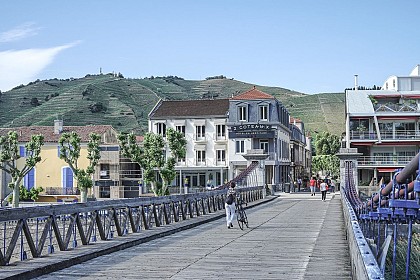
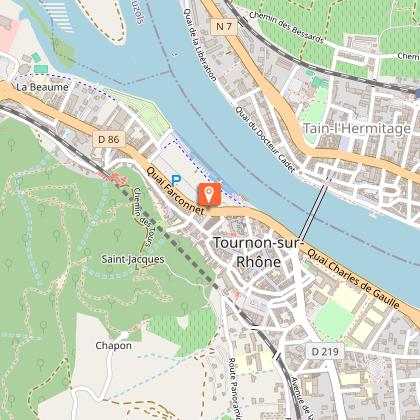
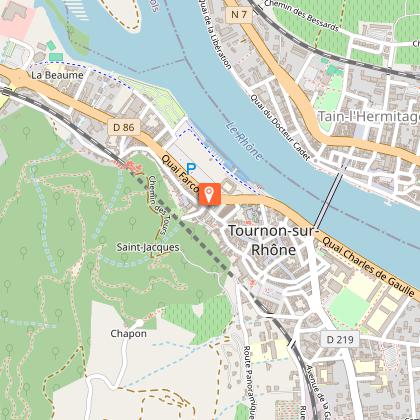
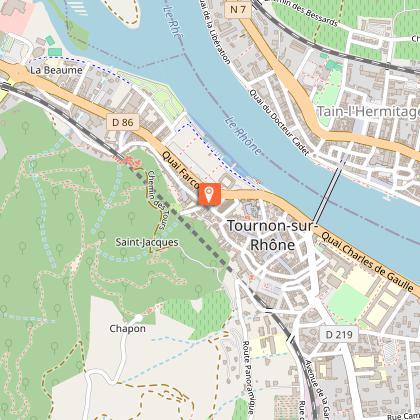
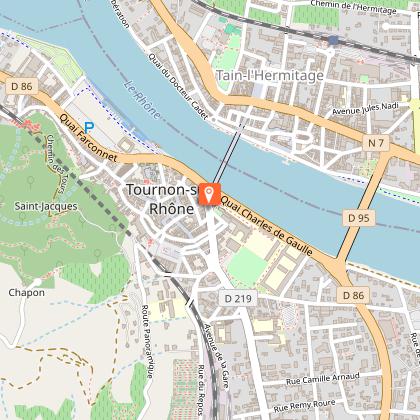
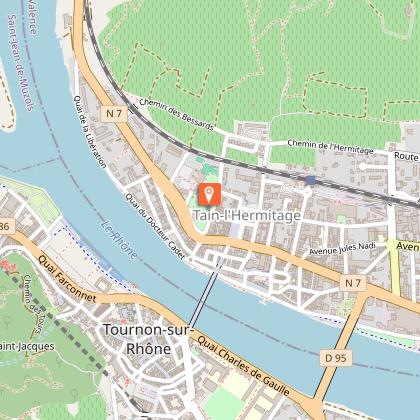
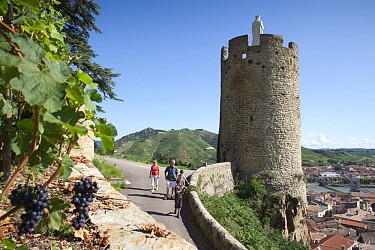
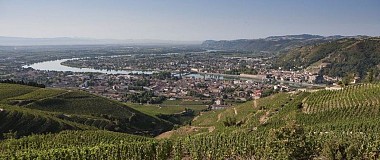
Beautifully situated along the Rhône Valley, nestling amid the vines of a famed winegrowing area, Tournon sur Rhone is a town with a Mediterranean feel. Behind the impressive castle on its granite rock, seigneurial home of the Comtes de Tournon, is a maze of narrow streets meandering through the historic center. Since the Early Middle Ages to the 18th century the Tournons have left a great cultural heritage thanks to different monuments such as the Château de Tournon but also the Collegiate Church Saint Julien. The town is then strongly fortified during the Hundred Years’ War, but it will expand beyond the wall after it quickly became prosperous again. In the south, the Porte de Mauves can be admired, the last stable door which once closed the town (there used to be 4). 2 watchtowers are left in the north and the south of the Sentier des Tours, a marked walking path which goes uphill between the towers. Up Rue Gabriel Faure the Passerelle Marc Seguin, an improved replica of the first cable suspension bridge built on the Rhône in Tournon in 1825 can be seen. Not far from the Passerelle, there is the Lycée Gabriel Faure (high school), “direct descendant” of the Collège founded by François de Tournon at the time of the Renaissance (1536), François I’s counsellor. That made it one of the most ancient high schools in France. It is in 817 that we find the first written trace of Tournon, under the name of " Turnone", thus marking the beginning ot is official history. It was at this time that a rich family of lords later called " Comtes de Tournon" moved in. They will choose to install their fort on this granite rock overlooking the Rhone Valley. In 1308, the northern Vivarais was annexed by the Kingdom of France after having been Empire since the 11th century. The seigneury of Tournon had a very extensive domain and enjoyed a great reputation throughout the region, among other things by the numerous offices that some counts could have left rich testimonies through various monuments such as the castle that stands today masterfully in the heart of the city. They beautifully embellished it from the 13th to the 16th century, the primitive construction of the castle dating back to the year 1000. At the foot is the old towqn with the collegiate Church of St Julien, the Porte de Mauves once marking the southern limit of the city, one of the oldest colleges in France ( today Gabriel Faure High School), the Marc Seguin bridge: 1st bridge suspended by iron cables... From a remarkable point of view, the Tours trail ( connecting the 2 old watchovers of the old ramparts of the 16th century), flanked by hillsides, or the viewpoint even higher with its orientation table where it is easy to contemplate the magnificent panorama of the Rhone Valley. Very recently, the city has just inauguarated the " Chemin de l'Air", a path with small terraces to reach the Tours trail ( behnd the Tourist Office) accessible during the guided tours programmed by the TO).

07300 Tournon-sur-Rhône
Show
Chapel of  the "Lycée Gabriel Faure" (High school)
719 m

Chapel of the "Lycée Gabriel Faure" (High school)

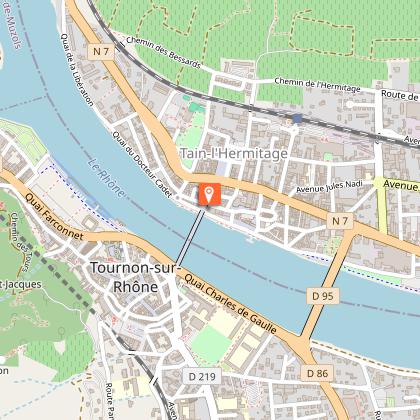
The construction of this chapel lasted from 1673 to 1720. The plans were designed by the architect Martellange from Lyon. The facade is "Jesuit classic" style (classic). It is made of sandstone, which gives it its color. The work took a long time because it was often stopped. The workers , due to religion wars, were usually commandeered to fortify the ramparts. 1673- The first stone was settled. 1707 - Installation of the choir balustrade, altar steps and flagstones 1713: Construction of the bell tower. She is opened for the service because she is almost done. 1714- Capassin's paintings ( Jean Capassin, a pinter from Florence at the 16 century, was hired by the cardinal François de Tournon when he was in diplomatic missions in Roma for François 1er and Henri II) and the tapestry ( Aubuson and Flandres) are inside the chapel, which saved them from the fire of the College. 1720- The ashes of the Cardinal François II de Tournon are put behind the altar. The facade is in the classical Jesuit style, built in molasse, which gives it its colour. It is very elegant with its Doric columns at the base and composite at the top. The interior, with a total length of 26 metres, is in the Renaissance style. The great nave is flanked by chapels and the whole is decorated in trompe l'oeil, which means that this style is sometimes confused with 18th century Baroque. side galleries run above the chapels. The acoustics are remarkable, enhancing the sound of the classical organ installed in the 18th century.

Place Stéphane Mallarmé 07300 Tournon-sur-Rhône
Show
High school Gabriel Faure
758 m

High school Gabriel Faure

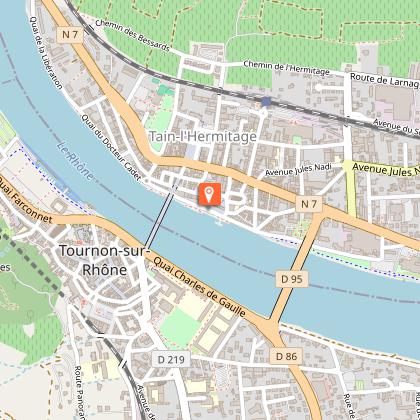
Teaching place since the Renaissance: the "collège" was founded in 1536 by the Cardinal of Tournon, high-school since 1548. Called Gabiel Faure becauce of a local literay man. Including a tapestries galery, a rich historical library and some paintings. Cardinal François de Tournon founded the college in his town in 1536. it was not until 1548 that the first stone of the building was laid; the Collège de Tournon took just six years to complete. In 1552, the institution became a University of Philopsophy and the Seven Liberal Arts. In 1551, François de Tournon entrusted his college to the Society of Jesus, making it the first French Jesuit teaching establishment and a means of countering Protestantism through education in the Scriptures. The buildings of the Collège were transformed. In 1560, a chapel was added to the north and a fifth building to the east of the four main buildings and the bell tower dating from 1554. A medicinal herb garden completed the college's layout untill April 3rd 1714. This was the date of a terrible fire. Far from discouraging the Jesuits, they continued their renovations. A third floor was added to the main building. Construction of a new chapel ( begun in 1673) was completed. The new chapel was larger than the old one, providing a more dignified setting for the Cardinal's remains and the faithful. The Jesuits were expelled from the College in 1762 and replaced by an administration office. Tournon became a Royal Military School, which ensured its longevity. In 1776, the Royal Military School ofr Paris was reformed. Twelve establishments in the kingdom retained the priviledge of training soldiers. The new administrators were the Oratorians. As the existing boarding school was deemed too small to accomodate the students, new buildings were constructed and work was undertaken. The Revolution and the events that followed did little to change the life of the college, apart from the fact that there was no longer any need to mention it as a royal college and the Military School section was abolished at the start of the Academic year in 1793. In 1819, the school once again became a royal college, under the supervision of the Minister of the Interiror: attached to the university, it was first gibven the tittle of Collège Communal and then that of College Royal de troisième classe. The college became the Imperial Lycee and then the Lycée under the Restoration. The Construction of the Rhone dykes in the mid-19th century altered the buildings, as evidenced by the cureent two-storey Cour des classes, the ground floor of which is located under Route Nationale 86. A few years earlier, the Grand Corridor and the lare terrace known as the Infirmary had been built. At the end of the century, part of the lycee grounds were amputated, allowing the construction of the girls lycée, Collège Mare Curie since 1998. It was over 400 years ago that the Lycee de Garçon got its baptismal name: that of a man from Tournon who worked actively to protect, maintain and preserve it. In 1967, it became the Lycee Gabriel Faure. Over the course of the 20th century, the school underwent further transformations with the construction of buildings D ( science buildings), E ( classrooms and new boarding school) and the gymnasium. Since the early 2000s, the lycee had been undergoing restructuring. In addition to the buildings, work has also been carried out on the grounds. Notably, the thirty-three metre long disused swimming pool has been filled in. All that remains of the work carried out in the park since 1781 are a few plane trees, which are now listed as historic monuments, and an idea of the size of the area at the time.

Place Mallarmé BP 116 07300 Tournon-sur-Rhône
Show

Where to eat in CAMPING LE RHONE EX CAMPING DE TOURNON HPA

See more suggestions
Explore the best dining spots in CAMPING LE RHONE EX CAMPING DE TOURNON HPA.
See more suggestions
Where to sleep in CAMPING LE RHONE EX CAMPING DE TOURNON HPA

See more suggestions
Discover popular accommodations in CAMPING LE RHONE EX CAMPING DE TOURNON HPA.
See more suggestions
Caution!
We have no information on the difficulty of this circuit. You may encounter some surprises along the way. Before you go, please feel free to inquire more and take all necessary precautions. Have a good trip! 🌳🥾