Tours
Activities
Places of interest
Where to eat
Where to sleep

Unveil ALPES EVASION in Voglans: Adventure in Savoie

Are you the owner?
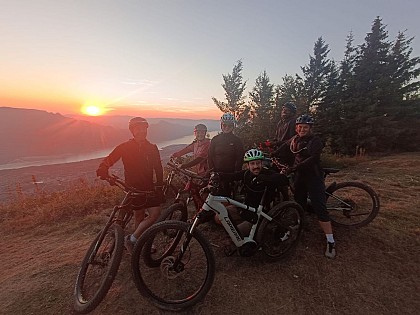
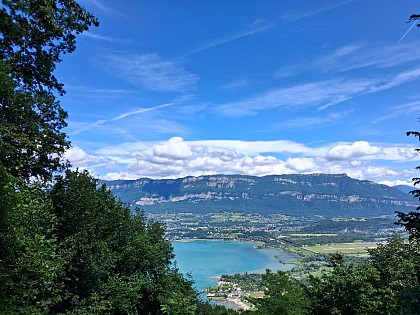
Welcome to ALPES EVASION, your gateway to unforgettable adventures in Voglans, Savoie. Nestled in the heart of the stunning Rhône-Alpes region, this site offers privileged access to a multitude of local activities and attractions. Start by exploring the magnificent Lac du Bourget, the largest natural lake in France, ideal for swimming, sailing, or relaxing by the water. For hiking enthusiasts, the...See more

Walking around ALPES EVASION

See more suggestions
Enjoy pleasant walks in ALPES EVASION.
See more suggestions
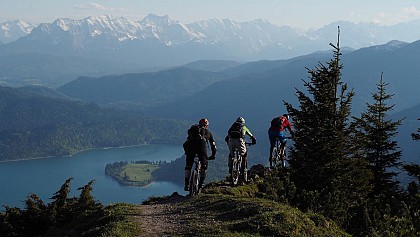
What to do in ALPES EVASION

See more suggestions
Organize your days in ALPES EVASION with bookable activities for the whole family.
See more suggestions

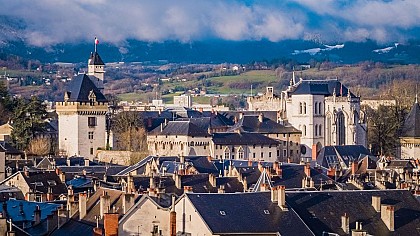
What to visit in ALPES EVASION

See more suggestions
Relax in the parks of ALPES EVASION.
See more suggestions
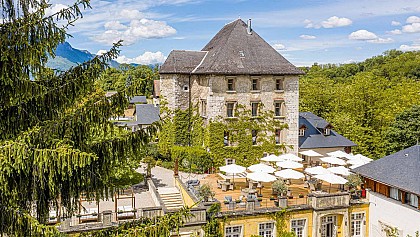
The Priory and its Formal French Garden
3.7 km

The Priory and its Formal French Garden

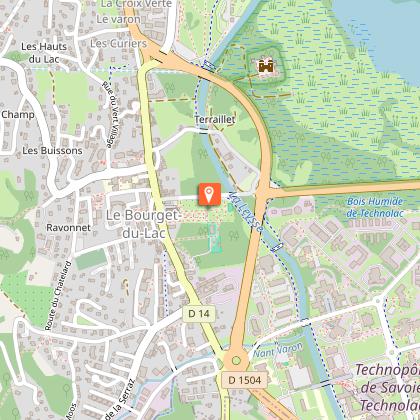
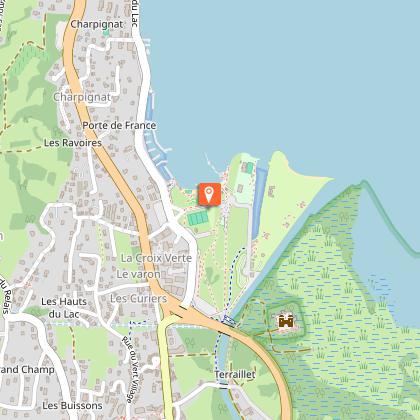
This Cluniac Priory founded in the 11th century consists of a Gothic church, a Romanesque crypt and monastic buildings and gardens arranged around a long avenue. Guided tours only. The Priory was built around the year 1030 following a prophetic dream by Odilon, the fifth abbot of the Great Abbey of Cluny. According to legend, Odilon stopped at Le Bourget-du-Lac because he had a high fever. One night, while delirious, he reportedly saw the Count of Savoy and Saint Maurice planting a cross. The saint then touched him, and the next day Odilon was cured. Interpreting this as a divine sign, he decided to build a priory dedicated to Saint Maurice to thank him. The rooms are arranged around the cloister, the heart of daily life. On one side are the domestic rooms—the kitchen, refectory, and pantry—and on the other, the spiritual rooms—the chapter house and chapel. Seven monks lived permanently at the priory. The refectory is the first room you enter. This is where the monks ate their meals. The room is spacious because the monks welcomed the needy and pilgrims. You can also admire two neo-Gothic sideboards. The adjoining room, the kitchen, features a beautiful 15th-century fireplace made of molasse, a local stone. At the center of this fireplace is the coat of arms of the de Luyrieux family, two of whose members served as priors and contributed to the priory’s splendor in the 15th century. The library is a feast for the eyes with its Cordoba leather ceiling. Converted into a library in the early 20th century by the Duchess of Choiseul, the function of this room during the monks’ time remains unknown. Perhaps it served as a scriptorium (a place where manuscripts were copied). The Saint Claude Chapel, located beneath the cloister gallery, appears deserted today. In the days when the monks occupied the priory, the altar faced away from the gardens and featured a 15th-century painting on wood. Via a small spiral staircase, the House of Savoy accessed a box reserved for them. This box has an opening that looks out onto the church’s choir. The House of Savoy lived at the priory until 1248, when Thomas II’s castle was built on the lakeshore. The next room is known as the chapter house. It was here that the monks gathered daily to discuss monastic life. In this room, you can admire a bronze sculpture depicting the Duchess of Choiseul. She purchased the priory around 1912 and lived there until 1939. The town purchased the buildings in 1952. Before her, an art lover from Chambéry, Mr. Barut, had had part of the premises designated as a “Historic Monument.” The Cluniac monks left the priory in 1582. Jesuits took their place until 1773, followed by the Franciscans of Chambéry until the French Revolution, when the priory was sold as national property. A notary, followed by farmers, occupied the premises until Jean Barut purchased it. The cloister, around which the rooms—and indeed monastic life—are arranged, has several distinctive features. First of all, it is incomplete, as only one side features a gallery. Apparently, it was never finished. The current gallery dates from the 15th century. It was commissioned by Oddon de Luyrieux, the prior, and built in the Gothic style. Another distinctive feature: the upper gallery is Romanesque in style, while the lower gallery is Gothic—yet in most buildings, the older parts are typically found at the base of the structure. The upper gallery was built in the 13th century and is part of the former cloister. From a path, you can admire the French-style gardens with their axial perspective. The French-style gardens were originally a vegetable garden and an orchard to provide for the monastery’s needs. In the early 20th century, the Duchess of Choiseul transformed them into a French-style ornamental garden featuring pruned yew trees and several rare species. Two sculptures by Jacques Coquillay catch your eye along the axis. The town of Bourget-du-Lac has joined the network of Cluniac sites, linking the priory to the Council of Europe’s major cultural route. It is currently the only one of its kind in Savoie.

route de Chambéry 73370 Le Bourget-du-Lac
Show
Jean-Jacques Rousseau statue
6.3 km

Jean-Jacques Rousseau statue

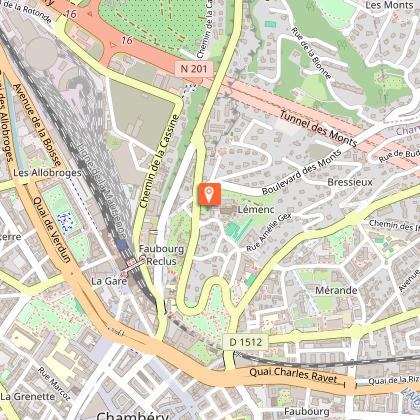
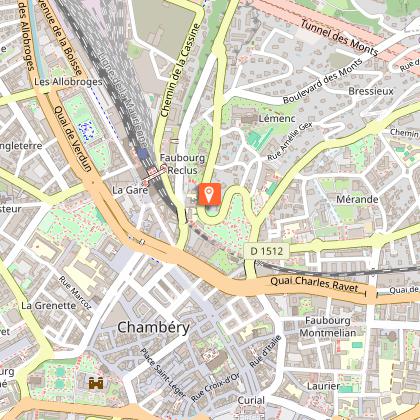
Statue de Jean-Jacques Rousseau, sculpted by Mars Valett in 1910. ‘It’s a shame that the Savoyards are not wealthy, or maybe it would be a shame if they were… for whatever they are, they are the best and most friendly people that I know. If there is a small town in the world where you can taste the sweetness of life in agreeable company, it’s surely Chambéry’. (Les Confessions, Book V). In 1728, at the age of 16, Rousseau decided to leave his home town of Geneva, and after a few days of wandering, he arrived in the Savoie. The priest of Confignon welcomed him and sent him to a ‘charitable good woman’ in Annecy. Madame de Warens received the young Jean-Jacques in her home, and despite her being 12 years his senior, Rousseau soon fell under her spell. Françoise-Louise de Warens was born in Vevey, in the Vaud region. Abandoned by her husband, she decided to convert to Catholicism, as, in the Savoie, it had a significant amount of wealth, during a period of intense power struggle against the Reform. The King of Sardinia, Victor-Amédée II, provided Madame de Warens with an annual pension to welcome Swiss Calvinists who had fled to the Savoie to join the Catholic church. Rousseau renounced Calvinism and was baptised in Turin within a few days, before returning to Madame de Warens’ house in Annecy. A few months later, at the beginning of autumn 1731, he found her again in Chambéry, where she had recently moved. ‘The house that she lives in is sombre and sad, and my room is the most sombre and saddest of them all. A view of a wall, a cul-de-sac for a road, no air, no space, crickets, rats, rotten boards – hardly conducive to pleasant lodgings. But I was with her, close to her…’ Madame de Warens found Rousseau (her future lover) a job at the ‘mensuration Générale de Savoie’, that is to say in the Sardinian land registry, in the Château. The adventurous spirit of the young man quickly tired of the routine and monotony of such a job, so he would find excuses to read and learn arithmetic, geometry and design. For the time being, he was uninterested in botany. However, since he was a child, music completely absorbed him - this passion would last his whole life. He would organise small concerts, with the help of artists and amateurs, and offered his services as a professor of music theory and singing for well-heeled young ladies, despite the misgivings of his protector. From 1735 or 1736, Madame de Warens and Jean-Jacques would spend the summer in the Charmettes estate.

Boulevard de Lémenc 73000 Chambéry
Show

Where to eat in ALPES EVASION

See more suggestions
Explore the best dining spots in ALPES EVASION.
See more suggestions
Where to sleep in ALPES EVASION

See more suggestions
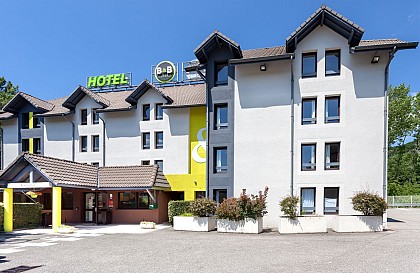
Stay near ALPES EVASION with our lodging options.
See more suggestions
Caution!
We have no information on the difficulty of this circuit. You may encounter some surprises along the way. Before you go, please feel free to inquire more and take all necessary precautions. Have a good trip! 🌳🥾