Alert

Alerts

To see around
See more
Open
Close
Show
Show
Show
Show
Show
Show
Show
Show
Show
Show
Show

Oups... It would appear that Cirkwi does not have permission to use your location.

Presentation
Description
Map
Points of interest
Ratings and reviews
See around

PTM 1 - LUCHON : FLÂNER, VISITER, DÉCOUVRIR… LE PATRIMOINE

VILLA_PYRENE_7©A.Spani
SityTrail - 4440080 - Luchon - visiter, flâner, découvrir… - Carte seule A4 Portrait

Description

Fancy a walk that combines history, culture and nature? Follow us through the streets of Luchon, the "Queen of the Pyrenees", for around fifty surprising discoveries. You will be captivated by the elegance of the built heritage: villas steeped in history, Belle Époque palaces that have hosted illustrious personalities, and buildings emblematic of tourist life (Thermal Baths, Casino, etc.). You will come across magnificent statues, guardians of memory. And nature will not be outdone: let yourself be charmed by the majesty of century-old trees, the tranquillity of parks and gardens, and the beauty of lakes and fountains that punctuate this unforgettable walk.

Technical Information

Walking
Difficulty
Very easy
Duration
1h30mn
Dist.
4.5 km
Show more

Altimetric profile

Starting point

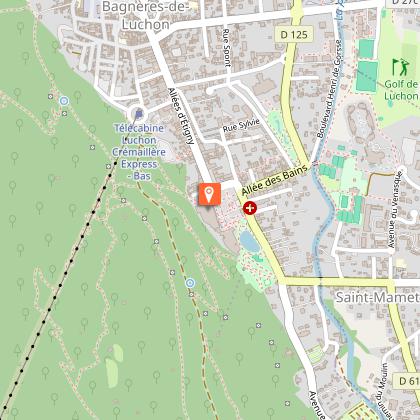
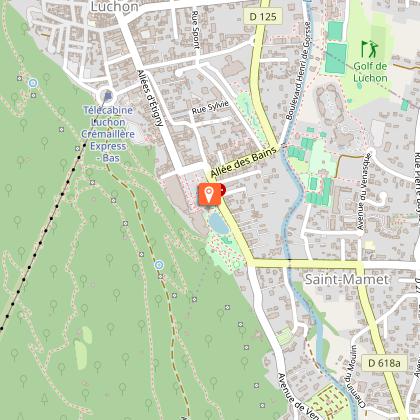
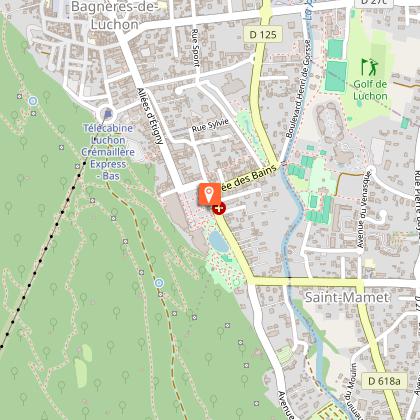
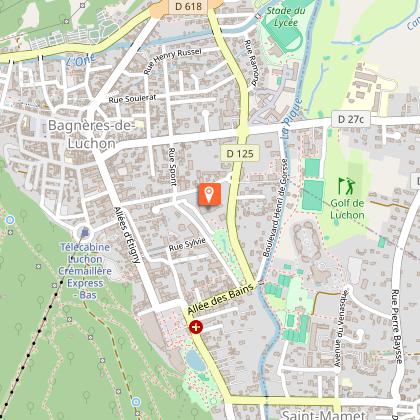
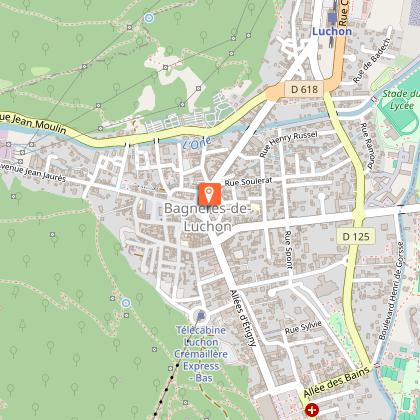
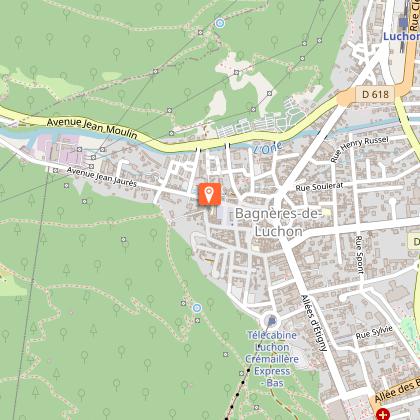
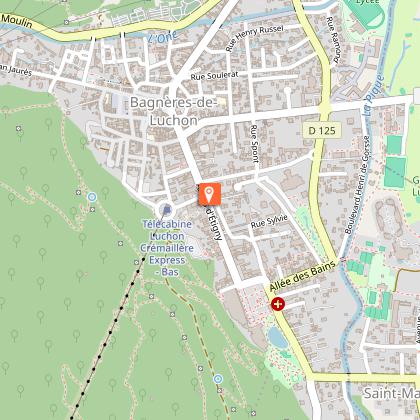
18 Allées d'Étigny , 31110   BAGNERES-DE-LUCHON
Lat : 42.7894038Lng : 0.59183725

Points of interest

image du object

LE CASINO ET SON ARCHITECTURE

Listed as a historic monument. Casino dating from 1878 and 1929. The entrance hall, staircase, elevation, gallery, park, auditorium and pavilion were listed in 1999.The Casino is emblematic of Luchon's Belle Epoque architecture. The Casino de Luchon was built in 1880 by the architect Raymond Castex, based on a design by Edmond Chambert. For its time, it was one of the most successful in France. In a classical style, the building consists of a main body, flanked by 2 wings in return, and a façade 100 metres long. Its eclectic Second Empire architecture is characterised by the polychromatic use of brick and stone. With the arrival of the railway in Luchon, it was now easy to have materials delivered from afar. It was a palace of pleasure, where no expense was spared in terms of space or proportions: the superb Napoleon III theatre, concert halls, restaurant, gaming rooms and lounges alternated in styles ranging from Moorish to modern. Until 1925, the Casino housed the Museum's collections in the lounges on the 2nd floor. Henri Martin modernised the façade in 1929 in the Art Deco style, using dynamite to replace the majestic stone staircase with a large glass gallery overlooking the terraces and gardens. A host of artists performed at the theatre: Sydney Bechet, La Belle Otero, Sacha Guitry, Charles Trenet, Stéphane Grappelli and, at the end of the 50s, it hosted the Golden Voices Tournament on several occasions. More recently it has been frequented by Michel Galabru, and the many artists who come every year to present their films at the Festival des Créations Télévisuelles de Luchon. The Casino is home to the Luchon village hall, which was completely renovated in 2006 and now bears the name of Henry Pac, a poet and writer who was an emblematic figure of Luchon. On the edge of the esplanade is the "Pavillon Normand", built for the Universal Exhibition in Paris in 1900 and then brought to Luchon at the request of Paul Bonnemaison, Mayor from 1894 to 1912. It is made up of half-timbered walls, false cement bricks and a flat tile roof supported by a colossal 20th-century framework, the work of journeymen carpenters. Around the park, at number 10 Boulevard Edmond Rostand, is the Villa Julia, built in 1880. It was here that Edmond Rostand spent the first 22 years of his life, writing the poems "Les Musardises". Its wooden balcony is said to have inspired the author of the famous balcony scene in Cyrano de Bergerac. It was for health reasons that Edmond Rostand left Luchon for Cambo in the Basque country. In a letter to his friend Henry de Gorsse, he wrote: "I will never return to Luchon because... I have been too happy there...". As you walk along the Boulevard de Gorsse along the banks of the Pique, you come across a succession of villas. First of all, the romantic villa Le Pigné, with its turrets, was home to Sacha Guitry and Yvonne Printemps when they came to Luchon to take the waters. Next, the Villa Santa-Maria (difficult to see from the street) is the former residence of Princess Narishkine, a Russian aristocrat and wife of Alexandre Dumas. Further on is the Villa Raphaël, where Clémenceau stayed in the 1900s. It was later occupied by Mata Hari and housed the Gestapo during the Second World War. On the right bank of the Pique, the Russian and Persian chalets, dating from 1860, were the residence of the princess's mother. This combination of 2 architectural styles, neo-classical and picturesque, is representative of the eclecticism fashionable in the last century. At the end of the boulevard is the Hospice Ramel (Villa Bertin), where Prince Napoleon stayed in 1867. This very Second Empire residence was also designed by Chambert. On the Place Lézat, the Hôtel Majestic, built in 1880, was for many years an annex of the Toulouse hospitals. In the middle of the roundabout stands the statue of François 1er and his sister Marguerite. It was created by Jean-Baptiste GUILLAUME in 1905. On the other side of the Parc du Casino, at the corner of Place Richelieu and Avenue Boularan, the 2 twin houses were Gustave Flaubert's place of residence when he came to Luchon. Along the boulevard Charles Tron, the Villa Luisa dates back to 1870. The princely family of Monaco stayed here, and Prince Rainier spent some of his childhood summers here, presiding over the flower festival in 1930. To the rear, the former stables have been converted into detached houses. You can recognise them by the horse's head overhanging the façade. A little further on, the Pyrénées Palace, designed in 1911 by Edouard Niermans, is a former hotel that has now been converted into flats. To enable hotel guests to get to the Casino in complete safety, an underground tunnel linked the 2 establishments.

Place de Richelieu 31110 BAGNERES-DE-LUCHON
- OFFICE DE TOURISME PYRENEES 31 -
Consulter
image du object

ÉGLISE NOTRE-DAME-DE-L'ASSOMPTION

Listed as a historic monument. Notre-Dame-de-l'Assomption church, dating from the 16th century but rebuilt between 1847 and 1857, paintings by Romain Cazes, listed in 2003 in its entirety.The church in Luchon, dedicated to Notre Dame de l'Assomption, was built during the Second Empire under the direction of the architect Loupot, and completed in 1857. Of varied architectural inspiration, the plan is in the Southern Gothic style, while the facades are in the Lombard-Romanesque style, in the spirit of the churches in the Luchon valleys. At the request of Mayor Charles Tron, the old 12th-century church was demolished in 1850 on the grounds that it had become too small to accommodate the crowds of spa visitors and tourists who flocked to Luchon. The new church has a capacity of around 600. However, vestiges of the old church still remain, the main one being the Gothic north side portal. A listed historic monument, this white Saint-Béat marble portal is decorated with scallop shells on the 2 side entablatures, a reminder that we are on the road to Santiago de Compostela. Gallo-Roman remains and a cemetery were discovered in 1977. A number of sarcophagi are on display at the foot of the church. On the north side of the church, a small square with the presbytery in the background retains a very village feel. The limestone of which the church is made has the particularity of being bluish, veined with white. The bell tower has 4 bells: the first, dating from 1596, has been listed since 1942, 2 other bells are from 1832, and the last was cast in 1923. Inside the church, the frescoes are the work of the painter Romain Cazes, a disciple of Ingres. Early in his career, Romain Cazes offered the parish priest of Montauban de Luchon 2 drawings imbued with a deep religious feeling. A few years later, while the painter was convalescing in Luchon, the abbot, who had not forgotten the talent of his young friend, asked him to decorate the church of Saint-Mamet, which was being rebuilt, with paintings and frescoes. In view of the quality of this work, Romain Cazes was then asked to create the frescoes for the church in Luchon, followed by those for the Thermes. After 4 years' work from 1852 to 1856, these frescoes formed 3 major compositions: the Coronation of Mary, the Litany of the Blessed Virgin and the Divine Liturgy. The architect Loupot's decoration project was to make this spa church a holy reference for the benefits of water. To illustrate the works of Cazes, the Luchonnais themselves were used as models. The monumental organ in the church is decorated with angel musicians and is said to have come from an English church.

Avenue Carnot 31110 BAGNERES-DE-LUCHON
- OFFICE DE TOURISME PYRENEES 31 -
Consulter

Additional information

Detailed stages

1 - Château Lassus Nestier - Built in 1772 in the Louis XIV style, this is the oldest building on the Allées d'Etigny. It currently houses the Tourist Office.
2 - The Charles Tron House - Set back from Square Lauret, it was built by Edmond Chambert in 1854.
3 - The "Crémaillère Express" cable car - It connects Luchon (627m) to Superbagnères (1800m) in less than 10 minutes. The first cable car operated from 1993 to 2023. The current cable car was inaugurated during the winter of 2023-2024.
4 - Representative buildings - Nos. 41 to 45, Nos. 47 and 53 are representative of the 19th-century neoclassical style.
5 - The Spont Chalets - Built in 1854, upon the return of Mr Spont and Miss Soulérat from their honeymoon in Switzerland. They reflect the style of their honeymoon destination.
6 - The Thermal Park - Developed in 150, it is home to all of Luchon's thermal activities.
7 - The Chambert Thermal Baths - Built in 1848 on the ruins of the Roman Baths.
8 - The Imperial Pavilion - Created in 1954 by Artigala, today the first floor houses the SPA (800 m²), which combines beauty treatments, relaxing rituals and a thermal area with a natural sauna, hammam, jacuzzis, sensory showers and a heated bench. Everything you need for an unforgettable moment of relaxation.
9 - The Thermal Baths - Two therapeutic treatments are available: respiratory and rheumatology. Built in 1969, it offers treatments for spa guests as well as the "Ressources & Vous" thermal leisure area with pools, including one outdoors, a jacuzzi, saunas, a trépidarium, a snow room, a gym and weight training room... and, above all, the Grotte Vaporarium, a natural hammam that is unique in Europe.
10 - The statue of the Baron d'Erigny - From 1889 by Crauk. In homage to the man who laid out the Allées (1762) of the same name, which connect the village with the thermal baths.
11 - The funicular railway station - Built in 1894, the funicular railway provided access to the Chaumière restaurant. It operated until 1964.
12 - The Petit Lait refreshment bar - Built in 1874. Ladies would come here to drink milk to soothe stomach upsets caused by excessive consumption of thermal waters.
13 - The bust of Marcel Spont - Two laces above the refreshment bar, the bust from 1906, created by Jean-Marie Mengue, who was a prominent Pyrenean figure depicted with the attributes of a mountain dweller.
14 - The Caraouet Fountain - Mentioned in Edmond Rostand's poetry collection Le Musardises. The author spent many summers of his youth in Luchon. It is marked by a plaque bearing a few verses: "It sings like a spinning wheel, the fountain of Carouet."
15 - The Column - Built in 1855 to honour the cross-border road between France and Spain. 16: The Statue of the Valley of the Lily - In the small basin in front of the Jen-Marie Mengue lake (1900).
16 - The Statue of the Valley of the Lily - In the small basin in front of the Jen-Marie Mengue lake (1900).
17 - The gigantic Cedar of Lebanon - Planted in 1867 during the visit of Napoleon III's son and Eugénie.
18 - The Bronze Bear - A statue that has been used by children for sliding down for generations. (Guyot 1950).
19 - The Spa House - Dating from 1855, it was built on the site of the former emollient baths, which were used for beauty treatments for ladies. The building is topped by a glass roof characteristic of the Belle Epoque. Inside, you can visit exhibitions, including a presentation of the thermal water circuit, conferences, and more.
20 - The Bandstand - Characteristic of the late 19th century style.
21 - The Villa Pyrene - Built in 1900, located at 13 Allée des Bains, it is distinctive with its large glass roof.
22 - The Statue of Edmond Rostand - At the end of Allée des Bains (Mayliard - 1971)
23 - Villa Edouard - Built in a romantic style with two turrets, it was constructed by Edmond Chambert in 1864. Sacha Gitry and Yvonne Printemps stayed there.
24 - The Russian and Persian Chalets - Symbols of European aristocratic holidays during the Belle Epoque (1860).
25 - Villa Raphaël - At No. 12, Clémenceau stayed here in the 1900s, then it was occupied by Mata Hari. It was also used as Gestapo headquarters during the Second World War. Built in 1900.
26 - The Villa Bertin - Built by Edmond Chambert in 1850. The Imperial Prince stayed there.
27 - The Majestic - Going up Boulevard Edmond Rostand, the hotel was built in 1800. Previously, it was a military hospital for many years.
28 - The statue of François I and his sister Marguerite
29 - Villa Julia - at 10 Boulevard Edmond Rostand. Covered in ivy, built in 1880. Edmond Rostand stayed here. The balcony inspired Cyrano de Bergerac.
30 - The Casino Park - At the entrance, two small symmetrical pavilions connected by an ornate gate are the last vestiges of the fence that once surrounded the park.
31 - 31: The Statue of the Kiss at the Spring - At the edge of the lake, near the grotto, is a work by Couteillas (1862) that was originally placed in the Elysée Gardens.
32 - The Pyrénées Palace - Built in 1913 on the same model as the Négresco in Nice, they also share the same architect, Edouard-Jean Niermans.
33 - The Norman Pavilion - Built for the Universal Exhibition in Paris (1900), it was then transported and rebuilt in Luchon.
34 - The Casino - Built in 1880 by architect Raymond Castex. It was transformed in 1923 in an Art Deco style by Henry Martin.
35 - The Boulodrome - Competitions are held here regularly.
36 - The Statue of Isis Unveiling Herself - by André Allar (1901).
37 - The Villa Luisa - On Boulevard Charles Tron, built in 1870. It was home to Prince Albert I of Monaco.
38 - The Villa de Flaubert - At the corner of Avenue Balaran and Rue Spont. The author stayed here in 1840 and 1872.
39 - The Post Office and Golf Club - On the corner of Avenue Boulara and Allées d'Etigny, this was a former post office in the mid-19th century.
40 - The Town Hall - Building bequeathed by Madame Colomic to the town of Luchon
51 - Castel d'Alti - at no. 21, dating from 1789
52 - The Pountet Fountain - Its name, "Pountet", means "little bridge" in Occitan. The fountain is located where a small stream once flowed down from the mountains, and a small bridge allowed people to cross it. The fountain was built in the 19th century.
53 - Statue of Jean-Marie Mengue - Located on the square of the same name, this statue was created by Gaston Petit (1954). Behind it is the house of Jean-Marie Mengue.
54 - Church of Our Lady of the Assumption - Opposite Place Joffre, the church was built by Loupot between 1847 and 1857 on the site of the former Mozzarade collegiate church, of which only the north porch remains.
55 - War Memorial - Bronze and marble by Jean-Marie Mengue (1921). It also symbolises the equal distance between the Mediterranean Sea and the Atlantic Ocean.
56 - Place Gabriel Rouy: Town Hall - The old Town Hall was built in the Middle Ages and rebuilt in 1935 after being destroyed by fire.
57 - Place Gabriel Rouy: Les Halles - Built in 1896, inspired by Baltard and the Musée d'Orsay, they were renovated in 2000 and are open every morning. On Wednesdays and Saturdays, there is an open-air market where you can find local producers.
58 - The Courtat district - This is the oldest district in Luchon (late 11th and early 12th century). Courtat means "small courtyard" in Occitan.

Elevation gain

10

Services at the starting point

Bus stop nearby
Car parking
Public toilets

Start and end town

BAGNERES-DE-LUCHON

Data producer

Contact : HAUTE-GARONNE TOURISME / OFFICE DE TOURISME PYRENEES 31

This information comes from the Haute-Garonne Departmental Tourism Network and is synchronized as part of the partnership between Cirkwi and Haute-Garonne Tourisme.

Data author

Ratings and reviews

To see around
See more
Open
Close
Show
Show
Show
Show
Show
Show
Show
Show
Show
Show
Show
Caution!
We have no information on the difficulty of this circuit. You may encounter some surprises along the way. Before you go, please feel free to inquire more and take all necessary precautions. Have a good trip! 🌳🥾