Alert

Alerts

To see around
See more
Open
Close
Show
Show
Show
Show
Show
Show
Show
Show
Show
Show
Show

Oups... It would appear that Cirkwi does not have permission to use your location.

Presentation
Description
Map
Points of interest
Ratings and reviews
See around

Walking in the footsteps of the history of the village of Saint-Marcel-Bel-Accueil

1 alert on this circuit

CRÉMIEU, CITÉ MÉDIÉVALE:

Alerte visiteurs

Difficulté de stationnement lors de grandes manifestations.

Walking in the footsteps of the history of the village of Saint-Marcel-Bel-Accueil_Saint-Marcel-Bel-Accueil

Description

Leaving from Saint-Marcel-Bel-Accueil, this loop takes you to the heights of the village for an immersive journey through nature and history.

After a straightforward climb, the walk alternates between shaded and open areas, offering magnificent views of the local heritage and the Alps, which can be appreciated all the more from the orientation table set up along the way.

The last part of the walk takes you through the village and its traditional houses, whose golden hues add a touch of charm to this escapade.

Technical Information

Walking
Difficulty
Easy
Duration
3h10mn
Dist.
10 km
Show more

Altimetric profile

Starting point

151 montée des Perrières , 38080   Saint-Marcel-Bel-Accueil
Lat : 45.647638Lng : 5.237567

Points of interest

image du object

Saint-Marcel-Bel-Accueil

Bienvenue à Saint-Marcel-Bel-Accueil situé au sud-ouest des Balcons du Dauphiné, en nord Isère. L’église et ses vitraux classés à l’inventaire supplémentaire des Monuments Historiques sont, sans conteste, le fleuron de ce joli village.Le patrimoine de Saint-Marcel-Bel-Accueil – L’église Saint-Marcel et ses vitraux : l’actuelle église, construite en 1902, succède à deux autres édifices religieux témoignant de la continuité historique et spirituelle du village. Elle est embellie par vingt vitraux, classés à l’inventaire supplémentaire des monuments historiques en 1996. Quinze de ces vitraux portent la signature d’Antoine Bernard, maître verrier grenoblois, néanmoins on estime grâce à l’homogénéité de ces œuvres que toutes lui sont attribués. Ces pièces d’art illustrent divers cycles de la vie du Christ (dans le chœur), de la Vierge (dans le transept sud), de Saint Joseph (dans le transept nord) et des saints protecteurs (dans la nef). – La chapelle Saint-Pierre de Messenas se dresse fièrement sur un promontoire. Si elle était dans un état déplorable à la fin du XXème siècle, tout change en 1991 grâce à un projet un peu fou. En effet, le couple Coutif annonce à la commune leur volonté de marier leur fille dans cette chapelle qui était encore habitée par des ronces. Grâce à leur volonté, la chapelle retrouve sa beauté et son prestige après 9 mois de travail acharné. Aussi, deux ans plus tard, une association est créée pour continuer à travailler à la préservation et restauration de cet édifice. Elle sera à l’initiative de nombreuses manifestations culturelles qui permettront, grâce au fond récolté, de mettre en pratique ce projet. Grâce aux bénévoles, la chapelle a su perdurer et accueille toujours aujourd’hui diverses cérémonies. Les deux maison-fortes, toujours présentes dans le village de Saint-Marcel-Bel-Accueil, sont mentionnées pour la première fois par des titres du XIVe siècle : – La maison-forte de Bel Accueil (site privé) : c’est ancienne demeure de la famille Loras qui était très influente sur le territoire. Au XIXe siècle, le dernier des Loras meurt et l’édifice passe entre les mains de plusieurs propriétaires jusqu’au comte Nodier en 1897 qui initie plusieurs travaux de restauration qui donneront à la maison-forte son aspect actuel. La maison forte est dessinée en U autour d’une cour centrale. Elle est immergée au milieu d’un parc imaginé par le paysagiste Luizet en 1904. On y trouve notamment une chapelle du XVIIe siècle dédié à Saint-Antoine-le-Grand. – La maison forte de Loras (site privé) : situé à flanc de colline, nous avons peu d’informations sur cet édifice. Son élément le plus ancien est sa tour à l’angle nord-est.

- OFFICE DE TOURISME DES BALCONS DU DAUPHINE -
Consulter
image du object

Saint-Chef, the abbey city

The history of the village of Saint-Chef is directly linked to that of its Benedictine abbey, listed as an Historical Monument in 1840 for its Romanesque church among the oldest in Dauphine and chapel of the Angels, covered with 12th century frescoes.Saint-Chef's Abbey, through its influence for twelve centuries, has deeply marked the local landscape. The story begins in the hamlet of Arcisse at the beginning of the 6th century, where the young Theudère, a native of the hamlet, decided to leave everything to join the Lérins Abbey. Ordered in Arles, he returned 'home' to establish four monasteries, including that of Val Rupéen, probably on the site of the current church. Destroyed by barbarian raids, it was rebuilt in 890 by Benedictine monks from Champagne and experienced a remarkable boom. So much that, in the 11th century, the church was enlarged and highly decorated, in the 12th century, with Romanesque frescoes, illustrating Saint John's vision of the Heavenly Jerusalem, the eternal city. The abbey then extended its patronage to a dozen priories and a hundred parishes in the area. Becoming a noble chapter in 1536, the remaining twenty-eight canons decided to leave in 1774, to join the abbey of Saint-André-le-Bas in Vienne. Abandoned, then damaged during the French Revolution, the church was rescued from the ravages of time and men thanks to Prosper Mérimée who created the first inventory of Historical Monuments in 1840. From that point, the church was cleaned up by removing the four metres of earth that had slipped on its northern and eastern flanks, and the Romanesque frescoes were protected.

- OFFICE DE TOURISME DES BALCONS DU DAUPHINE -
Consulter
image du object

Les loges de Pérelle

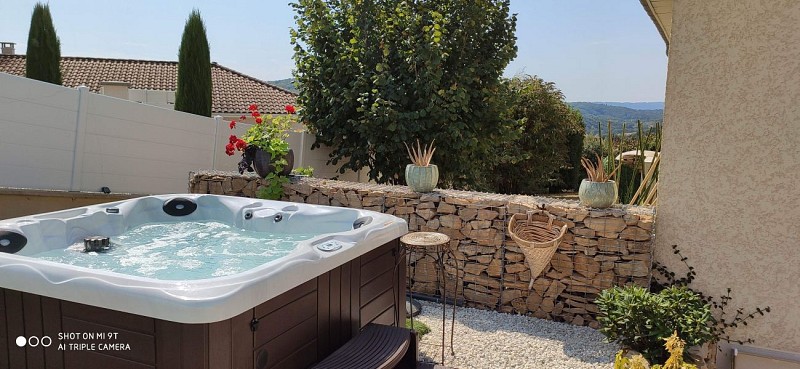
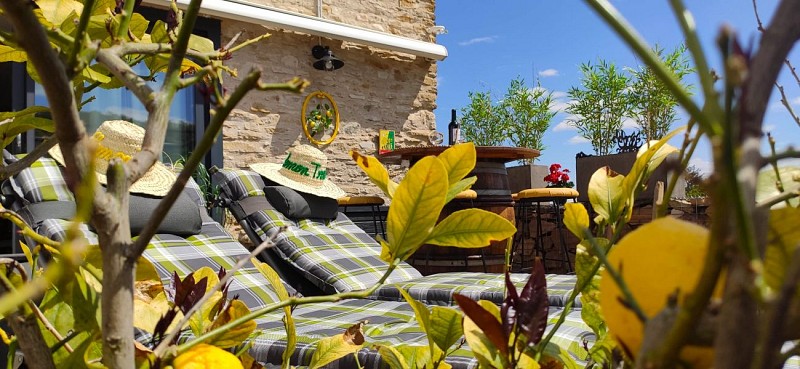
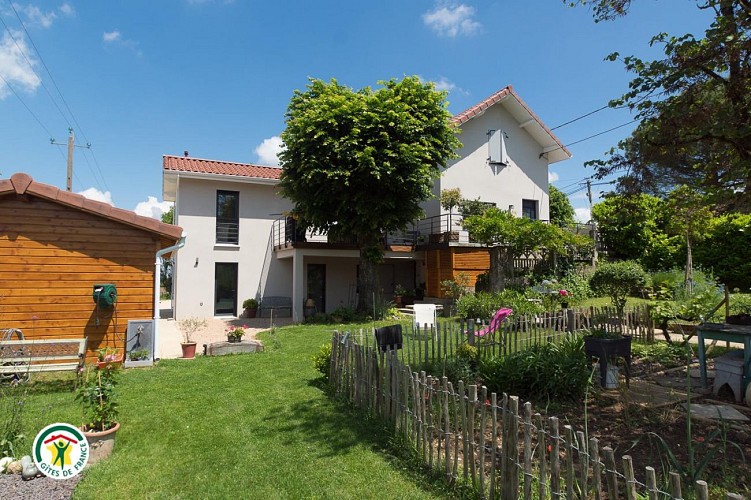
At the gateway to Crémieu, near the greenway of the Balcons du Dauphiné, Nicole welcomes you to two charming guest rooms, certified Accueil Vélo. Enjoy a beautiful garden and a covered terrace with views of the surrounding nature.Nicole welcomes you to Chozeau, a small country village located between Lyon, Chambéry and Grenoble. Her pretty house and garden are perfect for a short break, a business trip or a romantic weekend away. The guest rooms at Les Loges de Pérelle are all on one level, air-conditioned and have en suite shower and toilet facilities. Breakfast is served in the kitchen, which is also available to guests. This kitchen is fully equipped with coffee machine, kettle, fridge, microwave, hob, oven, etc. A magnificent flower garden invites you to take a stroll. You'll find plenty of books and games in the covered, shaded relaxation area. And to make the most of the outdoors, there's also a brazier corner. Lovers of discovery will not be disappointed, as the Balcons du Dauphiné, less than an hour from Lyon, Chambéry and Grenoble, boasts some remarkable attractions: a variety of outdoor activities, a rich cultural programme, emblematic sites and major cycling routes such as the ViaRhôna and the Voie Verte des Balcons du Dauphiné, which criss-cross the region. Just 5km away, discover the small medieval town of Crémieu, with its rich and authentic architectural heritage (ramparts and fortified gates, 15th-century covered market).

465 rue de Perelle 38460 Chozeau
- Apidae -
Consulter
image du object

Exposition photographique : nature et biodiversité à Saint Marcel Bel Accueil

Le terme "biodiversité" est souvent employé mais quelles sont les connaissances de chacun sur la biodiversité de St Marcel Bel Accueil ? Zoom sur l'ABC (atlas de la biodiversité communale) de la commune sous forme d'une exposition photographique enrichie.En 2022, la Communauté de Commune des Balcons du Dauphiné (CCBD) a initié un projet ambitieux d'inventaire de la biodiversité de sa faune, sa flore et des habitats naturels : l’Atlas de la Biodiversité Communale (ABC) qui a pour ambition de connaître, et faire connaître, préserver et valoriser la biodiversité sur notre territoire. Cet inventaire s'est achevé en 2024, et des cartographies descriptives de la biodiversité ont été produites . Ce projet entre maintenant dans une 2e phase dont un des objectifs est de porter à la connaissance des communes et du grand public toutes les données recueillies et les actions à mettre en œuvre pour une meilleure prise en compte de cette richesse que représente cette Biodiversité. La commune de St Marcel fait partie des 20 communes incluses dans le périmètre de cette étude. L’ ACAP a souhaité mettre à disposition des habitants de Saint Marcel et des communes alentour, les informations recueillies sous forme d'une exposition photographique, avec les données, et préconisations qui en résultent. En complément, plusieurs animations sont organisées dans la Maison du Patrimoine autour de cette exposition.

23 place du village 38080 Saint-Marcel-Bel-Accueil
- OFFICE DE TOURISME DES BALCONS DU DAUPHINE -
Consulter

Additional information

Open period

All year round daily.

Subject to favorable weather.

Updated by

Office du Tourisme Les Balcons du Dauphiné - 24/11/2025
www.balconsdudauphine-tourisme.com/
Report a problem

Environments

In the country
Panoramic view

Type of land

Stone
Ground
Grit
Not suitable for strollers

Topo guides and map references

Topo guides references :
A walking guide entitled "Walking in the footsteps of the history of the village of Saint-Marcel-Bel-Accueil" (FFR - Balcons du Dauphiné Collection) is on sale at the Tourist Information Offices in Crémieu, Morestel, Les Avenières-Veyrins-Thuellin and Saint-Chef.

Reception complements

Hiking boots recommended.

History, culture and heritage

The fortified house of Loras :
The Loras family, was one of the oldest and most illustrious lineages in the Dauphiné, present between the XIIᵉ and XIXᵉ centuries. Their stronghold house, consisting of three rectangular-plan main buildings, complete with a square tower and a circular tower, has retained its original structure. The circular tower has ornate loopholes, allowing it to be dated to around the XVᵉ or XVIᵉ century. Since most of this building has been altered over the centuries, it is difficult difficult to give a precise date of construction.

The stained glass windows in the church :
The church of Saint-Marcel-Bel-Accueil is home to stained glass windows that are listed as Historic Monuments, not only for the quality of their workmanship but also for their historical and religious interest.
They depict scenes from the life of the parish's patron saint, Saint-Marcel.
They are the only ones in the Balcons du Dauphiné to benefit from this type of protection. They are the work of the workshop of Grenoble master glass artist Antoine Bernard, who has worked extensively in Isère (notably in Grenoble and for the sanctuary at La Salette) and in other regions. He was also responsible for several stained glass windows in neighbouring churches, including those in Vertrieu, Corbelin, Optevoz and Saint-Romain-de-Jalionas.
A discovery trail featuring QR codes will enable you to discover these works in greater detail.

The tragic events of 26 July 1944 :
On the stone wall opposite the church, you will see a plaque commemorating the tragic events that took place on 26 July 1944.
In the late morning, the Wehrmacht burst into Saint-Marcel-Bel-Accueil, informed by an informer of the presence of a Maquis camp in the nearby woods. Around fifty local people suspected of helping them were taken hostage: men, women and children. Some were coldly shot or hanged.
Ten of the hostages were lined up against the wall by the Gestapo while a detachment searched the woods and houses in the village. The search was in vain: the maquisards had already fled. The Nazis stopped their investigations and it wasn't until they left, at around 7pm, that the villagers could finally breathe a sigh of relief. That day, the village escaped a massacre on a much larger scale.
A booklet detailing these events, written by René Marcaud, is available free of charge on request from the Town Hall secretariat.

Guidebook with maps/step-by-step

1- From the signpost "Saint-Marcel champ de foire", near the car park of the town hall, go towards Moréan along the cemetery.
At the cross, turn to the left, then to the right, and follow the road which rises and soon becomes a wide track leading to the post "Moréan".

2- First head towards "Gorge", then follow the signs for the Lavan cross. The track runs through a deciduous wood before reaching the hamlet of Loras.
Turn to the right and reach the post "Croix de Lavan".

3- Turn left, then right, following the signs for "Bois de Traversa" on a pleasant track through fields.

4- At the crossroads "Bois de Traversa", turn to the left towards "Sirens". Continue on a good track until you reach the first houses of a small hamlet.
Turn right. At the crossroads, go down to the left for about 100 m and don't miss the fork in the road on the left, which takes you on a path that makes a wide loop.
path that makes a wide loop. Reach the "Sirens" signpost.

5- From here, first on a dirt track, then on a tarmac road, head down towards Saint-Marcel-Bel-Accueil on the chemin du plâtre, then the montée de la cure.
Pass in front of the church and return to the town hall car park.

Animals

Yes. Pets allowed on lead only.

Data author

Ratings and reviews

To see around
See more
Open
Close
Show
Show
Show
Show
Show
Show
Show
Show
Show
Show
Show
Caution!
We have no information on the difficulty of this circuit. You may encounter some surprises along the way. Before you go, please feel free to inquire more and take all necessary precautions. Have a good trip! 🌳🥾