Alert
Alerts
Roche-Rousse
Description
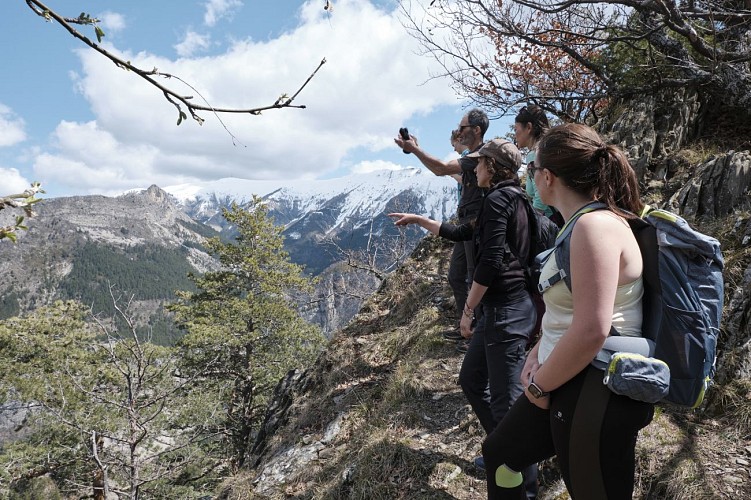
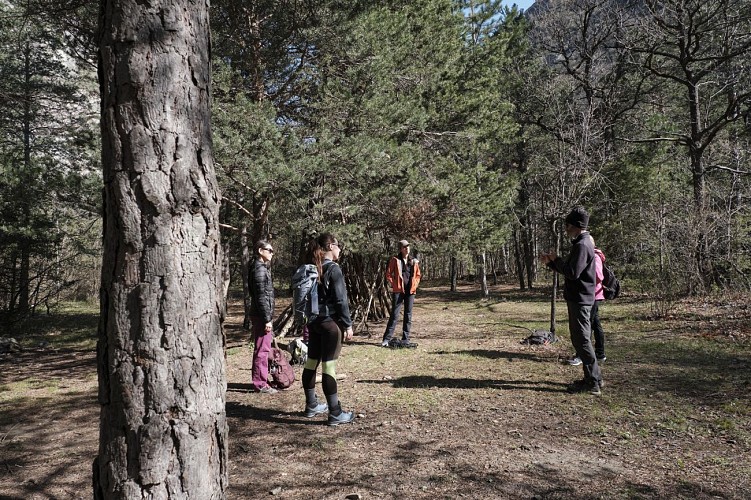
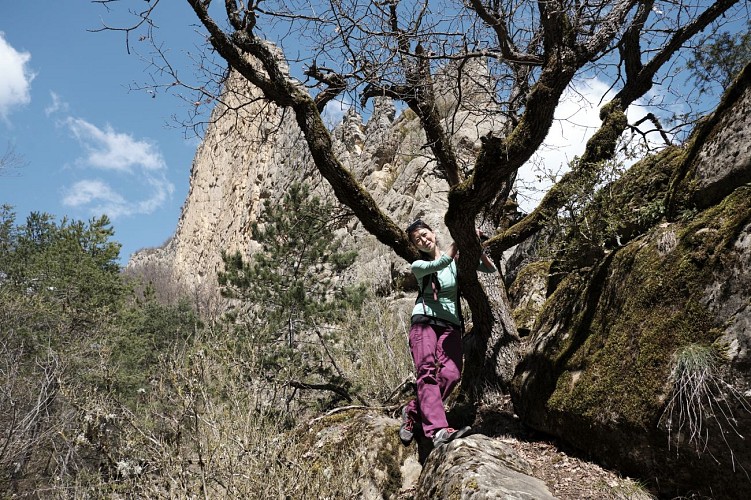
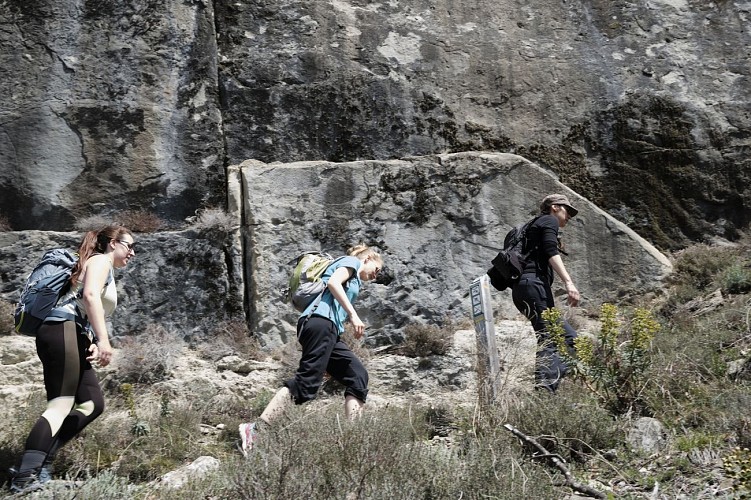
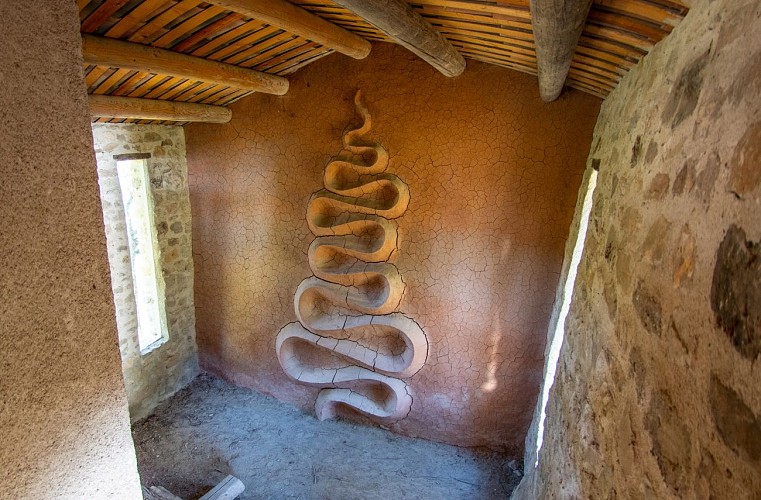
This beautiful loop in the heart of the Bès valley will allow you to discover the Facibelle blade, and several works by three artists from the L'Art en montagne collection of the Gassendi Museum: Paul Armand Gette, herman de vries* and Joan Fontcuberta.
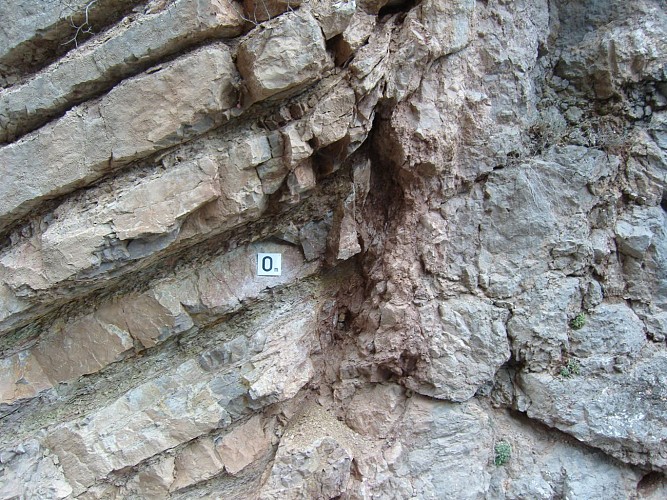
From the parking lot, the discovery begins with the two works of Paul Armand Gette: 0 m. (read zero meters). Zero meters is one of the signs used by botanists to indicate the beginning of an area to be observed. In Gette's work, it is a tool for designating certain specificities of the territory and acquires a new dimension, between openness and poetic interpretations.
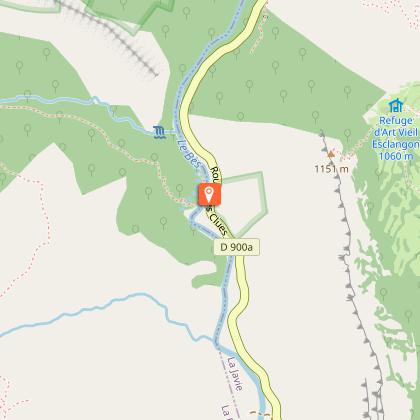
The first, 0 m., Au fond du lit de la rivière (Oligocène !) (2011) is visible opposite the parking lot, on the large rock block to the right of the path going up to Vieil Esclangon. "It takes a lot of attention to discover the small pebbles that have settled in the bed of this Oligocene river (about 28 million years)." Paul Armand Gette. The second will be visible by going up the road 250m higher, on rock strata on your right: 0 m., Les effets du contact (2011). Here the artist invites you to observe the contact between the Tertiary and Secondary layers, to imagine the nature of this contact, its strength or its delicacy…
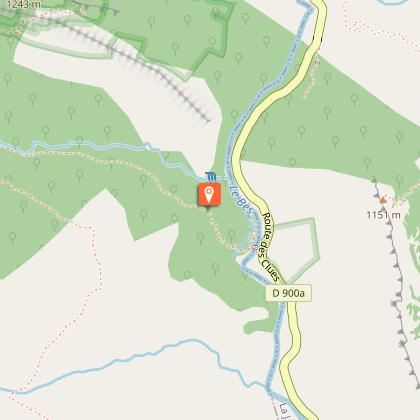
Still on the road, pass the Péouré tunnel: a first work by herman de vries*, parfait (Sanskrit) (2004-2006) is engraved in gold leaf in the rock, on the other side of the Bès. Then take the track on the left (4 mailboxes), until a bridge. The path then goes off to the left.
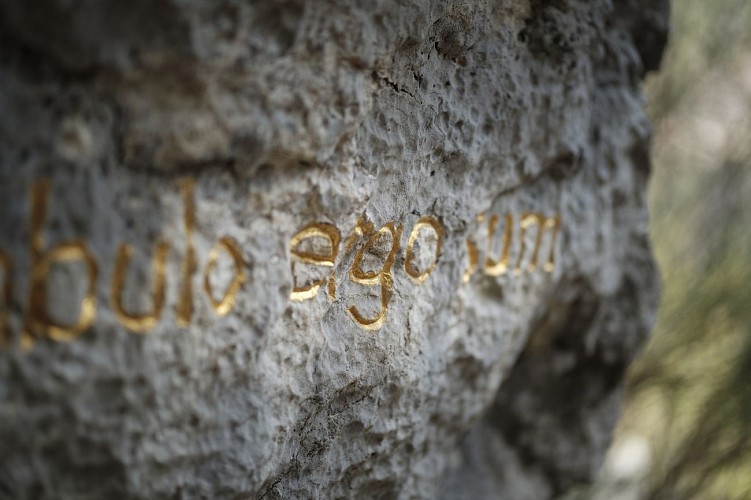
You will climb up to the crest and go back down on the other side. It is there, after several zigzags and 350m that you will find large rocks fallen from the cliff, on the edge of the path: ambulo ergo sum (1999-2001) by herman de vries* is on the one closest to the passage. herman de vries* is a naturalist by profession. His view of the world is strongly influenced by oriental philosophy. For him, nature is sufficient in itself and does not need to be embellished by art: "nature is art", he says, because it is perpetual creation.
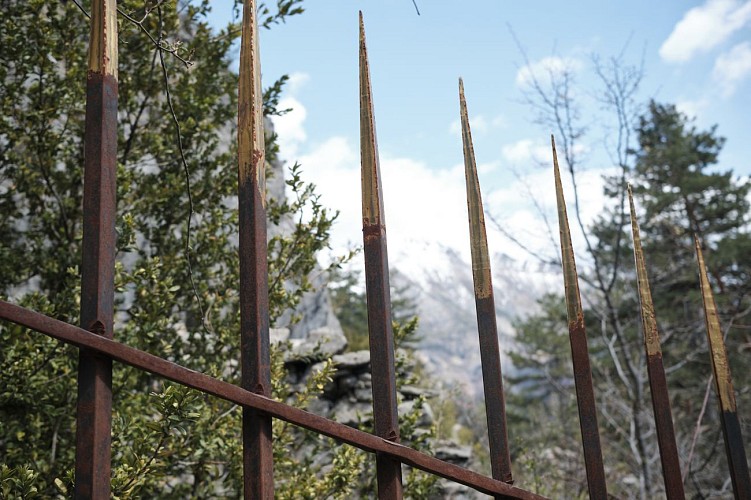
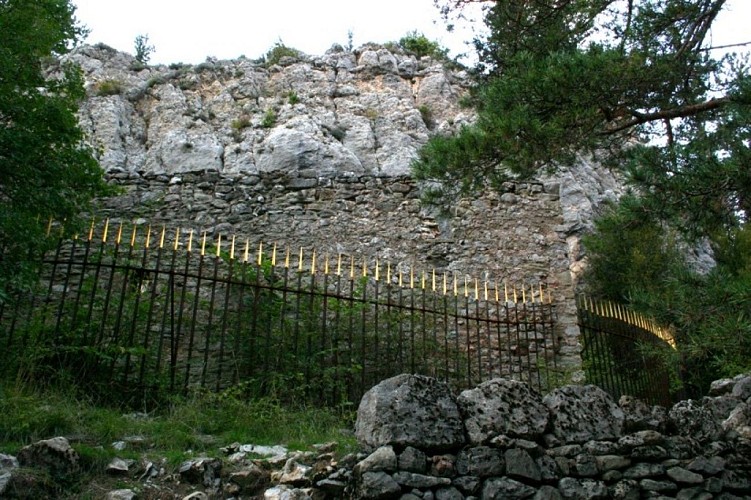
ambulo ergo sum (Latin, I walk therefore I am) invites the hiker to reflect on the link between the consciousness of existing and the activity of the body, here in this case that of walking. It also evokes the movement of mountains and stones in our Digne region so rich in geological history. From this work you will come across, here and there, the sanctuary of nature and its sacred wood, again by herman de vries* (1999-2003). Through these black spikes topped with a golden tip, the artist demarcates a space where despite the past presence of humans, nature has reclaimed its rights. He invites us to respect and observe this place and this nature.
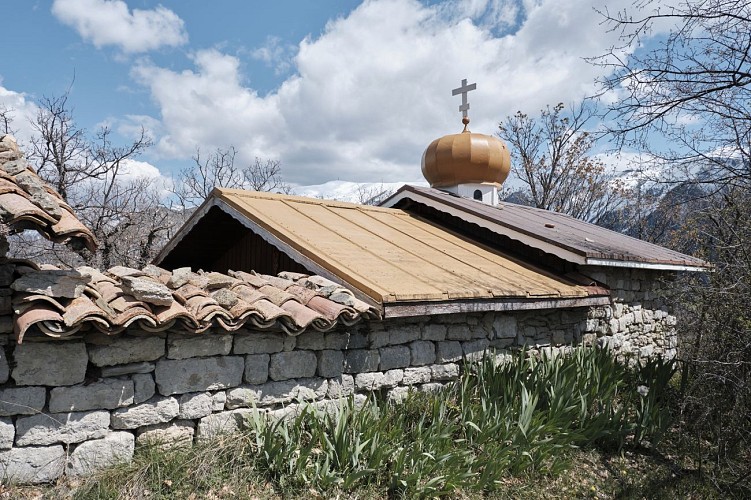
The path climbs gently into the forest, at the next crossroads you will discover another entrance to the sanctuary. The path passes to the left of the Chapelle Saint-Jean. A little before, a last entrance is on the left edge, put on your glasses, it is well hidden in the middle of the beech forest!
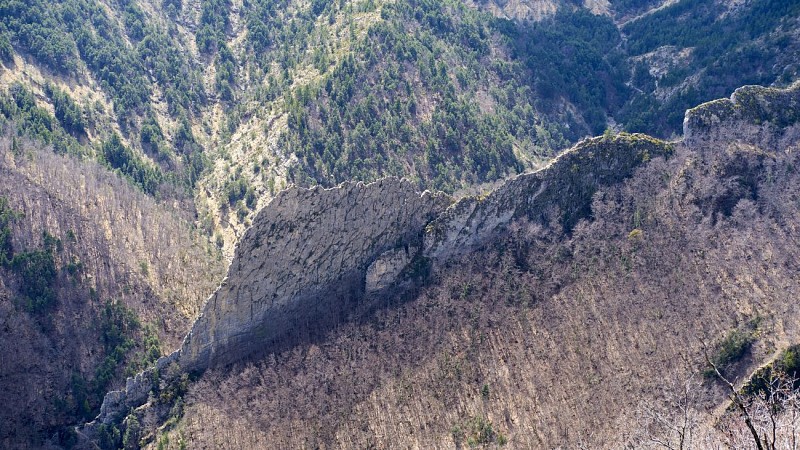
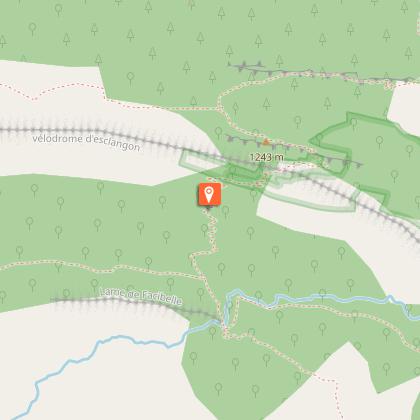
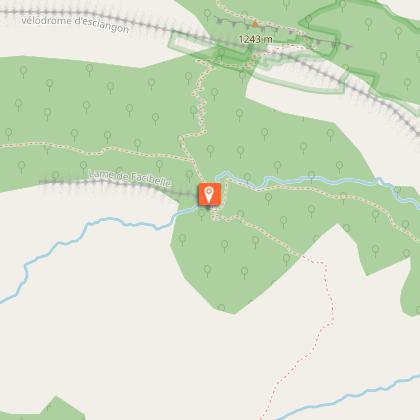
You will then go over the ridge and go back down on the sunny side to the Lame de Facibelle, a remarkable element of Digne's geology. Go back down to the Bès footbridge. But just before crossing it, you can discover the work of Joan Fontcuberta,La Sainte Famille des Hydropithèques (2011). You have to take the path along the Bès on the left. Make your way between the box trees to climb to the foot of the cliff, and there you will find this bas-relief which is part of a museographic device entirely devoted to falsification. With this project, La route des Hydropithèques, the artist questions science and the museum functioning as places of construction of knowledge and legitimation of values. Other mermaid fossils are thus visible throughout the territory and an installation is presented at the Gassendi museum.
After crossing the Bès, go back up the road for 300m. When the road widens, after the parking lot, a 0 m. marking La mer burdigalienne by Paul Armand Gette is visible on the rocky slope located to the right of the road. You are invited, why not, along the way up to the car park, to reflect on the ancient presence of this sea.
*we respect the artist's wish not to use capital letters, a form of hierarchy
Find the full description of the routes in the L'Art en montagne collection in the Topo guide "L'Art en montagne, 22 hikes to discover contemporary art in the Haute-Provence Geopark" (€15), available at the reception of the Gassendi museum, the Maison Alexandra David-Neel, and the Tourist Office.
Technical Information
Altimetric profile
Starting point
Steps
Points of interest
Additional information
Environments
In the country
Riverside
Mountain view
Waterside
Panoramic view
Updated by
Office de Tourisme Provence Alpes Digne les Bains - 24/11/2025
www.dignelesbains-tourisme.com
Report a problem
Contact
Phone : 04 92 36 62 62
