Alert
Alerts
Bergheim discovery tour
Description
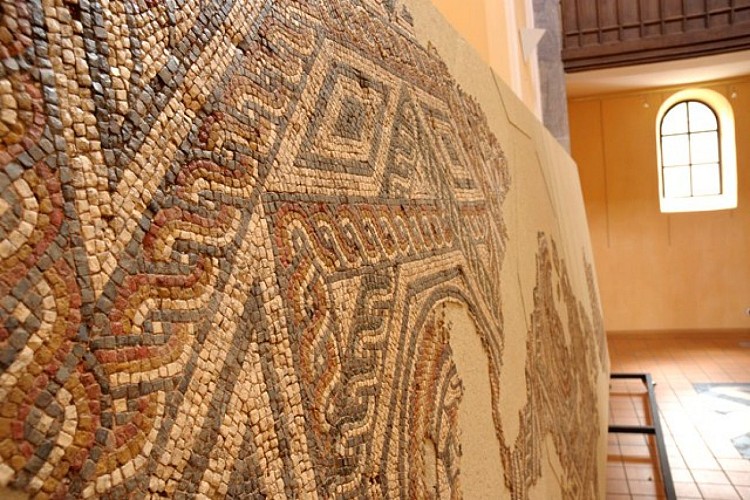
The first known name of Bergheim, "Veredum", dates back to the Roman occupation. This occupation is attested, among other things, by the discovery (in 1848 and 2006) of two remarkable mosaics, one on display at Colmar's Musée Unterlinden and the other at Bergheim's former Synagogue.
After Roman times, Bergheim changed lords many times: possession of the abbey of Moyenmoutier in Lorraine, then property of the Dukes of Lorraine who gave the town in fief to the Ribeaupierre house. In 1313, the Ribeaupierre family sold it to the Habsburgs, and in the 17th century, the town passed into the hands of the King of France (1648). Finally, in the 18th century and until the French Revolution. Bergheim once again became the property of the Ribeaupierre family.
Bergheim was not a free town, but the many privileges it was granted were comparable to those of free towns. Among the various privileges were the right to mint coins, the right of jurisdiction and the right of asylum (1).
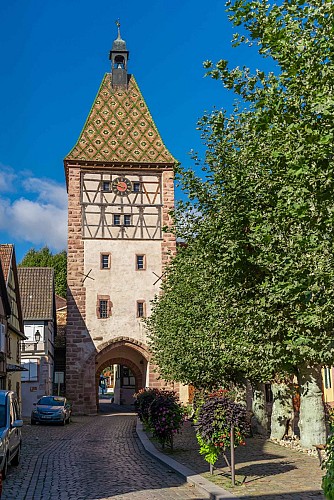
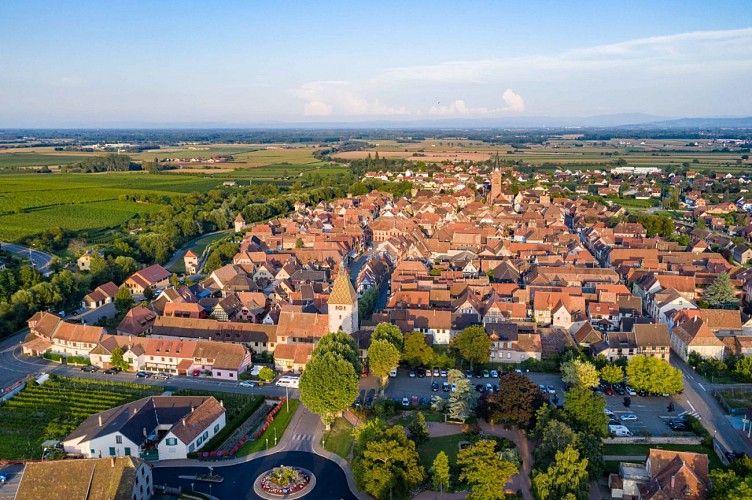
As well as being a charming medieval town, protected by medieval towers and ramparts, Bergheim is a wine-growing town. The first known mention of vines in Bergheim appears in a Carolingian charter dated July 25, 768. Since 1983, Bergheim has been home to two Grands Crus:
the Kanzlerberg and the Altenberg, where Gewurztraminer is particularly successful, of which Bergheim has become the capital.
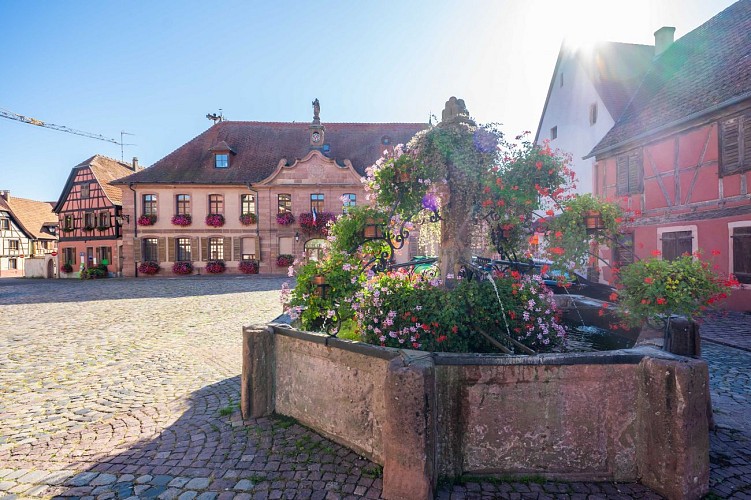
Almost rectangular in plan, Bergheim is crossed longitudinally by the Grand'rue. The center is occupied by a large triangular square where the town hall and a fountain dating from 1721 are located. The town's main features are the town hall and a fountain dating from 1721.
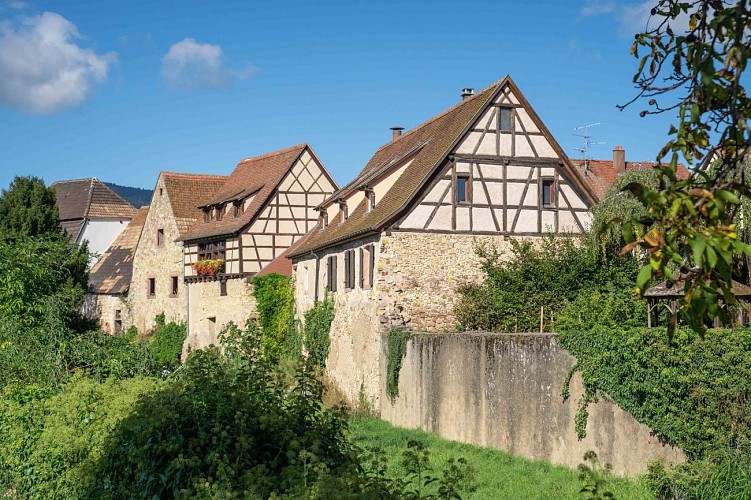
Winegrowers' houses are tightly packed inside the town's fortifications. The oldest, built of masonry and half-timbering, date back to the 15th century and have gables facing the street. Winegrowers' houses are closely attached to the town's fortifications.
Technical Information
Altimetric profile
Starting point
Additional information
Contact
Tel : 03 89 73 23 23
Email : info@ribeauville-riquewihr.com
