Alert

Alerts

To see around
See more
Open
Close
Show
Show
Show
Show
Show
Show
Show
Show
Show
Show
Show

Oups... It would appear that Cirkwi does not have permission to use your location.

Presentation
Description
Map
Points of interest
Ratings and reviews
See around

Walking rally for children and their parents: discovering the architectural heritage of a district of Spa
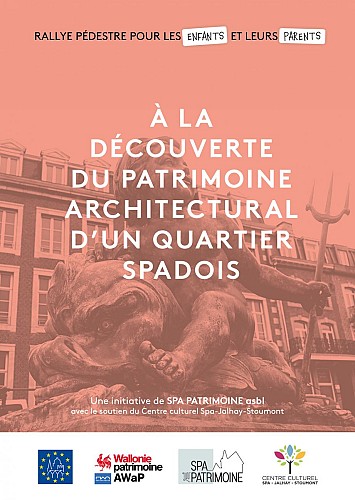
BrochuresDecouverte cover

Description

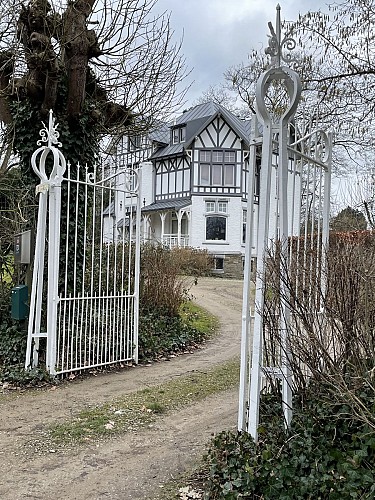
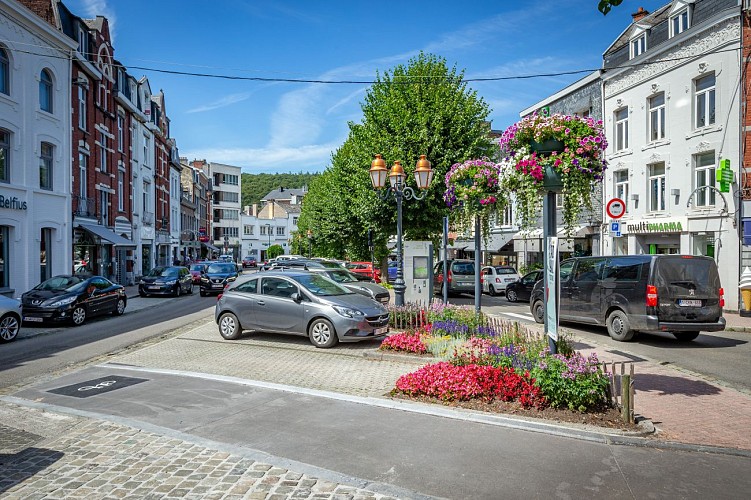
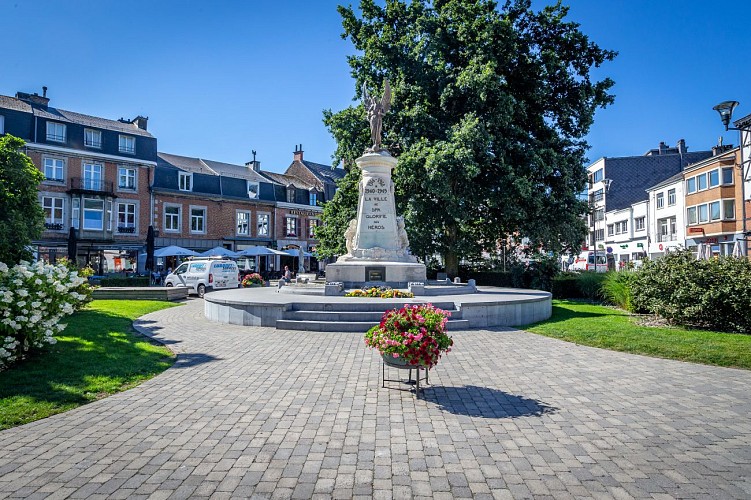
This free trail allows children accompanied by their parents to have fun discovering some of Spa's characteristic architectural heritage by answering questions about buildings of heritage value that they come across in the southern district and in a district of the city centre. For older children and their parents, additional information is provided as they explore the site. You'll find it in the boxes.

We invite you to discover this part of our spa town, the original spa town that gave its name "SPA" to spa towns all over the world, and which has been on UNESCO's World Heritage List since July 2021 alongside ten other European spa towns.

WARNING

Be careful when crossing the streets. This activity is carried out under your own responsibility. SPA PATRIMOINE ASBL cannot be held responsible for any accidents that may occur during this activity. We hope you enjoy this activity.

Learn to look, in town or in the country. Old facades can tell stories and tell about their lives. You don't need to be an architect or a historian. Just take the time to look at them and read them. To look, in other words, to take the time to go beyond a simple passive vision of the object and the information it contains, to go and meet the monuments. Taking the time to look up, to notice, to discover, to wonder. Learning to look at the colour of materials, the shape of windows and roofs, spotting details and unusual features. Deciphering and noting the use of materials, spotting scars, seams, extensions and heightening. Understand that the building has lived, that it has undergone transformations, that it may have undergone the evolution of styles, that it has been brought up to date. 

Understand that one day, one of its inhabitants may have decided to lower the window sills to take better advantage of the natural light or, from his armchair, of the street scenes. Making a building speak, reading its façades. So many elements can say so much about one's life. Learning to look, going beyond a simple vague perception that trivialises the vision of architecture. Take the time to stop, to read a page of architecture of architecture, to understand it, to listen to it, like a history book.

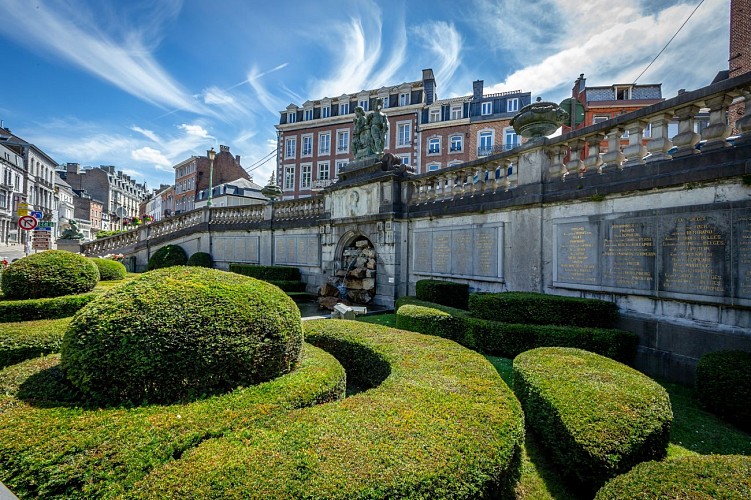
1. LA FONTAINE MONUMENTALE

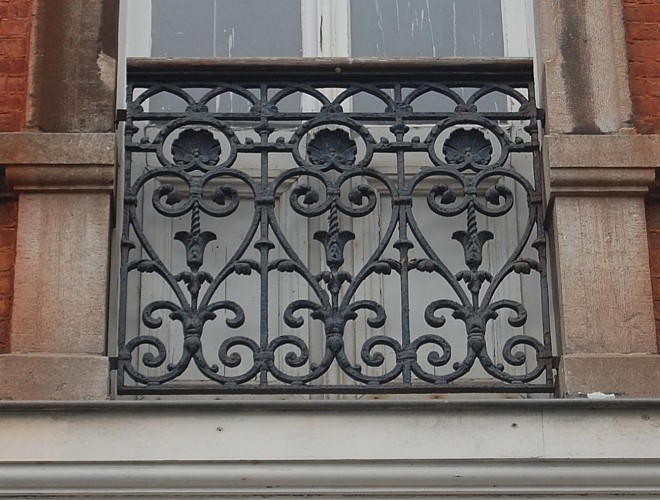
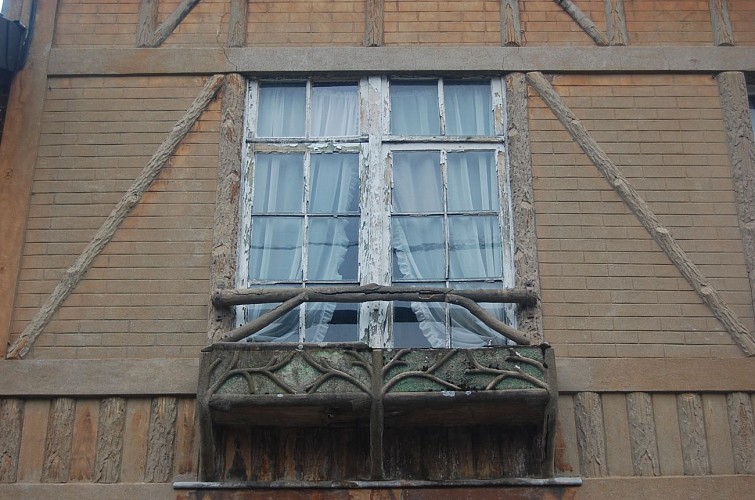
2. LES BALCONS

3. L’ÉGLISE ET LA PLACE ACHILLE SALÉE

4. RUE DU WAUX-HALL

5. LE WAUX-HALL

6. AVENUE ANTOINE POTTIER

7. AVENUE MARIE-THÉRÈSE

8. BOULEVARD RENER

9. PLACE DES ÉCOLES

10. PLACE VERTE 

11. PLACE DU MONUMENT

12. PLACE ROYALE 

13. RUE DELHASSE ET RUE DAGLY

14. POUHON PIERRE-LE-GRAND

The objective of SPA PATRIMOINE is to promote and safeguard the architectural, natural and cultural heritage of Spa, in particular by ensuring its promotion and understanding through the development of discovery activities, events and publications.

www.spapatrimoine.org

To find out more, visit

REGION WALLONNE - AWaP, Inventaire du Patrimoine Culturel Immobilier, 2017. 

www.wallonie.be/patrimoine/ipic

CURIEN Emeline et NELLES Norbert (sous la direction de), Guide architecture moderne et contemporaine 1868-2022- Verviers, Spa, Ostbelgien, cellule architecture de la fédération Wallonie-Bruxelles, 2022

MARCHAL Martine, A la découverte du patrimoine architectural spadois, in MAUGIS- La revue des Amis de l'Ardenne, Spa, Perle de l'Ardenne, n°72, June 2021.

Technical Information

Walking
Difficulty
Not specified
Dist.
2.6 km
Show more

Altimetric profile

Starting point

4900   Spa
Lat : 50.49231Lng : 5.86721

Points of interest

image du object

Le Pouhon Pierre-le-Grand

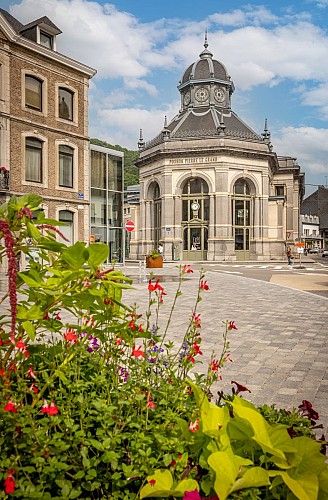
The Pouhon Pierre-Le-Grand spring, located right in the centre of the town, is housed in a remarkable building designed by Victor Besme and built in 1880.The word "Pouhon" comes from the Old French "puison", the place where water is drawn from.Le Pouhon has been named after Peter the Great, Tsar of Russia, since he was cured in 1717 when he came to Spa for a cure.The building is lit by large arched windows and a skylight at the top of the roof. Numerous decorative zinc elements adorn the roof.QUESTION 27. What shape does the building housing the spring have? Square? Rectangular? Hexagonal? Octagonal?ANSWER27. The plan of the building housing the spring is octagonal.This is the end of a tour of Spa, a spa town recognised as a UNESCO World Heritage Site along with 10 other European spa towns. Some of its features were discovered along the way: the old thermal baths, fountains, a casino, villas... all the atmosphere of a spa town. spa town. Just by looking. The aim of SPA PATRIMOINE is to promote and safeguard Spa's architectural, natural and cultural heritage, in particular by promoting and raising awareness of it through the development of discovery activities, events and publications.www.spapatrimoine.orgto find out more, visitREGION WALLONNE - AWaP, Inventaire du Patrimoine Culturel Immobilier, 2017. www.wallonie.be/patrimoine/ipiccurien Emeline et NELLES Norbert (sous la direction de), Guide architecture moderne et contemporaine 1868-2022- Verviers, Spa, Ostbelgien, cellule architecture de la fédération Wallonie-Bruxelles, 2022MARCHAL Martine, A la découverte du patrimoine architectural spadois, in MAUGIS- La revue des Amis de l'Ardenne, Spa, Perle de l'Ardenne, n°72, June 2021.

4900 Spa
- Spa Hautes-Fagnes Ardennes -
Consulter
image du object

The church and Place Achille Salée

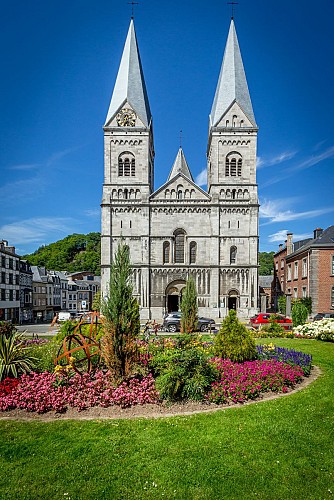
The parish church of Notre-Dame and Saint-Remacle is a vast stone building, built between 1883 and 1886.A church is almost always orientated, i.e. the chancel faces east. This is not the case here. The current building was built on the site of an earlier church, which was oriented. Question 5. This church was the setting for the funeral of Queen Marie-Henriette, whose portrait we have just seen above the monumental fountain. What year was this?As its name suggests, a bell tower is designed to hold bells. The sound of the bells is directed towards the pavement by means of sound shades, horizontal slats inserted obliquely into the bays (openings) of the bell tower. The bell tower is topped by a spire, a very high roof with sloping sides. Question 6: How many sides do the two spires of the bell towers have?Now look at all the facades of the houses in the square, on the right-hand side as you go up, and look for the smallest one as you head towards the rue du Waux-Hall.Question 7. What is the number of this smallest facade? How wide is it? Around 2.75 metres, 2.50 metres or less than 1.80 metres?This church, built in limestone to the designs of Beloeil architect Eugène Carpentier, is in the neo-Mosan-Rhenish style. Inside, the neo-Romanesque furnishings were designed by C. Sonneville and partly created by Antwerp sculptor Pierre Peeters in the late 19th century.The square's smallest façade has a single bay, i.e. a single vertical slice of superimposed openings. The level, or storey, corresponds to a horizontal slice of aligned openings.The building shown in the attachment has 2 levels and 3 bays.ANSWERS5. Queen Marie-Henriette's funeral took place on 22 September 1902.6. The 2 spires of the church have 2 X 8 sides = 16 sides.7. The smallest façade is number 19 and measures less than 1.80 metres.

4900 Spa
- Spa Hautes-Fagnes Ardennes -
Consulter
image du object

Rue du Waux-Hall

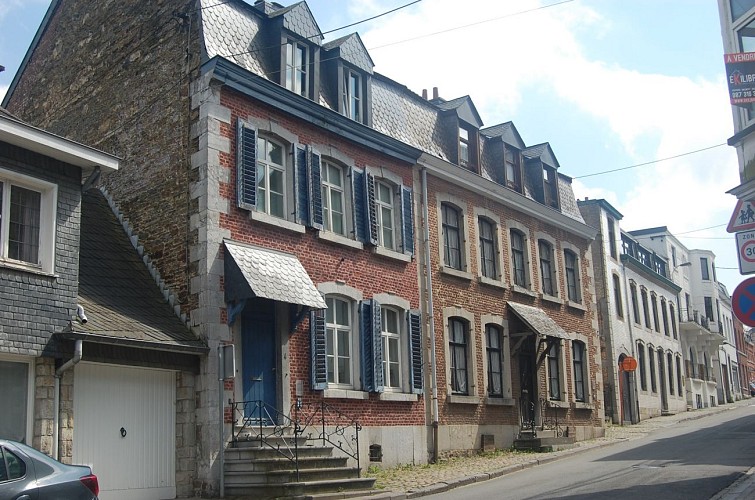
As you go up the rue du Waux-Hall, you pass two houses with listed facades (numbers 4 and 6). Each has a coat of arms to the right of the front door, giving this information door. This means that they are protected. They are protected because they are characteristic of the architecture of the middle and second half of the 18th century. The pavement alongside them, made of cobblestones, is also protected.Question 8. In number 4, which wooden elements are painted blue?The windows have louvres, i.e. shutters made up of inclined horizontal slats assembled in a frame. These slats are movable. A louver is a panel that pivots on one of its vertical edges. It is used to line the outside of a glazed frame. The shutter is a panel that pivots on one of its vertical edges. It is used to line the inside of a glazed frame.How can you recognise a building from the second half of the 18th century? By the shape of the openings and their lintels, which are almost always interrupted by a trapezoidal keystone. The most common types of lintel from the second half of the 18th century are shown in the attachment.Continuing along Rue du Waux-Hall, on the same pavement you will see a house from another era, number 12. Question 9: What is the name of the architect who built this house? This building dates from the 1930s. The façade is covered in decorative plaster painted white in an Art Deco style, as are the wrought-iron railings and the front door.Continue as far as the entrance to the Waux-Hall garden.ANSWER8. The elements painted blue are the entrance door, the window frames, the shutters and the cornice.9. The architect's name is Jean Montulet.

4900 Spa
- Spa Hautes-Fagnes Ardennes -
Consulter
image du object

Le Waux-Hall

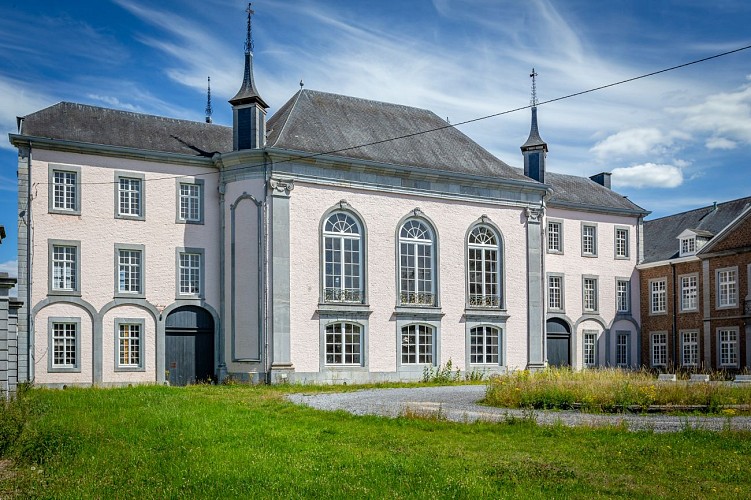
The Waux-Hall is a large brick building painted pale pink, preceded by a courtyard of honour bordered by a beautiful wrought-iron gate. The work of Liège architect Jacques-Barthélemy Renoz.It was built between 1769 and 1771 to house a casino and a large ballroom upstairs. This ballroom is lit by the large arched windows on the upper floor of the central building.The old brick buildings were always painted. Not just to embellish them, but above all to protect them. Bricks used to be fired by hand. They were therefore porous, permeable to rain. To make them more resistant to damp, they were painted or coated. In the second half of the 18th century, pastel shades were in fashion: off-white, beige, very pale yellow, light green (lime green) and pearl grey.Question 10: Which of these colours would you choose?The colour palette of buildings has evolved over the centuries. Generally speaking, until the early 18th century, the range of colours used to cover façades ranged from dark reddish-brown to orange-red, with local clays and lead oxides providing the colouring raw materials. Little by little, under the influence of fashion and classical and neo-classical trends, red was abandoned in favour of pastel shades, popular in the second half of the 18th century, and then white, a symbol of purity and cleanliness. In opposition to the general uniformity sometimes imposed by white a new aesthetic emerged in the 19th century: eclecticism. The combination of different materials and shades was given pride of place. This was followed by a trend towards stripping façades, which not only led to the disappearance of traces of old colours, but also caused sometimes irreversible damage to brick facings, whose protection was lost. The large arched windows, characteristic of the second half of the 18th century, light up the ballroom. This is a prestigious building, richly decorated. The keystone (the keystone in the middle of the arch) of each of these bays is sculpted. It bears alternating male and female mascarons (fantastical figures). To avoid falling out of the windows, each has a small wrought-iron balustrade, known as an armrest.Walk through the Waux-Hall garden along the left-hand side of the gate. Local residents have laid out a small herb and vegetable garden here and grown flowers. Then take the second street on the right, Avenue Antoine Pottier.ANSWER10. Response to choice among the pastel shades offered

4900 Spa
- Spa Hautes-Fagnes Ardennes -
Consulter
image du object

Place des Ecoles

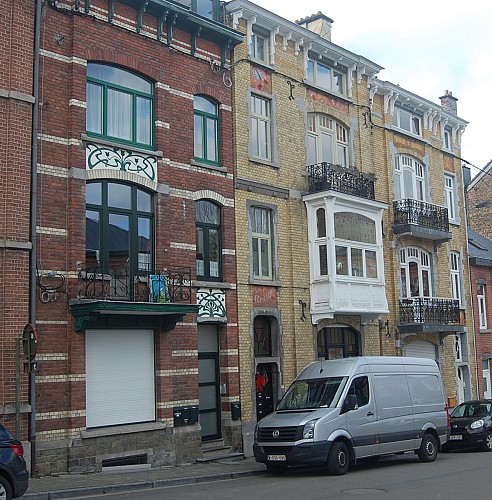
Question 16. Just around the corner from the Rue Lezaack and the Place des Écoles, if you look up, you will see two chimneys at number 22 with initials in wrought iron. What are these initials? On the square, cross at the first pedestrian crossing and turn round. Question 17 What animals are depicted in the stained glass windows in the loggia of the house at number 33, upstairs?Stained glass is a composition of pieces of coloured glass set in lead. With the revival of the decorative arts at the end of the 19th century, stained glass was often incorporated into facades. This is the case of several façades in this square inspired by the Art Nouveau style.Question 18. Which trees have been planted in the square? (The name of house number 31 will not help you find the answer).Question 19: In what year was the house at number 13 built?Go down to the bottom of the square and turn left into rue des Ecomines. Take a good look at the facades... and some of the details... Go down the street, turning right into rue des Chaffettes to reach Place Verte.A chaffette (from the Walloon word "tchafète") is a talkative woman. It is said that after services in the nearby Capucins chapel, women would often stop in this little street to chat.Turn right into Place VerteANSWERS16. The initials of the anchors are : A and M.17. At no. 33, the stained glass windows in the loggia depict butterflies.18. The trees in the square are maples.19. According to the inscription on the top floor, the building was built in 1911.

4900 Spa
- Spa Hautes-Fagnes Ardennes -
Consulter
image du object

Rue Delhasse et rue Dagly

In the past, a large number of hotels catered for the tourists who visited Spa. There are two major 18th century hotels in this street: the Hôtel de Bourbon and the Hôtel d'Irlande. They date from the second half of the 18th century and have been repainted pale yellow.Question 25. What number does the old Hôtel de Bourbon bear? In what year was it built?This three-storey, five-bay mansion is a double-barrel building, with two rows of rooms distributed by a central corridor. In the case of double-family homes, the façade is symmetrical and always has an odd number of bays. The central bay, which houses the entrance, is slightly overhang. It is bounded on either side by the full height of the pilasters with refrets (slightly projecting pillars with regular horizontal slits), as are the corners of the façade. Here too, an attractive balcony surmounts the entrance. Its wrought iron railing bears the name of the hotel.Question 26. There are other old hotels in rue Dagly. What are their names?Dormer windows illuminate the attics (interior spaces under the roof) of the two former hotels. The roofs of the two buildings are both covered in slate, but the shape of the roofs is different. Number 32 has a gable roof. Number 30 has a broken roof. It has two different slopes on the same side, separated by a ridge.The route ends at the end of the rue Dagly to join the Pouhon Pierrele-Grand, another of Spade's great springs.ANSWERS 25. At number 32, the former Hôtel de Bourbon was built in 1774.26. In Rue Dagly, you will also find the Hôtel de Suède and the Hôtel d'Autriche, two 18th century buildings.

4900 Spa
- Spa Hautes-Fagnes Ardennes -
Consulter

Additional information

Signalétique (EN)

No signage

Data author

Ratings and reviews

To see around
See more
Open
Close
Show
Show
Show
Show
Show
Show
Show
Show
Show
Show
Show
Caution!
We have no information on the difficulty of this circuit. You may encounter some surprises along the way. Before you go, please feel free to inquire more and take all necessary precautions. Have a good trip! 🌳🥾