Alert
Alerts
GR®223 - Sainte-Mère-Eglise - Fontenay-sur-Mer
Description
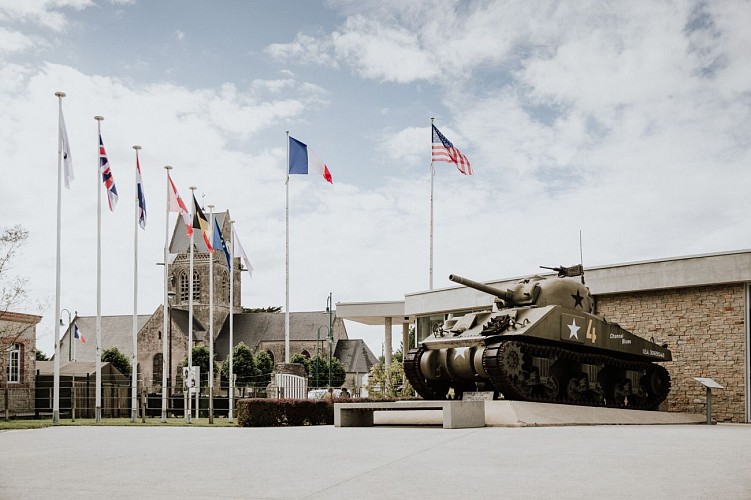
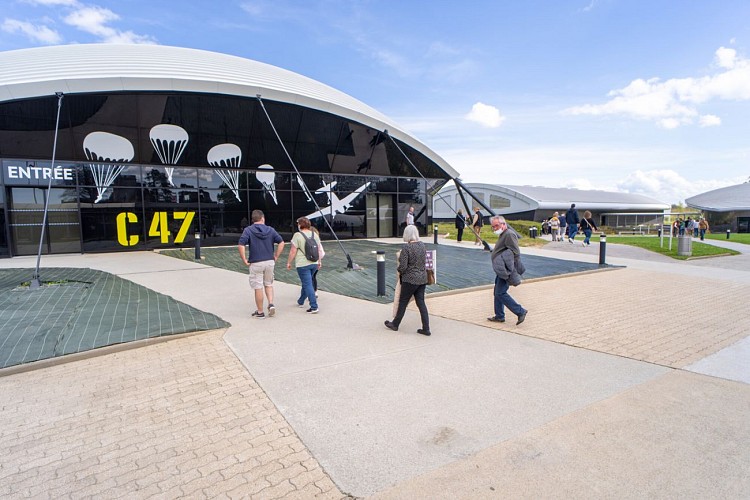
Before setting off on this 14 km stage, take the opportunity to explore Sainte-Mère-Église. During the night of 5 to 6 June 1944, 15 000 soldiers were dropped over the village and its surroundings. Carried by their parachutes, some of them got stuck in the trees: private John Steele was even left hanging from the church spire for two hours before being saved! The next morning, Sainte-Mère-Église became the first French town to be liberated by air. Right next to the church, the Airborne Museum presents the history of the parachute drops. Don’t miss a visit to the Sainte-Mère biscuit factory to stock up on treats before you start the 14 km hike to Fontenay-sur-Mer. In Sainte-Mère-Église you can also see the 0 marker of Liberation Road. From the Normandy beaches to Belgium, 1 200 markers commemorate the route taken by the Allies and the French army to liberate France.
As you leave the town, you need to take the Chasse du Monet. This path goes through Le Plain, a bocage region of the Cotentin Peninsula. It’s also the birthplace of Norman cattle and horse breeds; prize-winning trotters and saddle horses are born here.
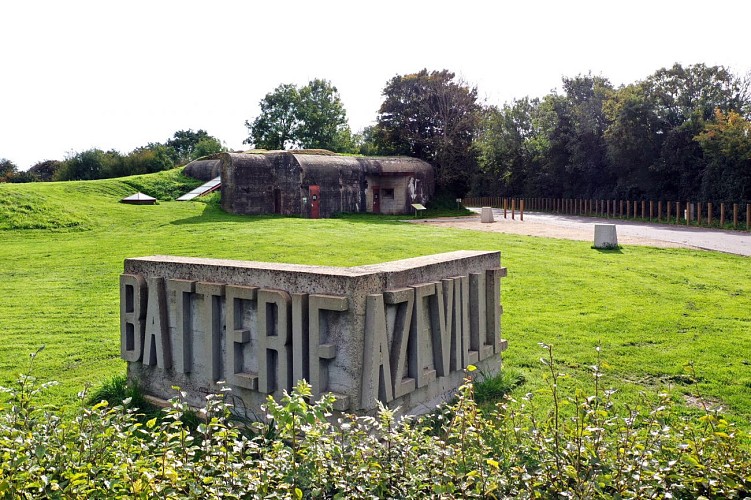
After Pont Percé, the path takes you to the small village of Azeville, famous for its German battery. Built in 1942, it marks the beginning of the German presence on the coast of La Manche.
Your hike continues along dirt tracks (also known as “Chasses”) to Saint-Marcouf, where you’ll find a restored 13th century church, a crypt and a fountain said to have miraculous waters. Out to sea are the islands of the same name, with a bird reserve on the Ile de Terre and a military fort that is currently being restored on the Ile du Large.
Leave the road behind and follow the path to the battery in Crisbecq. Go through Dangueville on your way to Fontenay-sur-Mer, your finish for the day.
Technical Information
Altimetric profile
Starting point
Additional information
Markup
Full route : Hiking - Red and white
Data author
