Alert
Alerts
GRP 4 Les belvèdères du Mont-Saint-Michel - de Carolles à Avranches
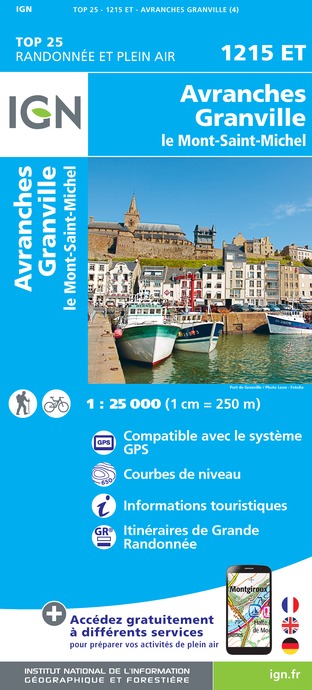
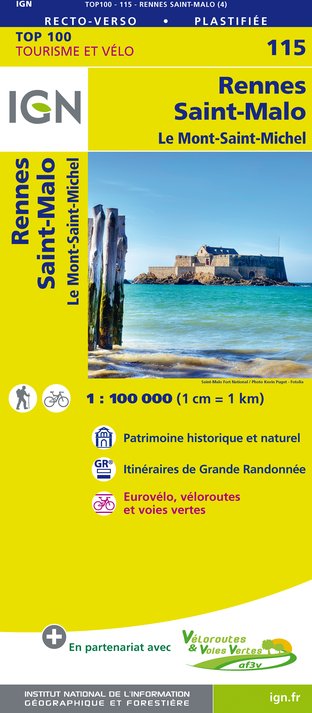
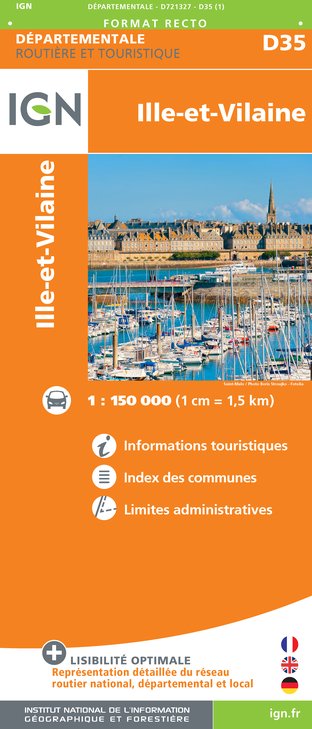
IGN cards




Description
Presentation:
Walk the second section by taking part of the GR223 and the GR22.
This section leads you to Avranches.
Remarkable points on the stroll
11- La falaise de Carolles : Placed between 2 Vauban huts, it offers incomparable panoramas and evokes many stories: legions of Caesar and soldiers of Hitler, Vikings and Chouans, St Scubilion and Vauban, Gargantua and Satan, gold diggers and builders of dykes, naval fights and shipwrecks, silence of the leprous monks of St-Clement and mischievousness of the fetishes of the caves...
12- The church of Saint Jean le Thomas : Be careful at the crossroads, the church of Saint-Jean-le-Thomas is on the left on the D24. Of Romanesque origin from the 12th, 14th and 16th centuries (IMH): traces of fern leaf apparatus, Gothic portal and bell tower; high altar and statues from the 18th century. Commune of Dragey-Ronthon.
13- The church of Saint-Medard Dragey: Built from the twelfth century, it has a stained glass window recalling the drowning of the son of the then owner of the manor Brion, Mr. Isselin with one of his friends. Its Saint-Médard tower was used as a landmark for fishermen, pilgrims or sailors who were in the bay.
14- Les chemins de la Baie et Découverte du Bec Andaine : This sandy point bordered by dunes is the starting point for pedestrian crossings of the bay towards Mont-Saint-Michel, guided mainly by two organisations: Les Chemins de la Baie and Découverte. The crossings take 1h30 and the same for the return.
15- The church of Notre-Dame and Sébastien de Genêts: The church of Notre-Dame and Sébastien, as well as its cemetery, are listed. The bells were also used to guide people lost in the bay in foggy weather. On the benches of the charming south porch, the affairs of the parish were once dealt with.
16- Islet of Tombelaine rock: Look out to sea on the right, you will see the wild islet of Tombelaine rock, which is home to many birds: little egrets, gulls etc. ... You are now on the GR223, which goes around the Cotentin, the coastal path.
17- Pointe du Mont Manet des Près Salés : The point of Mont Manet offers a panorama on the "Grand Port" and the "herbus" or "salt meadows" sheltering cows and sheep that feed on the vegetation loaded with iodine and salt. The flesh of these lambs is particularly appreciated by gourmets.
18- The Romanesque priory of Saint-Leonard: The Romanesque priory of Saint-Leonard dominates the town of Vains. It is made of schist and granite, noble material of the Avranchin for religious buildings. The territory was given by William the Conqueror to an abbey in Caen who founded this priory, around which the town was built.
19- The points of Grouin du Sud and Roche Torin: The points of Grouin du Sud and Roche Torin form ideal elevations to observe the rising tide. During the equinox tides, they are invaded by a crowd that comes to witness the impressive spectacle of the 'flood' invading the shore at the "speed of a galloping horse" and the amazing formation of the tidal bore.
20- The tithing barns of Saint Léonard : Look at the two 17th century tithing barns : one at the entrance of the village of Saint-Léonard, the other near the church of Vains has been restored. The Manor of Vains has an interesting architecture: the North side (XVIth century) was a fortified and defensive farm, the South side (from the XVIIIth century) became a gentleman's residence, when peace returned.
21- The Avranches Scriptorial Museum: The Scriptorial is the Mont-Saint-Michel manuscript museum which presents more than 200 medieval volumes and allows the discovery of the different phases of manuscript production, calligraphy and illumination. It deals with the content of ancient texts, then evokes the evolution towards printing. Its medieval architecture is interesting.
Technical Information
Altimetric profile
Starting point
Data author
