Alert

Alerts

To see around
See more
Open
Close
Show
Show
Show
Show
Show
Show
Show
Show
Show
Show
Show

Oups... It would appear that Cirkwi does not have permission to use your location.

Presentation
Description
Map
Points of interest
Ratings and reviews
See around

City walk "the 10 inescapable" in Verviers
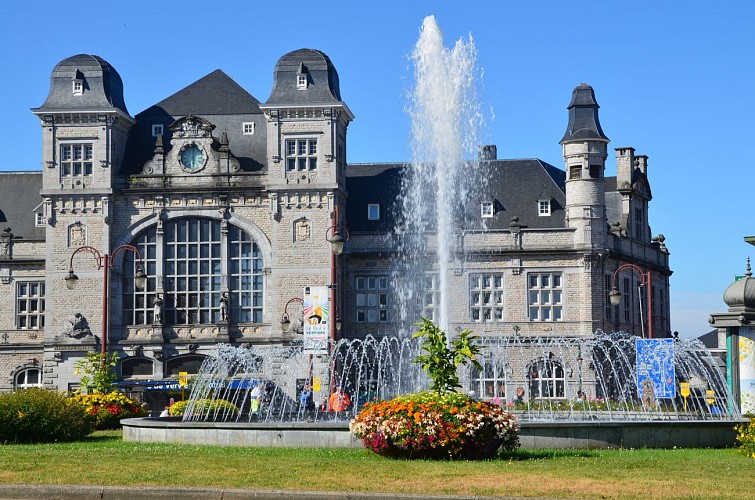
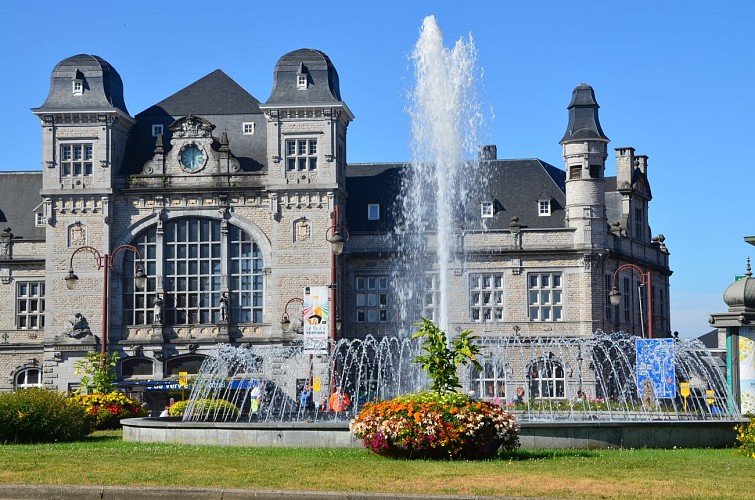
Gare de Verviers_©Ville de Verviers
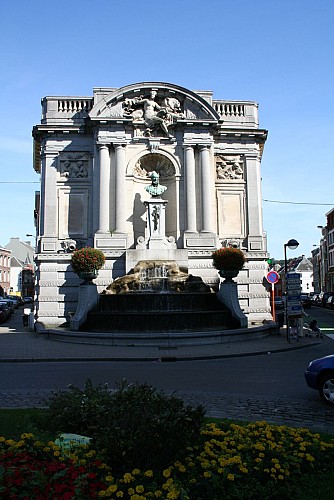
FontaineOrtmans_©MTPV (3)
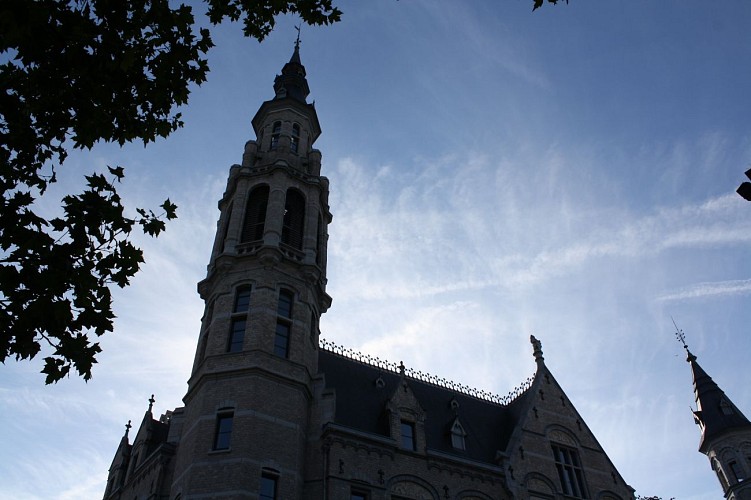
Grand-Poste de Verviers_©MTPV (3)
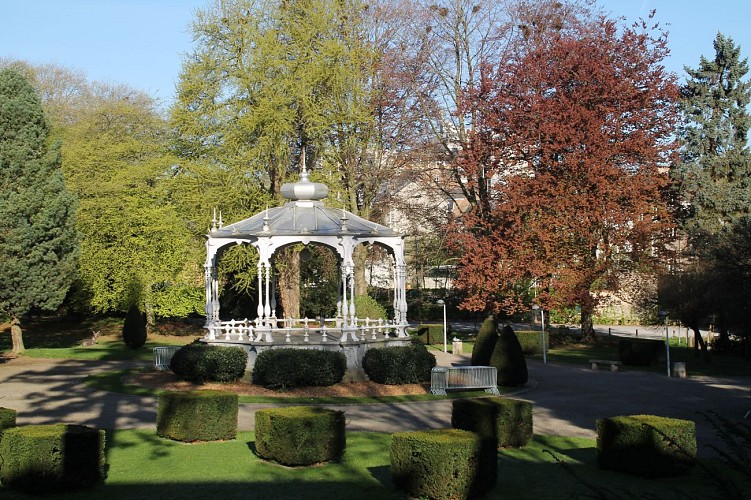
Harmonie_©MTPV (1)
Credit : Ville de Verviers

Description

Discover the 10 emblematic points of interest of Verviers in a 2-hour walk: the Town Hall, the Grand Theatre, the Saint-Remacle Church and more. A route set up by the students of the 6TQ Agent en Accueil et Tourisme of the Institut Sainte-Claire of Verviers. A remarkable work to follow! 

Download the PDF of the course. Only available in >French< or >Dutch< or >German<

Also available as a printed leaflet at the Maison du Tourisme du Pays de Vesdre. 

6km walk. Also possible with a pushchair and PRM but to be adapted ! 

Technical Information

Walking
Difficulty
Easy
Duration
2h
Dist.
3.3 km
Show more

Altimetric profile

Starting point

61 Rue Xhavée , 4800   Verviers
Lat : 50.5909Lng : 5.85864

Points of interest

image du object

The Grand Théâtre (a must in Verviers)

In neo-classical style, the Grand Theatre is a massive building, without embellishments, and seems to be carved out of a single block. Its main façade, topped by a long balustrade, features a monumental peristyle-terrace. The ground floor is made entirely of carved limestone with bosses; an entrance portico occupies three bays in the centre. On the second floor, five semicircular bays, separated by antique columns, illuminate the foyer. This building replaces the former theatre known as "la Bonbonnière" located in Place Verte, which was inaugurated in 1822. Why this change? There were two main reasons: to build bigger and, above all, to meet higher safety standards. When the project was born in the minds of the authorities, an architectural competition was launched. Thirty-one anonymous but titled projects were submitted. The project entitled "Will it happen? This was the project of the architect Thirion, who was to build the neighbouring building, "le Manège", almost in parallel. From its inauguration in 1892, shows, operas and operettas (Verviers had its own theatre company), musicals (including Annie Cordy and ourvil), concerts (with prestigious names) and music competitions were organised there. The most famous of these was the international 'Vieuxtemps' competition, a world-renowned composer and performer from Verviers, which attracted talented violinists from all over the world. Inside, a vast marble staircase of honour. On the side, the two staircases are horseshoe-shaped and the columns are neo-Corinthian. We also discover the busts of Henri Vieuxtemps and Roberto Benzi. This decoration was only visible to the wealthy. The present glass doors were made of wood. The common people entered through the barely visible wooden side doors and reached the "paradise" via blind staircases. The rich interior in the "Louis XIV" style (gilding, ceiling light) is quite well preserved. The ceiling is decorated with mythological representations by the Liège painter Berchmans. The theatre was the first in Belgium to be fully electrified. The large auditorium can accommodate 1,350 people. The Grand Théâtre de Verviers was listed in 2003 and has been included in the list of Wallonia's exceptional heritage since 2016.

Rue du Théâtre 4800 Verviers
- Maison du Tourisme du Pays de Vesdre -
Consulter
image du object

L'Harmonie (a must Verviers)

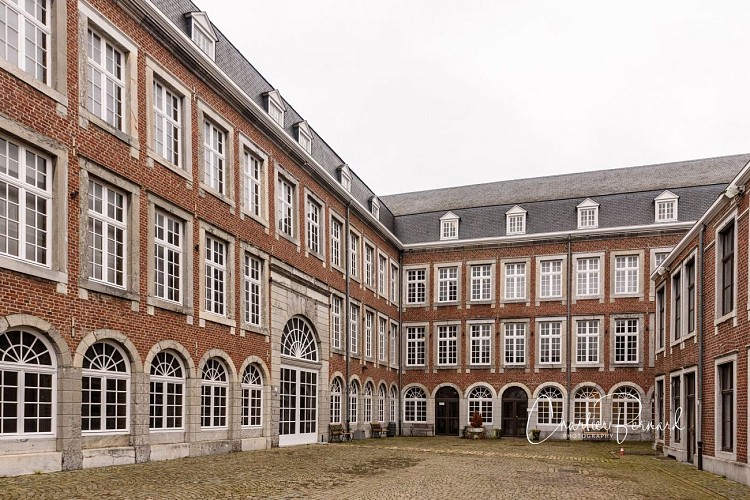
The Société de l'Harmonie was created in 1829 by a Hervien in order to develop the musical presence in Verviers. This old lady, older than the Belgian state, had its premises near the Récollets. The musical meetings were a great success and were attended by rich industrialists. As the premises were not up to scratch, the bourgeoisie called on the Brussels architect Spaak to construct a new building, which was inaugurated in 1835. Henri Vieuxtemps, aged 15, played there. The simple neo-classical building has two levels with nine bays. From the outset, the building was already too small, and it was Thirion who added a wing on each side in 1859, as well as balustrades and vases crowning the façade. On the ground floor, the seven central bays form a portico with Doric columns. This supports the first floor with large bays also separated by Doric columns. They illuminate the great hall which is the centrepiece of the building. This hall has hosted and still hosts many receptions. It is here that all the Belgian kings passing through Verviers have been received.The park adjoining the building is very pleasant to walk through and has many rare species brought back by our woolgrowers, such as a sequoia and a ginkgo biloba, exceptional trees. It is surrounded by beautiful gates.In this green space, there is a magnificent kiosk in Moorish style. It was designed by Thirion, an architect from Verviers, and was inaugurated in 1854. It should be noted that it has a twin in Bruges. The building and the kiosk are classified as Walloon heritage; the park is managed by the Walloon Region.

47 Rue de l'Harmonie 4800 Verviers
- Maison du Tourisme du Pays de Vesdre -
Consulter
image du object

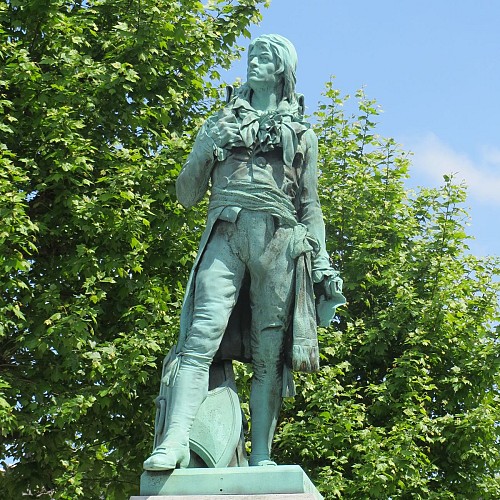
The statue of Grégoire-Joseph Chapuis (a must in Verviers

The statue was made by Joseph-Antoine Van den Kerkhove, known as Nelson. Doctor, philosopher, magistrate, promoter of civil marriage, founder of schools for workers to whom he was very close. He spoke to and taught the workers at the Gris-Gevris, teaching them to read, convinced that education must be given to all and is the best way to achieve freedom. Grégoire-Joseph Chapuis was born in Verviers in 1761. He learned his trade from his father, a master teacher, before obtaining his diploma. He was the first surgeon to perform a caesarean section in the Verviers region. He was also the officer in charge of the civil registry. This man who loved justice and solidarity, an advocate of political and social reform, was arrested, condemned for his ideas, summarily judged and executed, for "an example". Brought back from Liège, sitting on his coffin, he was decapitated on the Place du Sablon in Verviers. This square was to become the "Martyr's Square" in 1875. On 10 October 1880, the monument erected in memory of Chapuis was officially inaugurated by the liberal mayor Ortmans-Hauzeur. The work was carried out quickly because the event was to coincide with the 50th anniversary of Belgian independence. The monument consists of a four-metre high base made of Écaussines bluestone, topped by a bronze statue of the same height. The figure stands upright with his head turned towards the future and his legs slightly apart, revealing the blade that killed him. On the walls of the base, observe the inscriptions that reveal the values defended by Chapuis. In the absence of any representation of Chapuis' face, his features are said to be borrowed from his nephew Armand Wéber (whose resemblance everyone admits).

Place du Martyr 4800 Verviers
- Maison du Tourisme du Pays de Vesdre -
Consulter
image du object

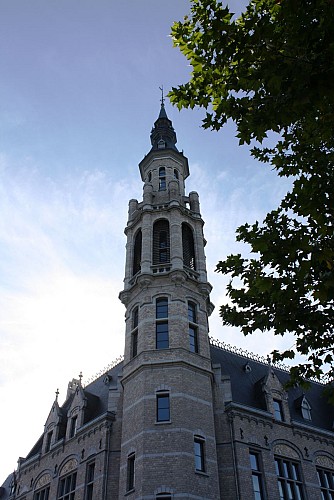
The Grand-Poste (a must in Verviers)

This imposing building has been listed as a Walloon heritage site since 7 August 1989 and is one of the emblematic symbols of the prosperity of Verviers thanks to its 19th century wool industry. The post office is the work of the Ghent architect Alphonse van Houtte, who completed it in 1909 after five years of work. For almost 60 years, it was the epicentre of the city's communications. Its style is a mixture of neo-gothic and renaissance, but the 'Flemish touch' can also be seen. Stone, and especially stone colours, are used extensively in the façades: blue stone for all the carved elements, sandstone for the masonry elements, green sandstone from the Gileppe for the base, pink sandstone from Andenne for the elevations. Numerous ornaments on the façade, figurative decorations or inscriptions, which indicate the various postal services, recall the original function of the building. Others refer to the inventions of the industrial century: light bulbs, electrical appliances, etc. Putti, i.e. medallions decorated with allegorical figures, complete this rich decoration. Two round and octagonal towers at the top frame the building. The smaller one measures 50 metres. Its larger sister is 80 metres high, the highest in our city. Originally, wires ran from the various houses connected to the top of the tower. To reach the Salle des pas perdus, you have to cross the majestic entrance porch, on which stand two heraldic lions bearing the coat of arms of the City of Verviers and the Province of Liège. The ground floor was used as a post office and the first floor as a telegraph and telephone office. Since January 2005, following the completion of restoration and rehabilitation work, it has housed the Forem offices.

Rue du Collège 4800 Verviers
- Maison du Tourisme du Pays de Vesdre -
Consulter
image du object

Saint-Remacle Church (a must-see in Verviers)

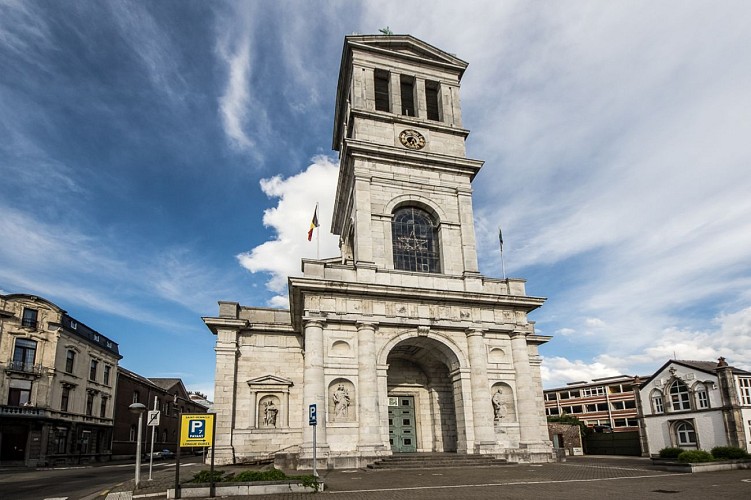
For centuries, the first parish church, St. Remacle, stood next to the building representing the municipal government. It gave a poor impression of the prosperity of our town and, at the end of the 18th century, stood out next to our new town hall. In addition, the building was in poor condition. After long discussions and controversy concerning the location, plans and choice of architect for the construction of a new church, Raymond Biolley, a wealthy industrialist and well-known notable, took matters into his own hands and called on Jean-Pierre Crémer, an architect from Aix. This perhaps explains the "Protestant temple" look of the building. It is a reproduction of a large Roman basilica, as the neo-classicals liked to do at the beginning of the 19th century, made of white limestone from the Verviers region. Four half-columns support the entablature of the central portico, which is widely opened by a central arch. It looks like a Roman triumphal arch. The façade is decorated with four statues placed during the centenary (1938). The square is ten metres deep. The 43-metre high, two-storey tower gives a massive appearance. It is topped by a dome with a copper cross. The clock dates from 1845. The side facades are made of brick. Inside, the choir is impressive: an imposing marble high altar surrounded by four large statues in French stone representing the "fathers" of the church (Ambrose, Augustine, Gregory and Jerome); oak choir stalls, paintings on the ceiling and sides. The side and back altars are leaning against the pillar supporting the rood screen. The statue of St. Severus, patron saint of weavers, was a must in a town that had been devoted to textiles for so long. The pulpit is an important piece of solid carved oak. Three statues form an interesting ensemble: Saint-Raymond and Saint-Edouard presenting Saint-Remacle with a plan of the church. The church of St Remacle is now increasingly becoming a cultural venue where concerts are held.

12 Place Saint-Remacle 4800 Verviers
- Maison du Tourisme du Pays de Vesdre -
Consulter
image du object

The Town Hall (a must-see in Verviers)

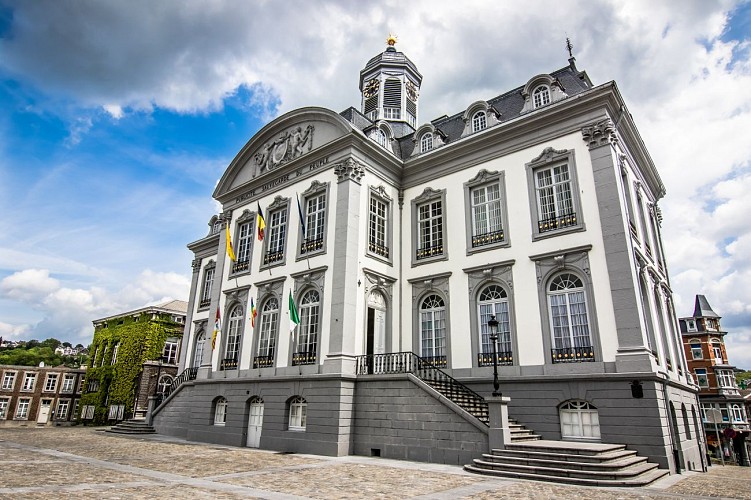
Until 1775, the seat of the local government stood, more or less on the same site, a massive building of the “halle” type similar to the meat hall that still exists in Liège, but with one storey. During the 18th century, Verviers prospered thanks to wool work and its population continued to grow. The authorities then decided to build a town hall commensurate with its wealth.The Liège architect Jacques-Barthélemy Renoz, known at the time for many projects, was chosen. He built this building in the style of the period, the neo-classical. Total symmetry, exterior and interior, decorations without frills and the use of iron. The façade consists of a three-bayed forecourt flanked by two wings, with staircases, also comprising three bays each.The windows on the two levels are different; those on the first level, surmounted by a drapery and a powerful weeping canopy, are round, while those on the second level, surmounted by a key adorned with a mascaron and supporting a laurel wreath, are rectangular.The curved upper pediment bears the coat of arms of the city, surrounded by garlands of laurels and framed by two toddlers (one carrying a shuttle, the other a thistle, two emblems of the wool industry). Below the pediment, the inscription added at the request of Pierre David, the first mayor after the independence of our country, “Publicity, safeguard of the people”, means that making public the meetings of the communal council protects the people.An octagonal bell tower crowns the building, with a clock dial, surmounted by a radial sphere.

Place du Marché 4800 Verviers
- Maison du Tourisme du Pays de Vesdre -
Consulter

Additional information

Signalétique (EN)

No signage

Data author

Ratings and reviews

To see around
See more
Open
Close
Show
Show
Show
Show
Show
Show
Show
Show
Show
Show
Show
Caution!
We have no information on the difficulty of this circuit. You may encounter some surprises along the way. Before you go, please feel free to inquire more and take all necessary precautions. Have a good trip! 🌳🥾