Alert

Alerts

To see around
See more
Open
Close
Show
Show
Show
Show
Show
Show
Show
Show
Show
Show
Show

Oups... It would appear that Cirkwi does not have permission to use your location.

Presentation
Description
Map
Points of interest
Ratings and reviews
See around

Cycling loop: Circuit du Bas Chablais

Cycling loop: Circuit du Bas Chablais

Description

The outward leg follows flat roads along the lakeshore to the charming village of Yvoire. The return leg heads inland, through the gentle hills and traditional villages to the south of the lake.

Departure point / TER: Thonon-les-Bains, avenue de Corzent
Length: 50 km
Difficulty: blue "plus", due to its length
Total ascent: 100 m
Direction: counter-clockwise
Landmarks and connections : Anthy-sur-Léman (junction with Thonon / Annemasse route no. 49); Sciez (junction with Annemasse / Thonon route no. 23); Jouvernex (junction with Planbois route no. 50)

72 km long, 13 km wide, 300 m deep: Lake Geneva appeared 15,000 years ago, after the retreat of the Rhône glacier. 140 professional fishermen bring out 650 tons of fish a year (whitefish, perch, pike, trout, arctic char), and some of the world's most important regattas on enclosed waters take place here every year: Cinq Jours du Léman, Bol d'Or in June, Translémanique en solitaire in September.
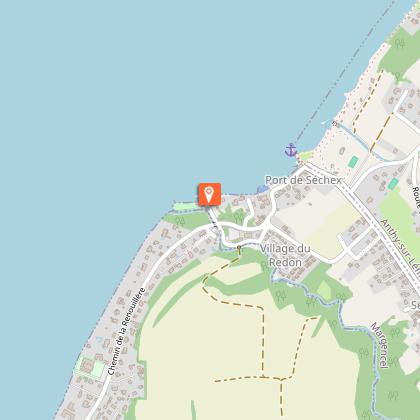
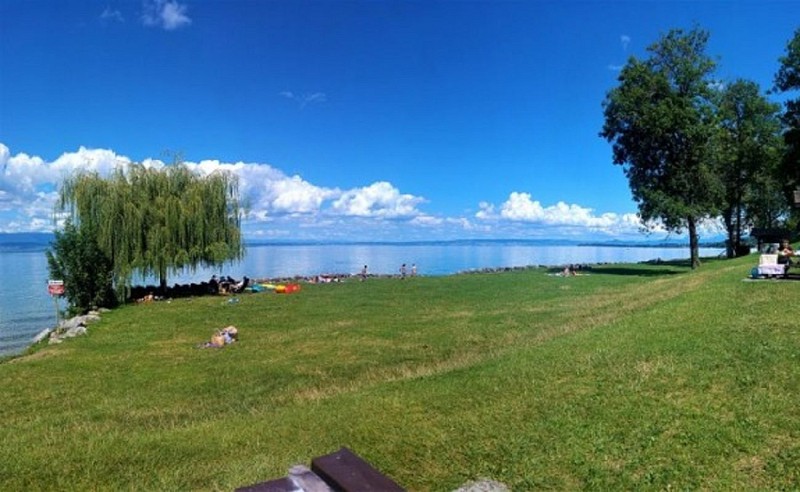
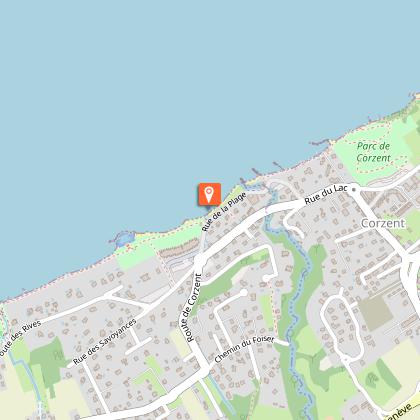
You'll sail along the lake for most of this magnificent circuit, with a stop at Corzent beach. After climbing back up to Anthy, you'll be back on the water's edge at Redon beach. To get to the next beach at Excennevex, you'll need to cross Sciez and ride very carefully along the N5 for 1.5 km. Allow time for a visit to Yvoire and the charming little port of Nernier. You can also visit the Collongette farm museum after Chens-sur-Léman. Take care on the short, traffic-light-protected drive through Douvaine, and on the way back to Sciez, don't miss the right-hand hairpin bend just a few metres from the main road, and the sudden changes of direction over the next 3 km. After Anthy, return to Thonon following in your footsteps.
Cyclo-discovery routes signposted by the Département de la Haute-Savoie as part of the Haute-Savoie Vélo Plan.

Technical Information

Racing biking
Difficulty
Easy
Dist.
50 km
Show more

Altimetric profile

Starting point

74200   Thonon-les-Bains
Lat : 46.367209Lng : 6.482529

Points of interest

image du object

Leman lake

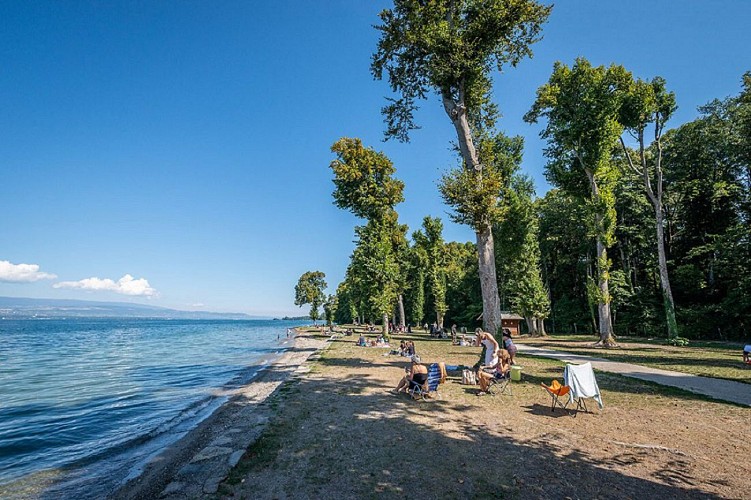
Lake Geneva is an authentic inland sea and the largest lake in Western Europe. It started out as a glacier mainly fed by the Rhone River. The lake is majestic in size and is a unique destination as the Sea in the Mountain!Lake Geneva is Western Europe’s largest lake. Its French name Léman is probably Celtic in origin, changed by Latin with frequent name changes over time: Lacus Lemanus, Lake Geneva or Lake Léman. The lake is crescent-shaped with the north bank and two sides being Swiss and the south bank being French. The border goes through the middle of the lake. The Rhone crosses through the lake from east to west. Many things have made the lake what it is today: Tectonic folding in part of the Great Lake and the action of a Rhone glacier in the Small Lake (between Yvoire and Geneva). It was formed when the Rhone glacier melted after the last ice age almost 15,000 years ago. Key figures and locations: - Length of intersection: 72.8km - Maximum width: 13.8km - Surface area: 582.4km² (348.4km² in Switzerland and 234km² in France) - Altitude: 372m - Maximum depth: 309.7m, coast plus 62.3m between Lausanne and Évian - Total water volume: 89 million m³ Microclimate... Although it is on the edge of the Alps, Lake Geneva has created a microclimate around it due to the sheer amount of water it holds. For example, in Montreux and its immediate surroundings you can see palm trees, agaves and other exotic plants. In winter, the lake uses the heat it has conserved during the summer to make the harsh mountain winter milder. In summer the lake cools its surroundings. Lake Geneva’s wildlife: Fish: Approximately 30 species of fish live together in the lake including: - True fera or féra as it is known locally, 360 tons caught in 2006 (310 tons in 2005). - Perch, which is filleted, 224 tons caught in 2006 (234 tons in 2005). - Pike, 35 tons caught in 2006 (47 tons in 2005, 29 tons in 2004 and 31 tons in 2000). In 1996 a 1.34m long pike was caught in the lake and a 20.5kg pike was caught in March 2004 in the Vaud area. - Lake trout, 11 tons caught in 2006 (17 tons in 2005, 27 tons in 2004). Some specimens can weigh up to 8 or 10 kilos. - The ever popular Arctic char, 14 tons caught in 2006 (17 tons in 2005, 9 tons in 2004, 68 tons in 2000). This fish is very sensitive to global warming as it requires very cold water in order to reproduce. - Crayfish which were released in the lake by mistake in the 80s and have now colonised the waters. This shellfish is very popular for its succulent meat and fishermen’s catch is now supplied to restaurants. - Roach, bleak, carp, burbot, tench, stickleback and many more. Birds: Many birds come to the lake as it is a migration route between the Alps and the Jura Mountains. The 150,000 birds and ducks coming from Scandinavia and even Siberia to spend their winter here include: - the Great Cormorant - the Common Merganser - the Great Crested Grebe - the Common Pochard - the Tufted Duck - and the Eurasian Coot - Along with swans and mallards. Tourism around Lake Geneva: There are lots of tourist attractions around Lake Geneva. On the Swiss coast stands Château de Chillon (Vaud) in a unique romantic setting popularised in written form by Jean-Jacques Rousseau’s La Nouvelle Héloïse and Byron’s The Prisoner of Chillon. On the Haute-Savoie Chablais coast lies the fortified village of Yvoire (also know as the pearl of Lake Geneva) on a rocky fort, Excenevex Beach and Château de Ripaille. In historical Thonon-les-Bains there are towers, parks and vineyards. The Lavaux vineyards between Vevey and Lutry were classified as a world heritage site by UNESCO in 1997. Visitors can also explore the many sides to life around Lake Geneva by visiting its towns and cities such as Geneva itself, Lausanne, Montreux and Thonon-les-Bains.

Rives du Léman 74200 Thonon-les-Bains
- Office de Tourisme de Thonon-les-Bains -
Consulter

Additional information

Updated by

Conseil Départemental de la Haute-Savoie - 12/03/2026
www.hautesavoiexperience.fr
Report a problem

Tips

Direction of travel: counter-clockwise
Landmarks and connections : Anthy-sur-Léman (junction with Thonon / Annemasse route no. 49); Sciez (junction with Annemasse / Thonon route no. 23); Jouvernex (junction with Planbois route no. 50)
Description: 72 km long, 13 km wide, 300 m deep: Lake Geneva appeared 15,000 years ago, after the retreat of the Rhône glacier. 140 professional fishermen bring out 650 tons of fish a year (whitefish, perch, pike, trout, arctic char), as well as renowned regattas. You'll follow the lake for most of this magnificent circuit, with a stop at Corzent beach. After climbing back up to Anthy, you'll be back on the water's edge at Redon beach. The next stop at Excennevex beach (the largest sandy beach on the lake) requires you to cross Sciez and ride carefully along the 1005 road for 1.5 km. Allow time to visit the medieval village of Yvoire and the charming little port of Nernier. You can also visit the Musée Paysan de Collongette after Chens-sur-Léman. Be careful on the short, traffic-light-protected drive through Douvaine, and on the way back to Sciez, don't miss the right-hand hairpin bend just a few metres from the main road, and the sudden changes of direction over the next 3 km. After Anthy, return to Thonon in your original footsteps.

Open period

From 01/01 to 31/12.

Location complements

Car park: Place de Crête

Data author

Ratings and reviews

To see around
See more
Open
Close
Show
Show
Show
Show
Show
Show
Show
Show
Show
Show
Show
Caution!
We have no information on the difficulty of this circuit. You may encounter some surprises along the way. Before you go, please feel free to inquire more and take all necessary precautions. Have a good trip! 🌳🥾