Alert
Alerts
The Tour du Canourgue
Description
This trail takes you in the footsteps of the lords of the Tour du Canourgue through the remains of a fortified hamlet, where history and architecture mingle.
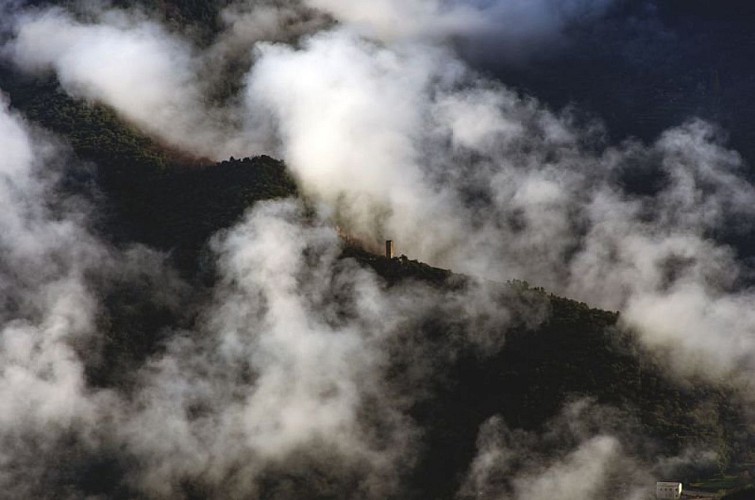
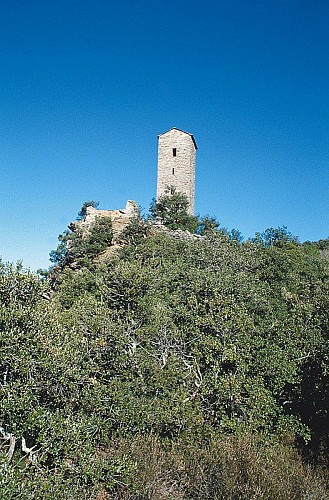
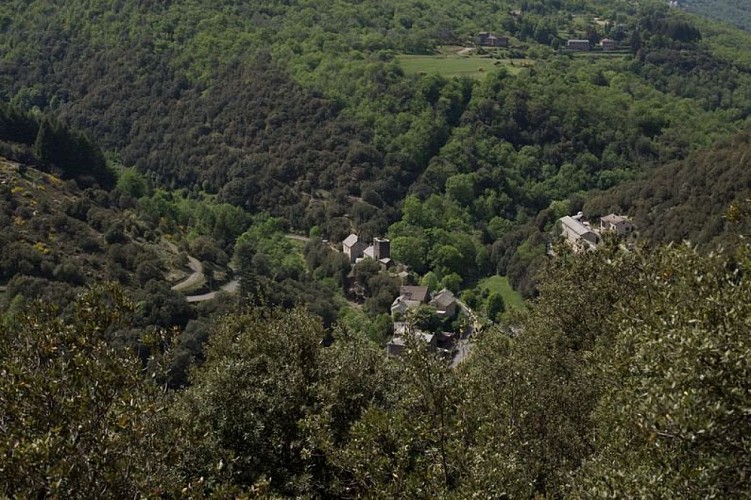
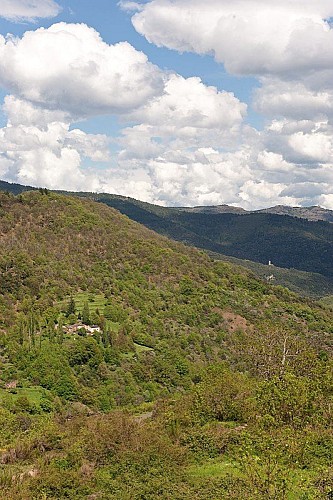
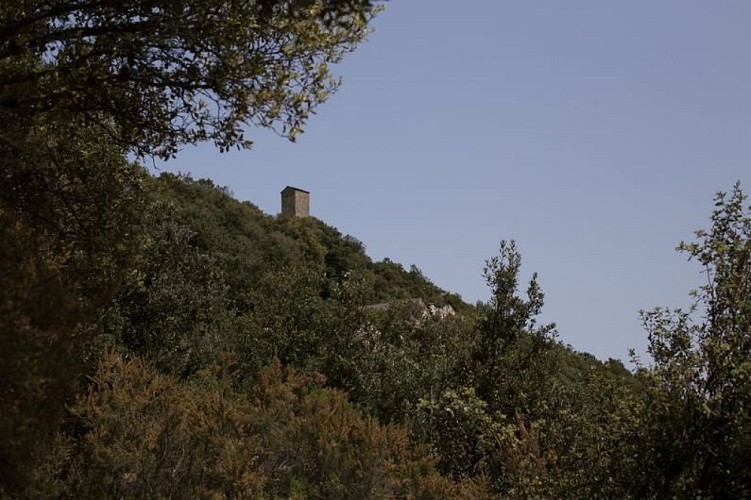
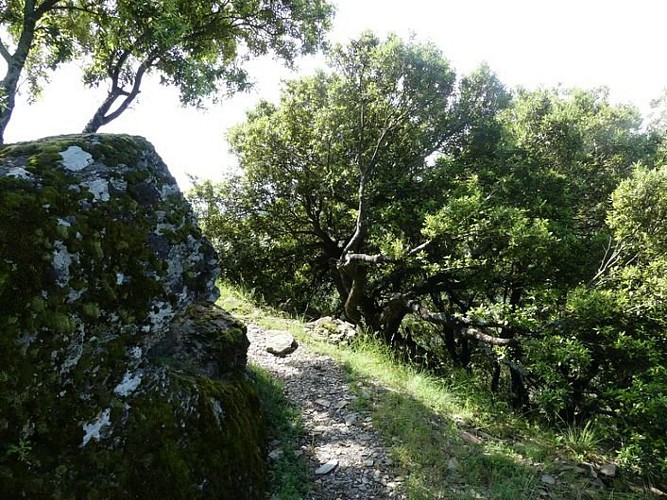
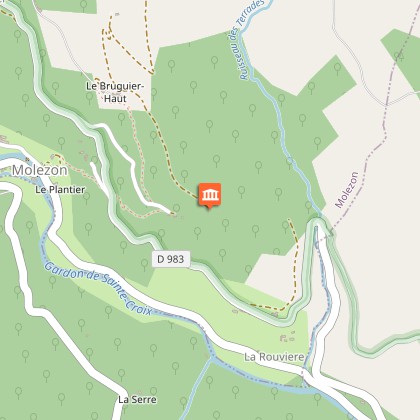
The trail passes through a grove of holm oaks before offering you several panoramic viewpoints over the Vallée Française. It then winds uphill through a ruined hamlet to the rocky spur on which stands the keep of Le Canourgue castrum (late 12th or early 13th century). After the defensive ditch, the path follows in the traces of disappeared buildings... Maps and illustrated scenes of mediaeval life have been reproduced inside the keep.
Technical Information
Altimetric profile
Starting point
Points of interest
Additional information
Departure
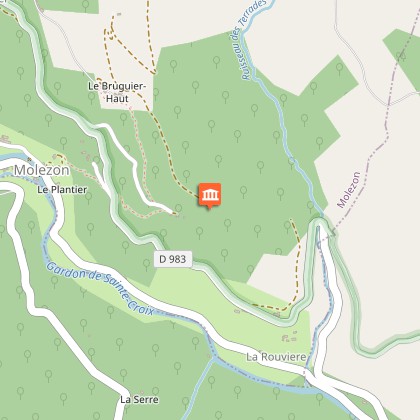
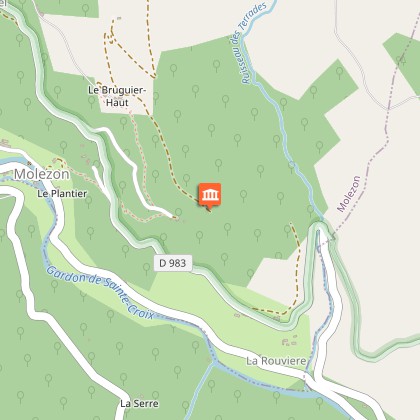
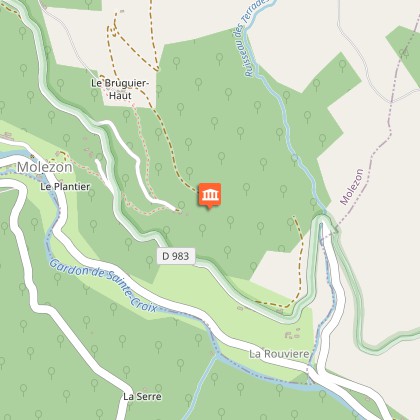
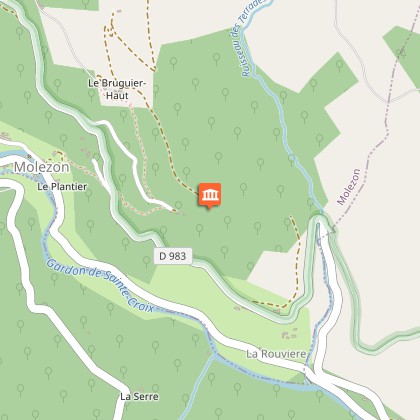
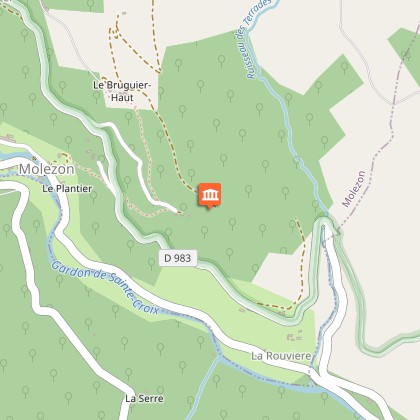
On the D 983 road between Barre-des-Cévennes and Pont-Ravagers (Molezon)
Arrival
On the D 983 road between Barre-des-Cévennes and Pont-Ravagers (Molezon)
Ambiance
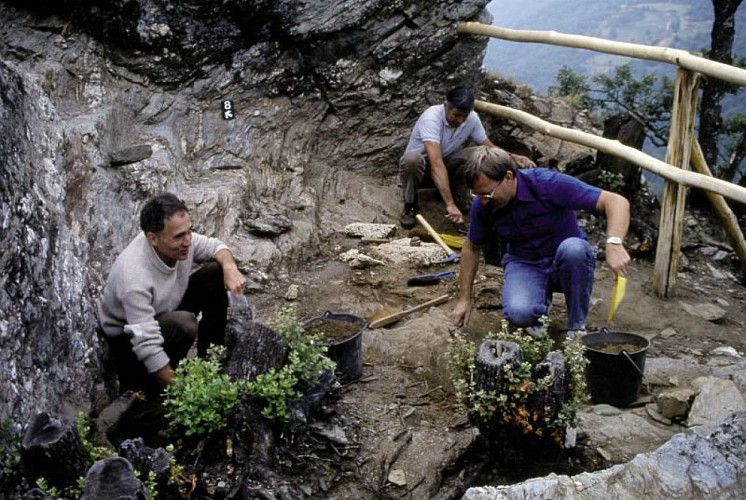
Archaeological excavations carried out at the Tour du Canourgue have shown that it was the keep of a château, which was probably abandoned in the late 14th or early 15th century. A whole set of buildings once backed onto the keep outside the fortifications. Their ruins are today covered by vegetation. Mediaeval castra were built for both prestige and defensive purposes. Did Le Canourgue castrum ever have to defend itself? For two centuries, scholars have evoked the existence of a network of “signalling towers” designed to keep locals safe. Was that Le Canourgue's purpose?
Access
On the D 993 between Pont-Ravagers et Barre-des-Cévennes
Advised parking
On either side of the D 983
Advice
Steep path with sections that are slippery when wet. Be sure to hold children by the hand. Going all the way around the tower is dangerous. After Marker 10, it is advisable to retrace your steps to reach Marker 11. Horse-riding or mountain-biking are not allowed on or adapted to discovery trails.
Is in the midst of the park
The national park is an unrestricted natural area but subjected to regulations which must be known by all visitors.
Data author
