Alert

Alerts

To see around
See more
Open
Close
Show
Show
Show
Show
Show
Show
Show
Show
Show
Show
Show

Oups... It would appear that Cirkwi does not have permission to use your location.

Presentation
Description
Map
Points of interest
Ratings and reviews
See around

In the footsteps of the storytellers

In the footsteps of the storytellers

Description

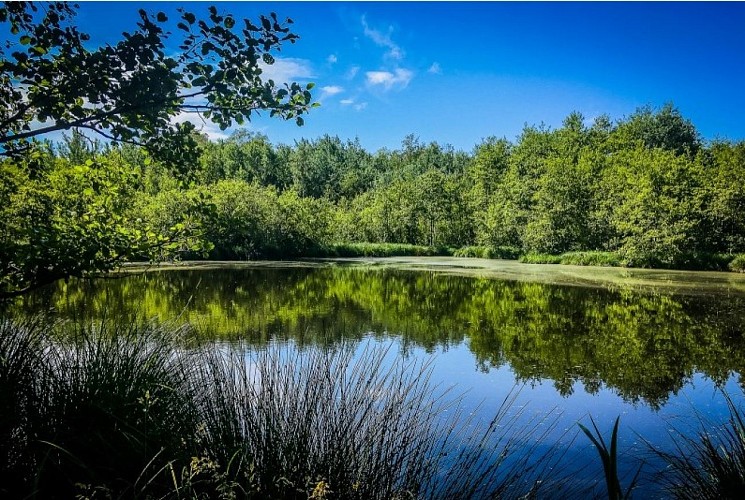
A green countryside and refreshing undergrowth will make you appreciate the local fauna and flora, near the "Puthods" and "Bizadan" ponds (or pond of the fairies), or along the banks of the Salençon.

Walking tour n°10
Bizadan Pond is of high environmental heritage interest.
This peat swamp is characterized by remarkable habitats typical of very wet environments.

Technical Information

Walking
Difficulty
Not specified
Duration
4h
Dist.
12 km
Show more

Altimetric profile

Starting point

Départ à la salle des fêtes Cras-sur-Reyssouze , 01340   Bresse Vallons
Lat : 46.308301Lng : 5.164256

Points of interest

image du object

Arboretum of Etrez

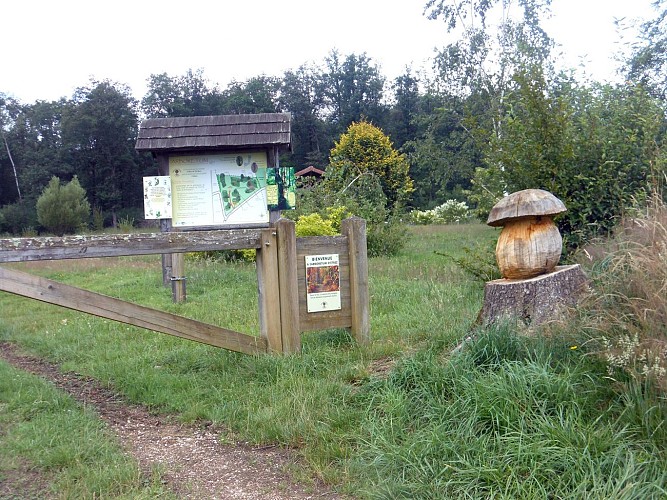
A 3-hectare wooded area less than 2 km from the village of Etrez. It's both a place for walks and picnics for young and old, and a place dedicated to the conservation of tree and shrub species.The site is open to the public all year round, provided they respect the visitor's charter on the entrance sign. It is visited by individuals, groups and schoolchildren, particularly on Nature Day. The "Arbres et Nature" association is involved in the creation of an arboretum to the north of the commune. Its aim is to promote trees to the general public of all generations through a better understanding of trees, their life, history, uses, role, function in nature and their enhancement. Objectives : - Preserve regional tree species and introduce rare species of the same species for educational purposes. - To offer future generations a place to recharge their batteries, in the calm of a protected and managed forest area. To date, 150 trees of different species and 80 shrubs have been planted, all marked with a plaque bearing their Latin and French names. A 250 m hedge borders the park on 2 sides. There's also a 200-year-old "plessée" hornbeam, one of the remarkable trees listed by Patrimoine des Pays de l'Ain. Two wetlands have been created: a pond and an area of 3 basins with a footbridge, home to aquatic plants, insects and amphibians, including the protected yellow-bellied toad. The association organizes guided tours to raise visitors' awareness of the need to conserve biodiversity, particularly on Heritage Days. To do even more for biodiversity, the association has acquired the adjacent land (around 2 hectares) and is working to rehabilitate the pond, which was still in water a hundred years ago.

Desserte de Negray Étrez 01340 Bresse Vallons
- Bourg-en-Bresse destinations - Office de tourisme -
Consulter
image du object

Poype de Jalamonde

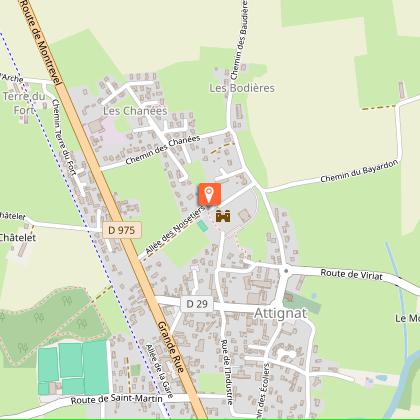
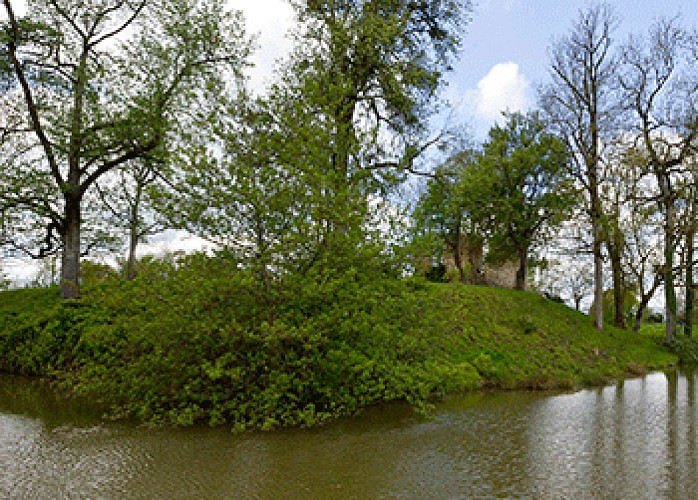
Aujourd'hui cette motte est le reste du château de Jalamonde qui a été rasé en février 1794. La poype, cernée de sa douve sur lequel a été édifié le château est bien visible. Site visible de la route (propriété privée).A proximité, le hameau de Balvay (beau regard, belle vue...) explique peut être la présence de ce site. Une très ancienne voie passait également sur ces hauteurs en direction d'Etrez ou de Bourg en Bresse. Les "poypes" ou "mottes castrales" sont des buttes de terre souvent artificielles qui accueillent en leur sommet un habitat médiéval à fonction défensive. Longtemps négligées par les historiens au profit des châteaux de pierre, ces "châteaux de terre" ont été redécouverts et étudiés à partir du 19e siècle. Dans l'Ain, une densité importante de ces vestiges s'observe encore en Bresse et en Dombes. Le terme italien "incastellamento" est un terme que l'on peut traduire par « enchâtellement » et qui désigne, en particulier à l'époque médiévale, le phénomène de fortification des zones rurales par la construction de châteaux. Le véritable essor de la construction des châteaux a lieu dans le dernier quart du 10e siècle. L’édifice fortifié s’oriente vers une vocation plus individuelle que collective, destiné à abriter un seigneur et sa suite, un chef et ses guerriers, et la basse-cour continue de servir à l’occasion de refuge aux paysans des alentours. Le symbole caractéristique de cette nouvelle orientation est la motte castrale. Les mottes appartiennent à la grande famille des « châteaux de terre » du Moyen-Age, demeures ou résidences fortifiées symbolisant une puissance politique éclatée. Ces châteaux prennent des formes variées mais sont toujours caractérisés par l’aménagement du terrain : terrassements, déplacements de matériaux pour former des refuges, plates-formes et remparts souvent complétés par des fossés et des dispositifs défensifs en bois. Aujourd’hui, ces fortifications marquent encore nos paysages ruraux de manière très nette. Leurs traces sont lisibles dans la topographie, le découpage cadastral, les contrastes de végétation ou encore les indices toponymiques. La région Rhône-Alpes s’est révélée riche en sites fossoyés, qu’il s’agisse d’enceintes, de maisons fortes, ou de mottes castrales, majoritaires en Bresse et Dombes.

Route de Jalamonde 01340 Attignat
- Bourg-en-Bresse destinations - Office de tourisme -
Consulter

Additional information

Updated by

Bourg-en-Bresse Destinations - Office de tourisme - 10/10/2025
www.bourgenbressedestinations.fr
Report a problem

Open period

All year round.

Ratings and reviews

To see around
See more
Open
Close
Show
Show
Show
Show
Show
Show
Show
Show
Show
Show
Show
Caution!
We have no information on the difficulty of this circuit. You may encounter some surprises along the way. Before you go, please feel free to inquire more and take all necessary precautions. Have a good trip! 🌳🥾