Alert
Alerts
11. Green Bush Trail – Starting point: Les Préaux Town Hall or Saint-Symphorien Town Hall
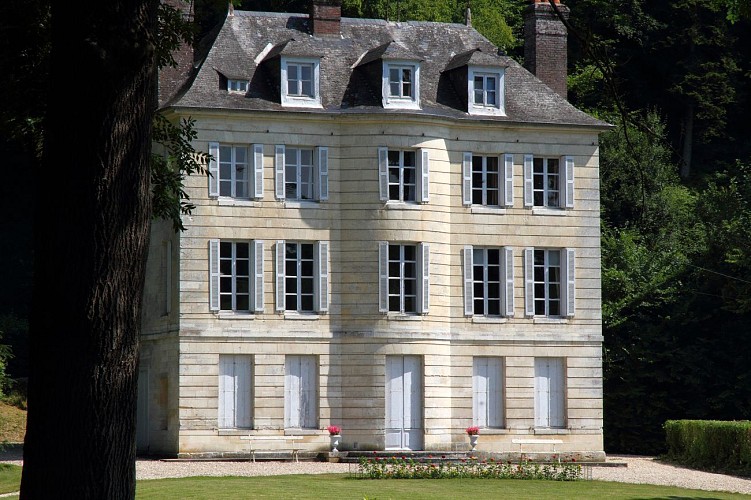
Description
This route crosses a landscape where religious history and Norman nature blend together with remarkable harmony.
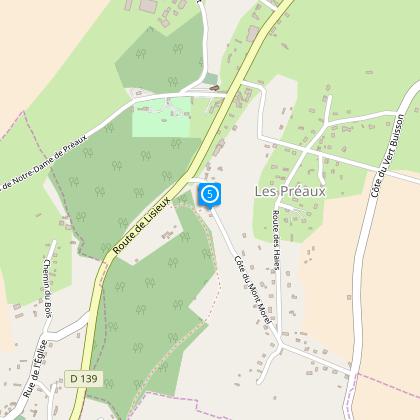
The most striking testimony to this heritage is the Abbey of Les Préaux. Once a powerful medieval institution whose influence extended far beyond the region, only a large section of its enclosure wall remains today—a simple yet evocative reminder of its former grandeur. The municipality of Les Préaux itself was created in 1844 through the merger of two parishes, each with its own abbey: one for men and the other for women.
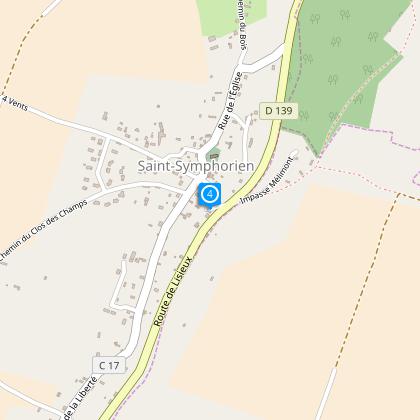
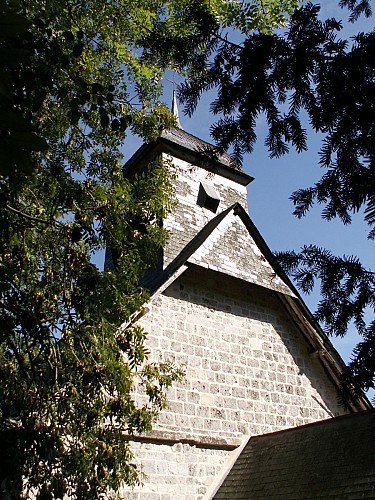
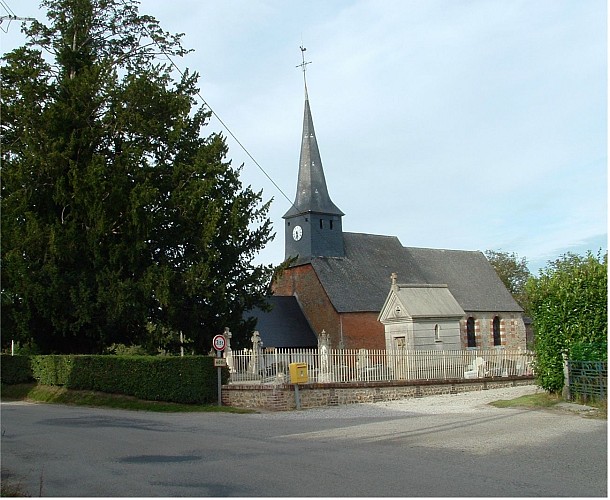
Both churches along the route are well worth a stop. In Les Préaux, the former 12th-century Romanesque abbey chapel impresses with its understated stone architecture. In Saint-Symphorien, visitors will discover a more eclectic style and one of the area’s most remarkable natural treasures: a millennium-old yew tree rising more than 20 metres high, an awe-inspiring presence in the landscape.
The scenery unfolds with equal generosity. From open farmland on the plateau to tree-lined viewpoints overlooking the valley, and from preserved bocage countryside with hedgerows to traditional half-timbered houses, the route offers a succession of quintessentially Norman landscapes that change with every step.
From medieval stonework to a thousand-year-old yew tree, this walk is a journey through the centuries.
Technical Information
Altimetric profile
Starting point
Steps
Data author
