Alert
Alerts
17. Resistance Trail – Starting point: Church of Manneville-sur-Risle
Description
This route offers a remarkable diversity of landscapes. Open farmland gives way to sunken bocage lanes before leading into rolling woodland. Throughout the walk, many impressive trees deserve attention, including pollarded ash trees lining the hedgerows and majestic beeches and oaks rising above the forest floor. Together, they bear witness to a well-preserved Norman bocage landscape.
Nature also reveals an unexpected curiosity: a storm gully, a true Norman wadi, which remains dry for most of the year before turning into a powerful torrent during periods of heavy rainfall. Best avoided immediately after storms, it remains a fascinating feature in every season.
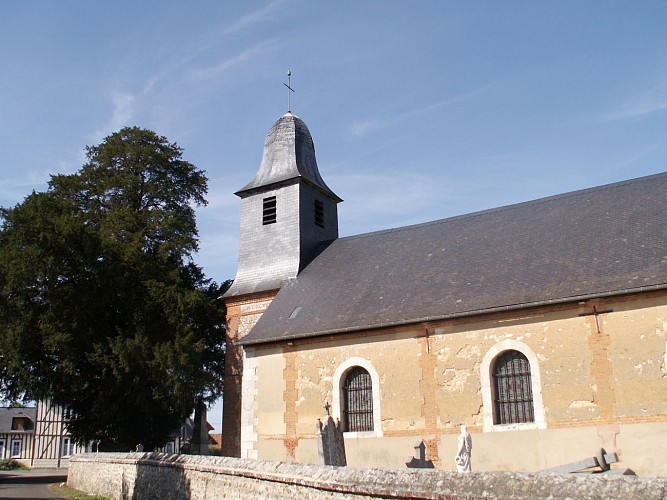
The walk begins beside the village church, surrounded by elegant manor houses built of brick or half-timbering, reflecting the quality of the local architectural heritage.
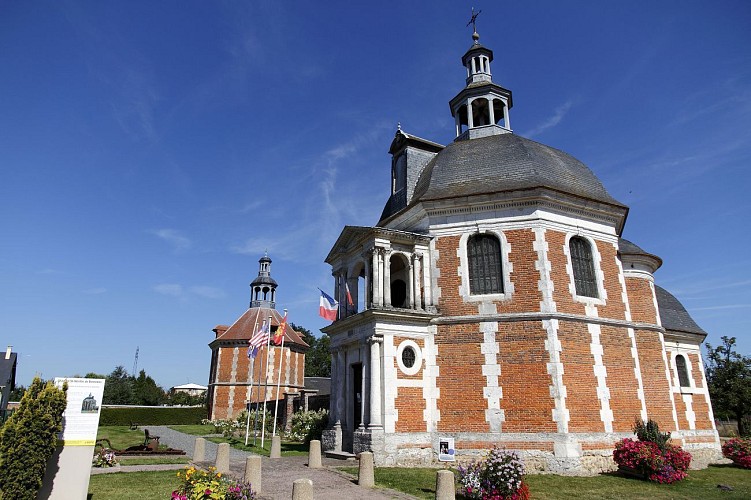
Close to the route stands the Bonnebos Chapel, dating from the late 17th century and listed as a Historic Monument. It houses the Departmental Museum of Resistance and Deportation. Its adjoining dovecote, the last surviving element of a once-important manor estate, conveys a sense of quiet dignity and emotion.
Combining landscapes, nature and remembrance, this walk leaves a lasting impression.
Technical Information
Altimetric profile
Starting point
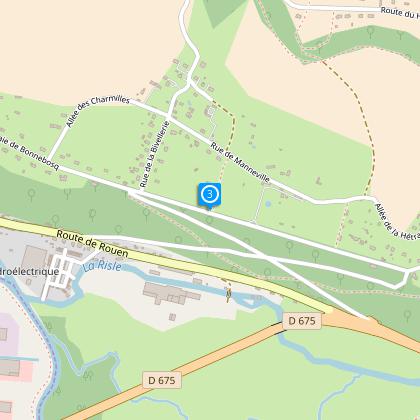
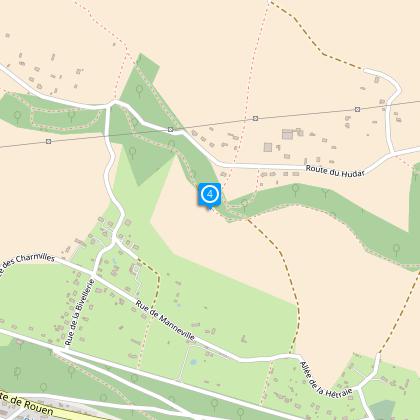
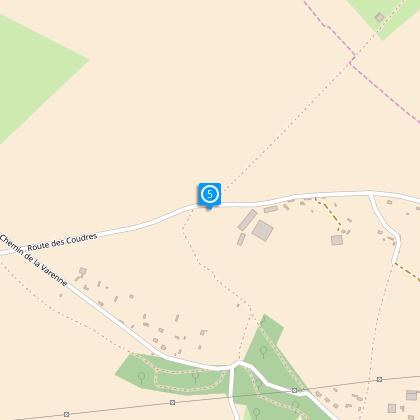
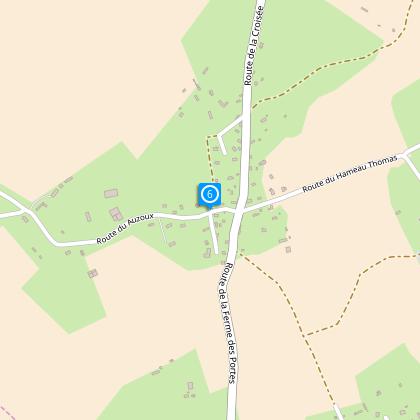
Steps
Points of interest

Data author
