Alert
Alerts
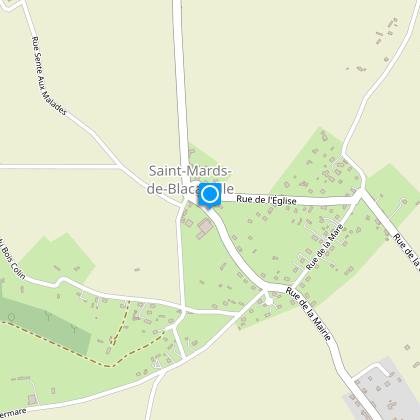
5. Butte au Loup Trail – Starting point: Church Square, Saint-Mards-de-Blacarville
Description
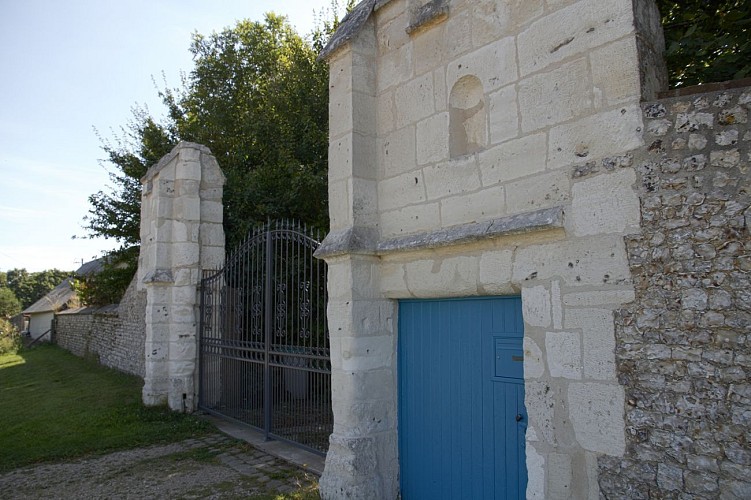
The starting point sets the scene: a former brick town hall, the large stables of a characterful farm, and an elegant manor house reflect a discreet yet expressive rural heritage. The municipality itself was formed through the union of two former parishes: Blacarville on the plateau and Saint-Mards in the valley. The church of Saint-Mards, now converted into a manor house, still bears witness to this dual identity.
The route then unfolds through landscapes of remarkable contrast. For the first half of the walk, wide agricultural plains stretch across the horizon before giving way to the sunken lanes of the Norman bocage, nestled at the bottom of the valley and along the edge of the plateau. Several sections of deciduous woodland—oak, beech, birch, and chestnut trees—bring shade and tranquillity to the walk.
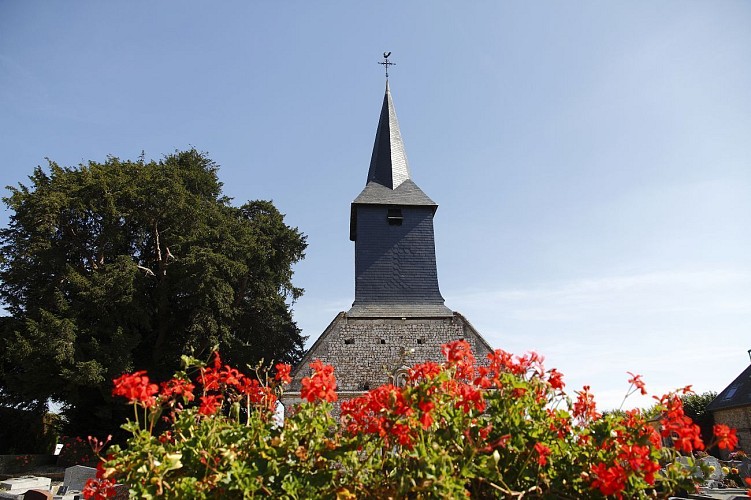
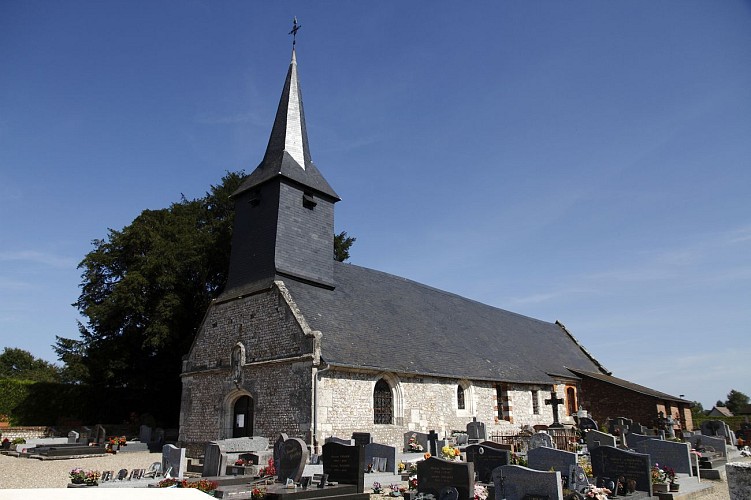
The return via the Church of Blacarville is a particular highlight. Rebuilt in the 15th century using flint, it still preserves Romanesque features, including its herringbone-pattern foundations and its 13th-century chancel. Over the centuries, arched stone openings and square brick windows were added, enriching its architectural character. In the adjoining churchyard stands a remarkable female yew tree, with a hollow trunk and an estimated age of between 750 and 950 years.
A route where history and nature meet, offering a simple yet striking experience.
Technical Information
Altimetric profile
Starting point
Steps
Points of interest
Data author
