Alert

Alerts

To see around
See more
Open
Close
Show
Show
Show
Show
Show
Show
Show
Show
Show
Show
Show

Oups... It would appear that Cirkwi does not have permission to use your location.

Presentation
Description
Map
Points of interest
Ratings and reviews
See around

Cycling Loop: Ramaz Circuit

Cycling Loop: Ramaz Circuit

Description

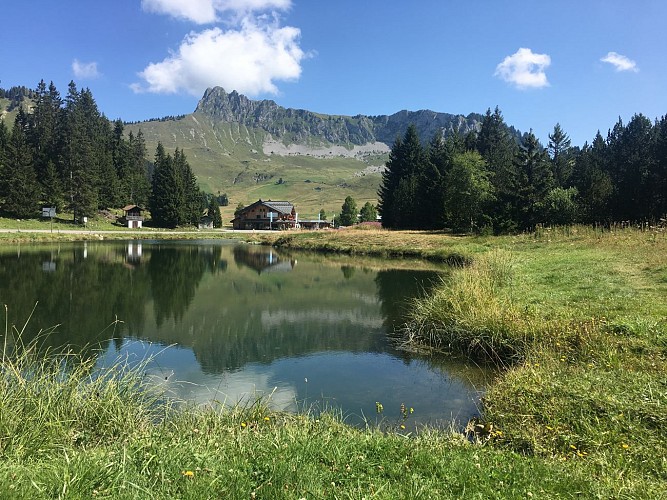
A 16-km climb with an average gradient of 6% starting in Taninges, preceded by a warm-up on the Col de Châtillon—that’s the highlight of this route, which offers exceptional panoramic views of the Mont Blanc massif.

Route direction: counterclockwise.
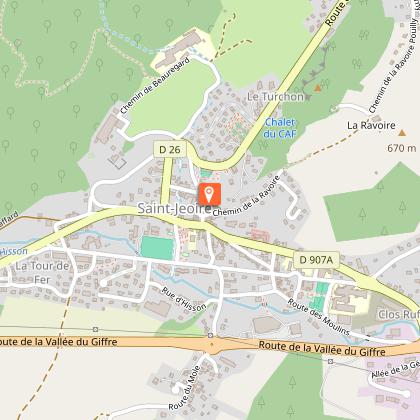
Landmarks and connections: Taninges (where it splits from the Boucle du Giffre No. 39 and the Circuit de Joux-Plane No. 36); Praz-de-Lys; Onnion; St-Jeoire (junction with the Tour du Môle No. 25) Route description: La Ramaz has only seen Tour de France riders twice: in 1981 and 2003. Following the suggested route, you’ll reach it via Châtillon and Taninges. At the downtown roundabout, take the RD907 to the left, then, 300 m further on, the RD307 to the right. This quiet little road, less busy than the Route des Gets, will be the starting point of your climb. In Fry, you’ll merge onto the RD328, which you’ll leave 2 km further on to take the Praz-de-Lys/Sommant road (RD308). During the climb, take the time to admire the panoramic view of all the peaks of the Mont Blanc massif. On the descent, don’t miss the exit from the departmental road on your right at the hamlet known as “Chez Besson.” You’ll rejoin the RD226 in St-Denis and turn left just before Laitraz. You’ll return via Onnion and St-Jeoire, where you’ll be directed under the Môle on a small scenic road (RD306) leading to Marignier. You’ll cover the final kilometers peacefully along the new greenway to Cluses.

Technical Information

Racing biking
Difficulty
Hard
Dist.
67 km
Show more

Altimetric profile

Starting point

74300   Cluses
Lat : 46.056883Lng : 6.580558

Points of interest

image du object

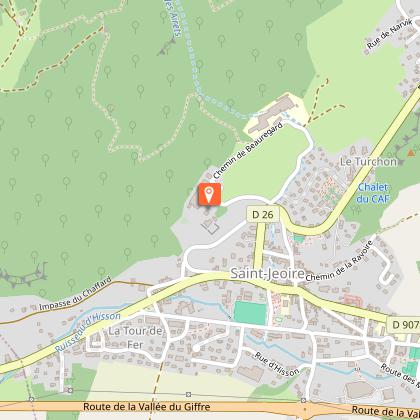
Beauregard castle

Beauregard Castle was the residence since the 13th century the Lord, became the Earls of Fletcher. You can admire this jewel, illuminated at night.The history of the castle, closely linked to that of the family of La Fléchère, Faucigny and the States of Savoy in general, has been very eventful. Burned down and looted several times, in particular by troops from Geneva or during the French Revolution, its interior had to be completely rebuilt several times, the walls however remaining in place. Witnesses of these reconstructions still remain, in particular a walled-up mullion window located under the plaster of the south facade, the location of which testifies to the different positioning of the floors at the time of its construction. The castle is said to have been built in the 13th century by the La Fléchère family. The original function of the castle, in addition to the dwelling, was to defend the village of Saint-Jeoire-en-Faucigny. It was then a simple rectangular keep with walls about 1.20 meters thick, which still constitutes the main body of the castle today. The other parts of the building were added to it as the history progressed and the needs of the Lords of La Fléchère evolved; starting with the staircase tower, built in the 14th century, including a staircase with rough marble steps. The white band painted under the roofs of the various towers reminds us that Hugues de la Fléchère will participate in 1366 in the crusade organized by the Green Count Amédée VI of Savoy to come to the aid of the Eastern Christian emperor, his brother-in-law. It was burnt down in 1589 during the Bernese invasion and subsequently restored. Among the most illustrious characters of this family, we must cite Colonel Jean-Pierre de la Fléchère who in the 18th century was Governor of Cagliari and Viceroy of Sardinia and General Georges-François de la Fléchère who was Major General of the province of Savoy. The castle remained in the family of La Fléchère until 2004, i.e. for 8 centuries, when its owner donated it to the diocese of Annecy, which entrusted it to a charismatic religious community wishing to be of Franciscan inspiration, the Eucharistein Fraternity, in 2008.

- Môle et Brasses tourisme -
Consulter
image du object

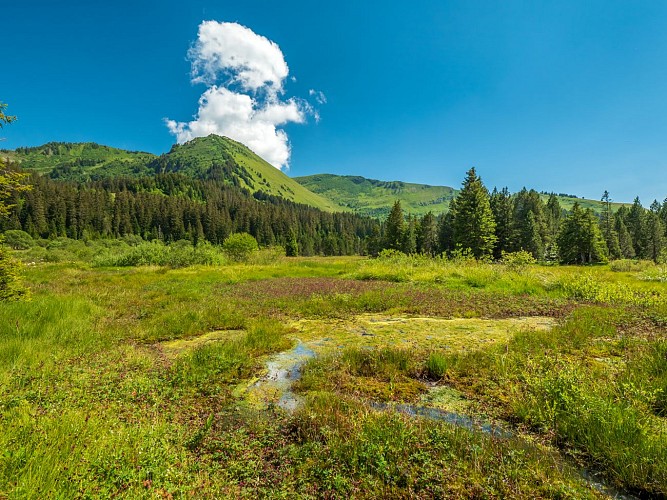
The Sommand Peat Bog

This peat bog is universally recognized as the most beautiful and richest in the region, as well as in the northern French Alps.Its ecological significance, rich flora, and easy access have attracted many professionals, including botanists, mycologists, and others. The ecological significance of this peat bog lies in the diversity of its plant communities. In the center, stands of mountain pine (Pinus montana) are surrounded by or interspersed with (depending on moisture conditions): - Wet Carex grasslands. - Marshy Menyanthes (Menyanthes trifoliata) grasslands. - Dry Nardus (Nardus stricta) grasslands. - Drying Scirpus (Scirpus caespitosus) grasslands. - Flooded depressions with Carex limosa. All these plant communities thrive in a relatively acidic environment, which is surprising given that the surrounding rocks are limestone! The flowering plants comprise a group of about 200 species, among which we note: - 29 species of Cyperaceae, including Carex limosa, Carex pauciflora, and Scheuchzeria palustris. - 7 species of Ericaceae, including the two species typical of Sphagnum peatlands: bog rosemary and cranberry - Among the orchids, Leucorchis albida in the Nardaie is worth mentioning. - In the moss beneath the pines, the delicate Listera cordata and a magnificent gentian (Swertia perennis) thrive. - The purple gentian is found in the Nard grasslands, and in the waterlogged sphagnum bogs, one encounters Drosera obovata and Drosera rotundifolia. The lichen flora comprises about 35 species, among which two French rarities stand out: - Cladonia carneola and Cladonia bellidiflora Among the fungi, there are two rare species associated with pine: - Lactarius musteus and Boletus flavidus. The second point of interest in this peat bog lies in its truly remarkable aesthetic quality, highlighted by its stands of hook-needle pines.

Sommand 74440 Mieussy
- Praz de Lys Sommand Tourisme -
Consulter

Date and time

  • From 01/06/2027 to 31/10/2027

Additional information

Updated by

Conseil Départemental de la Haute-Savoie - 02/10/2026
hautesavoiemontblanc-tourisme.com/
Report a problem

Open period

Closed temporarily.

Contact

Phone : 04 50 96 69 69

Email : tourisme@cluses-montagnes.com

Website : https://hautesavoiemontblanc-tourisme.com/

Location complements

Tourist Office

Data author

Ratings and reviews

To see around
See more
Open
Close
Show
Show
Show
Show
Show
Show
Show
Show
Show
Show
Show
Caution!
We have no information on the difficulty of this circuit. You may encounter some surprises along the way. Before you go, please feel free to inquire more and take all necessary precautions. Have a good trip! 🌳🥾