Alert

Alerts

To see around
See more
Open
Close
Show
Show
Show
Show
Show
Show
Show
Show
Show
Show
Show

Oups... It would appear that Cirkwi does not have permission to use your location.

Presentation
Description
Map
Points of interest
Cirkwi brief's
Ratings and reviews
See around

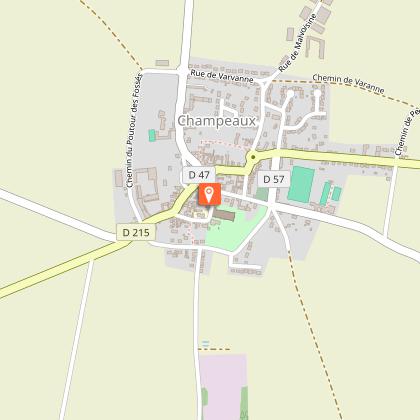
Walk in Champeaux

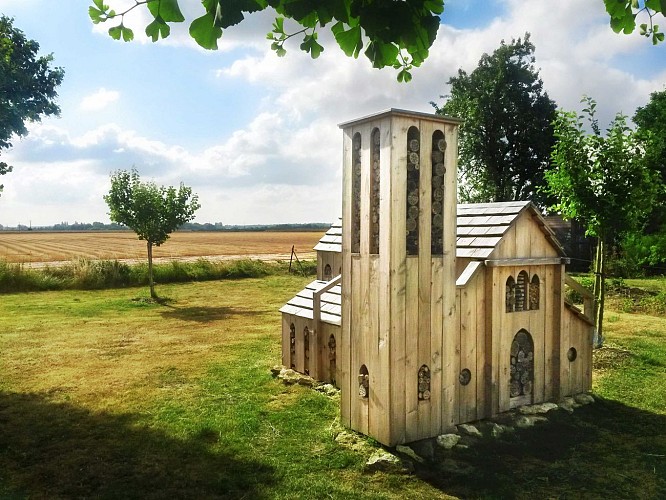
Hôtel à insectes
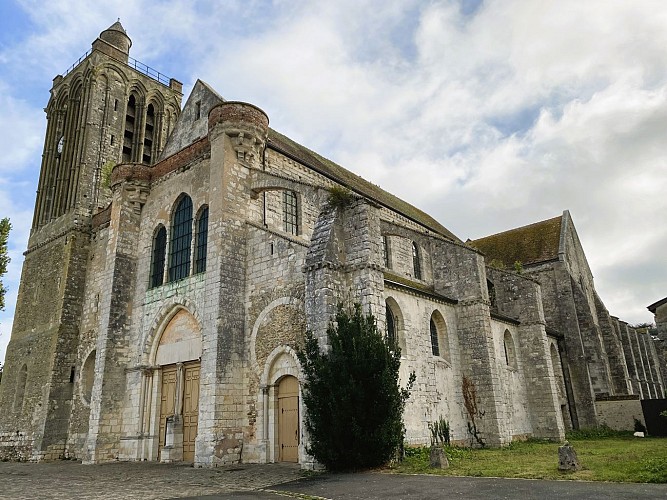
Collégiale Saint-Martin de Champeaux
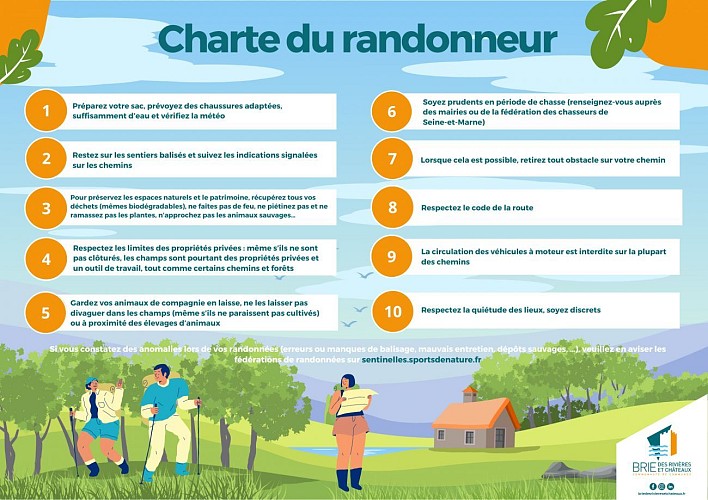
Charte du Randonneur
Credit : Yves Lagües-Baget

Description

Champeaux owes its fame mainly to its collegiate church, undoubtedly the most beautiful religious building in the Brie region. Champeaux's proximity to the ru de l'Ancœur and its many important heritage sites make it an outstanding tourist and cultural destination.

Champeaux's geographical location makes it a real ‘crossroads’ in the Val d'Ancœur, with its high bell tower visible in the distance. The collegiate church of Saint-Martin, a key site in the village, is the only remaining reminder of a college where some of the leading theologians of the Middle Ages passed through, including Abelard. To the south of the village lies the Château d'Aunoy, famous for its parkland, which is emblematic of ‘gardens in the English style’. The crossroads in the centre of the village and the presence of shops make Champeaux an ideal starting point for walkers.

The route, step by step...

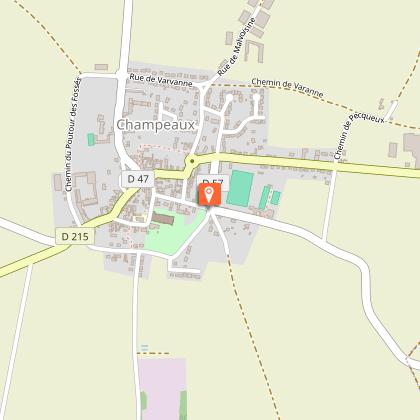
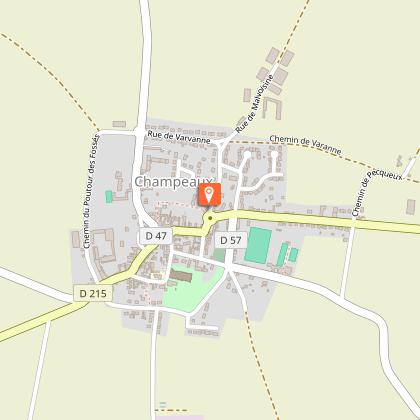
1. At the start of your walk, admire and visit the Collegiate Church of Saint-Martin de Champeaux. Walk down the rue du cloître and take the rue Saint-Léonard.
2. Turn left onto rue de la Libération and walk down to the junction with rue du Pourtour des Fossés.
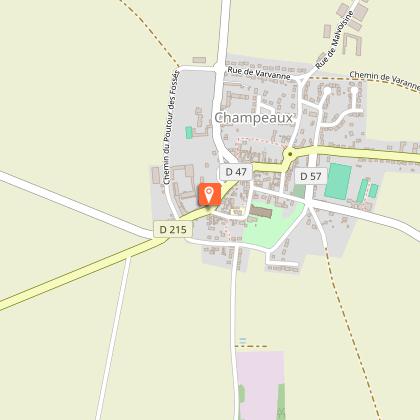
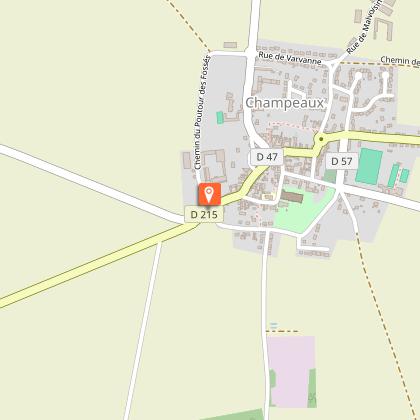
3. Turn slightly left onto the path that runs alongside Rue de la Libération. At the end of the path, on your left, you'll see a miniature version of the Collégiale Saint-Martin de Champeaux, which is in fact an insect hotel created using several types of wood to raise awareness of the importance of preserving biodiversity.
4. Turn left and go to the end of the cul-de-sac.
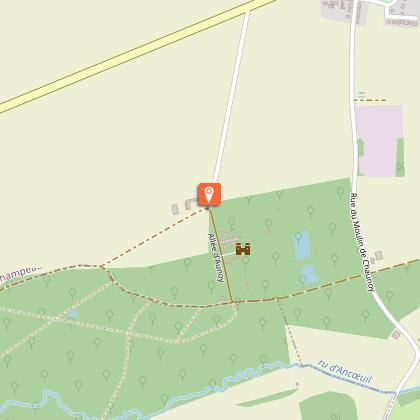
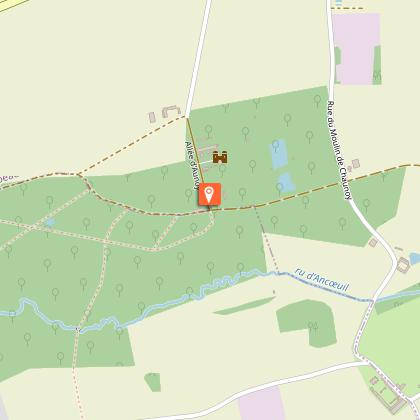
5. Turn left onto the chemin de Melun de Saint-Méry. Continue straight ahead and pass the Château d'Aunoy (private property).
6. At the end of the road, turn left until you reach the junction with the sentier de la Procession (GR1).
7. Turn left along the sentier de la Procession to the crossroads with the chemin du Pourtour des Fossés.
8. Go straight ahead on the chemin du Pourtour des Fossés as far as the junction with the rue de Malvoisine.
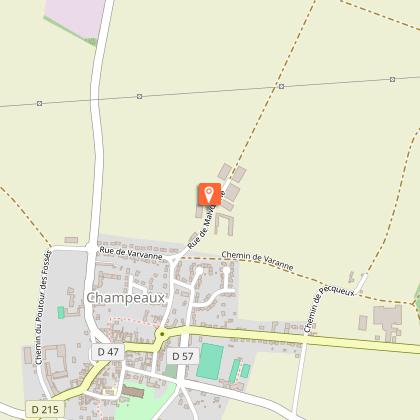
9. Turn right into rue de Malvoisine as far as Ferme de Malvoisine.
10. Make a U-turn and return to rue de Malvoisine as far as the crossroads with ruelle du Four Banal.
11. Turn right into ruelle du Four Banal, then left into Place du Marché. Turn right into rue du Cloître.

Town crossed: Champeaux
Distance: 4.9 km - Time: 1h30 - No signposting
Access to map: www.cirkwi.com/fr/circuit/175745-balade-a-champeaux

Technical Information

Walking
Difficulty
Very easy
Duration
1h45mn
Dist.
4.9 km
Show more

Altimetric profile

Starting point

5 5 Place du Cloître , 77720   Champeaux
Lat : 48.583437Lng : 2.806594

Points of interest

image du object

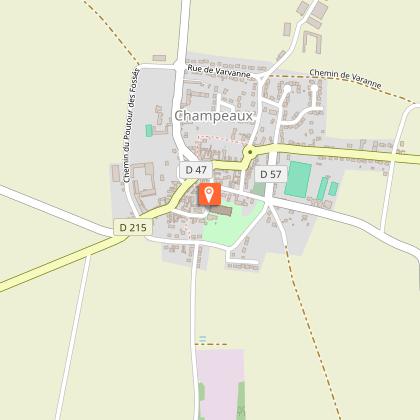
Collegiate church of Saint-Martin de Champeaux

The most beautiful religious building in the Brie region, the Collegiate Church of Saint-Martin de Champeaux is the only remaining reminder of a college (community) of canons that was home to a famous centre for theological studies and singing.The Collegiate Church of Saint-Martin de Champeaux, listed as a Historic Monument in 1940, is a large and beautiful church built between the mid-12th and early 14th centuries. It was the church of a Chapter of canons, also known as the Collège, hence its name of collegiate church. There was a singing school that trained singers for communities throughout the region in these exceptional acoustics. The prosperity of the canons enabled the construction of a church with remarkable architectural qualities. It is 69.55 m long, 24.20 m wide, 15.30 m high in the nave and has a steeple almost 30 m high. The oldest parts of the building, such as the transept, date back to the mid-12th century, while the rest of the church illustrates the main stages of Radiant Gothic architecture. Completed in the early 14th century, the church has survived almost intact, enriched in the Renaissance by a fine collection of stained glass windows and beautiful choir stalls, and in the 18th century by a large carved wooden altarpiece. The architecture, which is in a fairly simple early Gothic style, is nevertheless enriched by sculptures: a large number of capitals carved with plant motifs, and various figures and monsters dotted around the choir and transept. The Collegiate Church contains the largest collection of 14th-century tombstones in the region. In 1946, faced with the state of disrepair into which the monument had fallen, the Association des Amis de la Collégiale was founded to help the commune preserve and promote this heritage. The Collegiate Church is home to a number of objects protected as Monuments Historiques: 16th-century statues, a 17th-century tabernacle, an 18th-century eagle-lutrin, 19th-century prie-Dieu and a cantor's stool... The famous sculptor Rodin was fascinated by this beautiful monument, to which he often returned. He produced architectural drawings of the Collegiate Church, reproductions of which are on display here. The Guillaume de Champeaux Association has been organising concerts, exhibitions and guided tours of the Collegiate Church since 1983.

5 Place du Cloître 77720 Champeaux
- Communauté de Communes Brie des Rivières et Châteaux -
Consulter
image du object

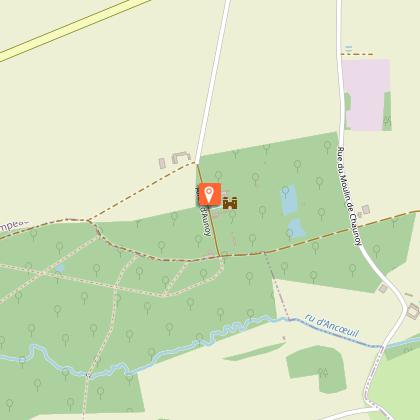
Château d'Aunoy

A Champeaux, non loin de la Collégiale, le domaine d’Aunoy a conservé son architecture originelle de l'époque classique. Le Château et son joyau : un parc à l’anglaise datant du 18e siècle sont inscrits à l’inventaire des Monuments Historiques.La seigneurie d’Aunoy est attestée dès 1180 et au début du 18e siècle, un château médiéval flanqué de tours est encore visible. C’est à la suite d’un incendie survenu en 1750 qui a ravagé l'ancienne demeure que le propriétaire Jean-Baptiste Chabert, agent de change, en profite pour remodeler complètement le domaine, déplaçant l'habitation plus à l'ouest, ne conservant que quelques signes féodaux comme le pigeonnier et deux tourelles. La résidence voulue par Chabert est caractéristique de l’architecture des maisons nobles de campagne. Le château d’Aunoy présente une particularité importante ; il est dépourvu de plafond et de charpente en bois. La technique de couverture utilisée est celle des plafonds et des combles briquetés. Le château tout juste terminé, Chabert le revend en 1754, à son fils cadet. Il passe ensuite par alliance au célèbre avocat parisien Pierre-Jean-Baptiste Gerbier, en 1761. Gerbier fait réaliser, par un jardinier anglais dont le nom reste inconnu, de nouveaux jardins dans le goût anglais. Les visites du prince de Conti et de la duchesse de Chartres, eux-mêmes amateurs et commanditaires de jardins à l’anglaise, font de ce parc un jardin à la mode. Il s’agit d’un des premiers parcs à l’anglaise réalisés en France. Le parc du château est aujourd'hui connu pour son majestueux platane hybride (Platanus x hispanica) de 30m de haut et 8m de circonférence qui s'étend sur une envergure de plus de 40m. Vieux d'environ 200 ans, il est d'ailleurs classé « arbre remarquable de Seine-et-Marne » (source CAUE77). Dans les années 1960, la propriété appartenait à Emmanuel Motte, le directeur du style de la mythique Maison Jansen, qui entreprit d’importants travaux de restauration à la fois dans le château et dans le parc. Il décore les salons selon la mode du 18e siècle, enlève les toitures des ailes basses et fait de nombreux aménagements dans le parc. Actuellement, propriété de M. Tapiau, ancien antiquaire et collectionneur d'art, les communs du château sont maintenant aménagés pour accueillir séminaires et réceptions.

Château d'Aunoy 77720 Champeaux
- Communauté de Communes Brie des Rivières et Châteaux -
Consulter
image du object

Val d'Ancoeur: listed site

The story begins like a fairy tale: "Once upon a time, there was the Val d'Ancœur..." with its castles, its legends and the 3 names of this small stream, which has become a myth, from Ancœur to Ancoeuil and ends in Almont... before flowing into the Seine.(extract from the Archives Départementales website) The ru d'Ancoeur is a watercourse which rises in the commune of Grandpuits-Bailly-Carrois at an altitude of 125 m. It then takes the name of "Ancoeuil" in the commune of Moisenay and, after a journey of 25 km from its source, flows into the Bassin de la Poële at the Château de Vaux-le-Vicomte. At the end of this basin, it flows into the Almont 5 km downstream into the Seine at Melun. Together with its tributaries, it forms a catchment area of approximately 306 km². The ru d'Ancoeur flows through the municipalities of Grandpuits-Bailly-Carrois, La Chapelle-Gauthier, Bréau, Bombon, Saint-Méry, Blandy-les-Tours, Moisenay, Maincy and Melun. Classified as an "Exceptional Site" since 14 October 1985 by the Direction Régionale et Interdépartementale de l'Environnement et de l'Energie d'Île-de-France, the ru d'Ancœur offers enchanting landscapes. The listed site covers 1861 hectares. Along its watercourses - the Almont, the Ancoeuil (or Ancueil) and then the Ancoeur - the Val d'Ancœur offers panoramic views: villages, forests, châteaux (Vaux-le-Vicomte, Blandy-Les-Tours, etc.) and, at the confluence with the Seine, urbanised areas. "The Ancoeur is a river with very little water, very irregular and in danger of running dry on a regular basis. The water level in its catchment area is 96 millimetres a year, which is one of the lowest in France, more than three times lower than the average for the country as a whole, and above all well below the average for the whole of the Seine basin (around 240 millimetres). For centuries, however, the constant flow of the river Ancoeur has enabled numerous mills to operate. The large number of hydraulic structures, such as canals, basins and ponds, small reservoirs and mills, give the landscape a distinctive identity based on water and its control. This is linked to the wet nature of the land. A place where people live, produce and create, the Val d'Ancoeur is home to a number of major heritage sites throughout the area: churches and works of art dating back to the 12th century, castles, farms, mills, rural housing, small-scale rural heritage, and so on. It has also become a subject of reflection and aesthetic admiration thanks to the artists who have seized upon its beauty to interpret it in their own way. - L'Ancueil ("Anqueil" in its 17th-century spelling), for example, gave its name to a majestic statue in the grounds of Vaux-le-Vicomte located to the left of the grotto complex (1659-1662), facing the Tiber installed to the right in 1659. - In 1879, the painter Paul Cézanne immortalised the Pont de Maincy (preserved at the Musée d'Orsay). - And sculptor Auguste Rodin devoted some superb drawings to the Collegiate Church of Champeaux (1890-1917), testifying to his admiration. For several years now, the Communauté de Communes Brie des Rivières et Châteaux and the Communauté d'Agglomération Melun Val de Seine have been working together to draw up a Landscape Plan to highlight the assets of the Val d'Ancoeur. An opportunity to protect and enhance the landscape heritage. The perimeter of the listed site covers 11 communes in an area of around 56 km². As the crow flies, it is almost 17 km long.

- Communauté de Communes Brie des Rivières et Châteaux -
Consulter

Additional information

Updated by

Communauté de Communes Brie des Rivières et Châteaux - 07/08/2025
www.briedesrivieresetchateaux.fr
Report a problem

Open period

All year round daily.

Contact

Phone : 01 60 66 91 88

Website : champeaux77.fr/

Facebook : www.facebook.com/mairiedechampeaux77

Reception complements

The Hiker's Charter: for responsible hiking in complete peace of mind :
1. Pack your bag, bring suitable footwear, enough water and check the weather forecast.
2. Don't stray off the beaten track, stay on the marked paths.
3. Protect natural areas and our heritage: collect all your rubbish (even biodegradable), don't make fires, don't trample or pick plants, don't approach wild animals, etc.
4. Respect the boundaries of private property: even if they are not fenced, fields are still private property and a working tool, just like certain paths and forests.
5. Keep your pets on a lead, and don't let them roam in fields (even if they don't appear to be cultivated) or near livestock farms.
6. Be careful during the hunting season (check with your local council or the Seine-et-Marne hunters' federation).
7. Where possible, remove any obstacles in your path.
8. Respect the highway code.
9. Motorised traffic is prohibited on most paths.
10. Respect the peace and quiet of the area and be discreet.
If you notice any anomalies during your walks (errors or lack of signposting, poor maintenance, illegal dumping, etc.), please notify the walking federations at sentinelles.sportsdenature.fr/.

The Cirkwi brief

Discover Champeaux: A Journey Through History and Nature

Embarking on a journey through Champeaux offers more than just a walk; it presents an opportunity to tread through history and nature harmoniously intertwined. The route, crafted by the Communauté de Communes Brie des Rivières et Châteaux, leads adventurers from the majestic Collégiale Saint-Martin, a beacon of medieval theological study, to the serene pathways beside the ru de l’Ancœur. As you traverse, the essence of Champeaux's past whispers, with each step revealing the craft of bygone eras and the untouched beauty of the landscape. This village, a crucible of heritage and culture, encapsulates the soul of the Brie region, making each visit a profound encounter with history.

Brief Technical Overview of the Route

Spanning a distance of 3.6 km, this leisurely trail is marked by a minimal elevation change, fluctuating between 85 to 99 meters. The journey from start to finish is estimated to take approximately 1 hour and 15 minutes, accommodating walkers of all paces. With no specific trail markers, participants are encouraged to follow the detailed directions provided, ensuring a seamless exploration of Champeaux's landmarks. This undemanding route, with a total positive elevation of 40 meters, offers an inclusive experience for enthusiasts seeking both historical insight and natural beauty.

Seasonal Advice for Champeaux Explorers

Regardless of the season, Champeaux’s trail offers unique charms. During spring, the blooming flora around the Château d’Aunoy and Collégiale Saint-Martin creates a picturesque backdrop for hikers. Summer presents an ideal time for extended explorations, with longer daylight hours illuminating the path. However, it’s advisable to carry water and sun protection. Autumn brings a cascade of colors, transforming the route into a mosaic of golds and reds, perfect for photography. In winter, while the trail remains accessible, ensure to wear appropriate footwear for potentially slippery paths. Always check weather conditions ahead of your visit.

Cultural Heart of the Brie Region

Champeaux, nestled within the scenic Brie region, stands as a testament to enduring historical and cultural significance. The highlight, the Collégiale Saint-Martin, is not merely an architectural marvel but a beacon of theological and educational advancement from the Middle Ages. This small yet pivotal village served as a crossroads in the Val d’Ancœur, evidencing the rich tapestry of France’s historical evolution. The juxtaposition of ancient heritage sites against the backdrop of the picturesque Brie landscape underscores Champeaux's vital role in French cultural and historical narratives.

Optimum Season for Champeaux Visits

The climate in the Champeaux region is generally mild, characterized by distinct seasonal changes that each bring their own charm to the landscape. The optimal time for visiting is late spring through early autumn, when temperatures are pleasant, and the risk of adverse weather is lower. This period allows for the full appreciation of the natural and architectural beauty that Champeaux has to offer. Whether it's the vibrant bloom of spring or the gentle warmth of autumn, each season in Champeaux creates a unique and memorable experience for visitors.
Automatically generated.

Ratings and reviews

To see around
See more
Open
Close
Show
Show
Show
Show
Show
Show
Show
Show
Show
Show
Show
Caution!
We have no information on the difficulty of this circuit. You may encounter some surprises along the way. Before you go, please feel free to inquire more and take all necessary precautions. Have a good trip! 🌳🥾