Alert

Alerts

To see around
See more
Open
Close
Show
Show
Show
Show
Show
Show
Show
Show
Show
Show
Show

Oups... It would appear that Cirkwi does not have permission to use your location.

Presentation
Description
Map
Points of interest
Ratings and reviews
See around

Boucle de la Plagne - summer hiking trail

Boucle de la Plagne - summer hiking trail

Description

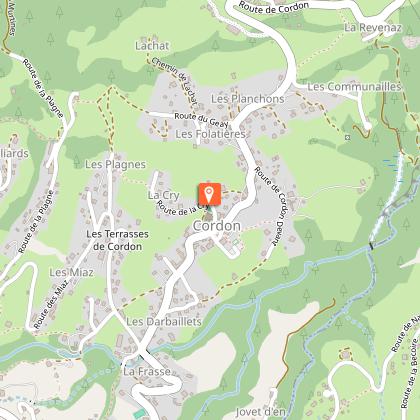
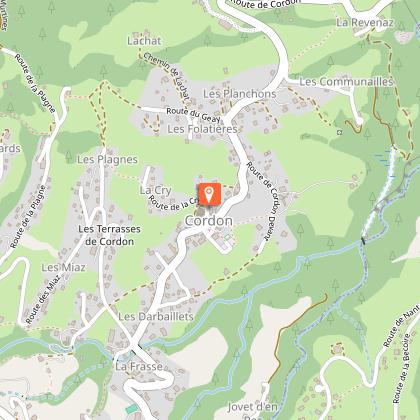
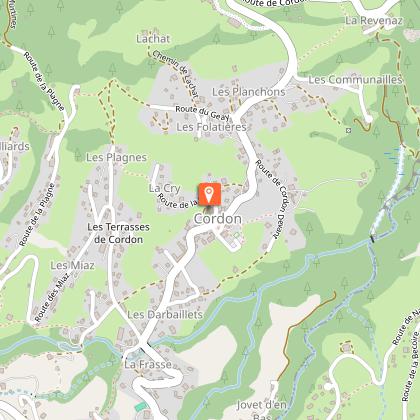
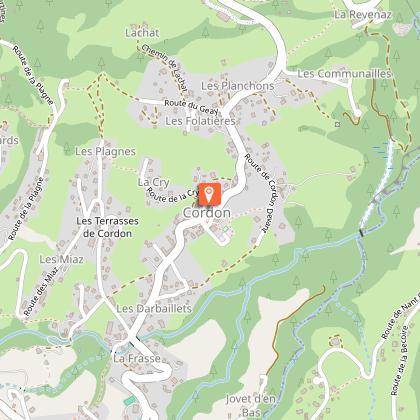
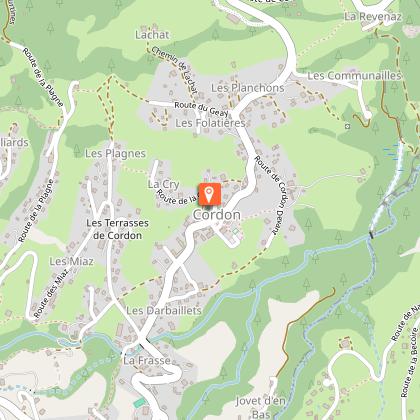
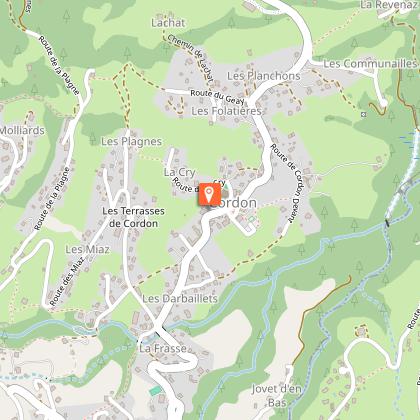
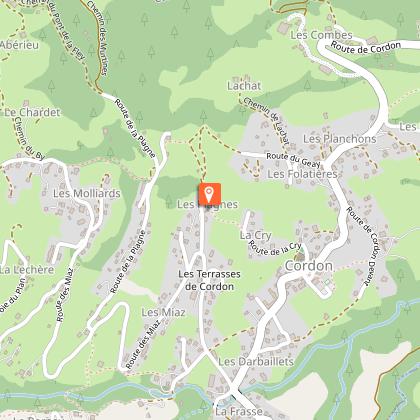
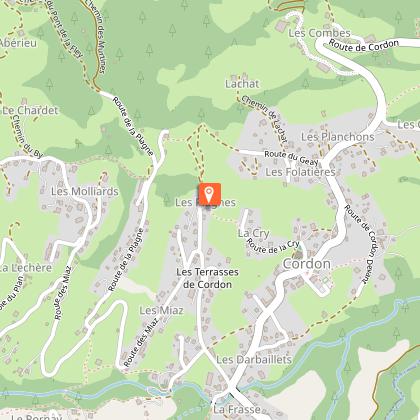
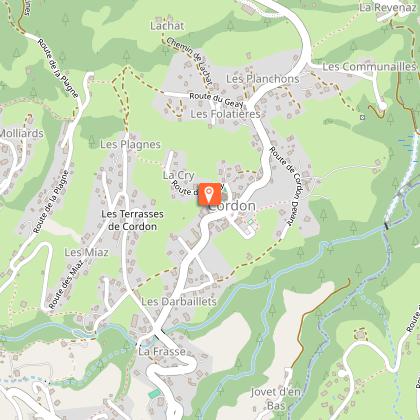
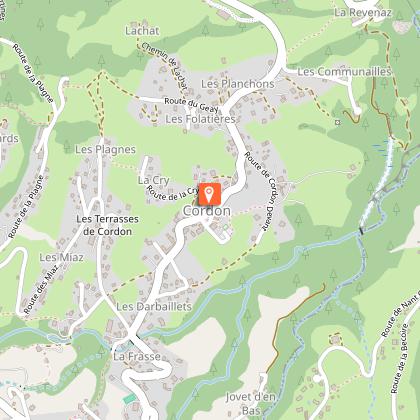
Starting from the Cordon church, this accessible walk allows you to discover the village in its entirety: the traditional habitat, its hillsides, farms, granaries, bread ovens, and more.

This walk is perfect for the whole family. It allows you to discover both the beauty of the landscape and its traditional heritage.

The walk begins in the heart of the village, behind the church. Before setting off, take the opportunity to stroll through the village, admire the view and discover its local architecture.

The trail passes by numerous mountain farms. This bucolic setting is punctuated by cows, goats and sometimes sheep, depending on the season.

Following the road, the path gradually rises to offer an exceptional view of the Mont-Blanc chain at La Plagne.

Technical Information

Walking
Difficulty
Very easy
Duration
1h15mn
Dist.
2.8 km
Show more

Altimetric profile

Starting point

74700   Cordon
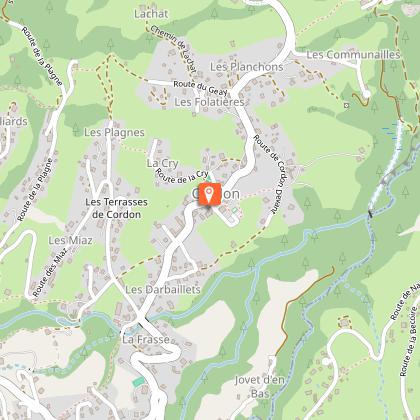
Lat : 45.922203Lng : 6.61046

Points of interest

image du object

Baroque Church of Our Lady of the Assumption

Probably one of the most beautiful Baroque churches in Savoy, it is listed as a historic monument. Recently restored, it now looks as good as new. The gold-leaf gilding, carved wood and polychromy will delight your eyes.Fabulous Baroque decor. Notre Dame de l'Assomption church was built between 1781 and 1787. Its balanced, vigorous silhouette is refined by a bulbous bell tower with openwork lantern and twin bays resting on median columns. The last fire in 1973 was a major one, requiring the intervention of the "Monuments Historiques", who listed the building in 1974 and financed the reconstruction of the bell tower and a first stage of restoration. The steeple was clad in "patinated" (hot-painted) steel to imitate the rust of an 1816 tinplate. The sober exterior gives no hint of the superb Baroque decoration. Baroque aims to astonish and dazzle, and it achieves this through the effects of light and movement. The furniture, paintings and architecture are designed to evoke a strong sense of beauty, while at the same time suggesting that this earthly beauty is merely an illusion in the face of the true beauty of the divine world. Gilding, gold leaf, carved wood, polychromy - nothing is too beautiful to affirm faith. It borrows its azure from heaven, its purple from blood and its light from gold. The paintings, pictures and statues in our church tell the whole story of Christianity, and allow us to relive it in a few moments, especially the story of the Virgin Mary. drone-de-regard.fr/vr/facim/74_cordon.html

- Cordon Tourisme -
Consulter
image du object

Bread ovens

Spaced 5 to 10 m from the house, these are stone constructions with solid roofs and frames. In 1920, there were 89 bread ovens in operation in Cordon. Today (2023), around twenty are still in regular operation.Nowadays, it's not uncommon to see smoke escaping from the mouth of one. Pain de Cordon Day is an authentic replica of a ritual that continues to this day, much to our delight. It takes place on the first Sunday in September. Bread: the general shape of bread is a ball 20 to 30 cm in diameter, weighing 1.5 to 2 kg. Various products are used to make it: flour, water, sourdough, wheat, rye, oats. During the war, when flour was in short supply, it was mixed with boiled potatoes without the skin. Only four decades ago, most Cordonnants made their bread every 15 days or 3 weeks. In local French, we say "Faire au four", the process of baking bread (kneading, heating the oven, cooking...). We'd knead between 20 and 25 kg of flour. The dough was left to rise in the bedroom or kitchen, in the heat, and then stored on a rack in the attic (a small building away from the main building, where certain foods were kept). It could be kept for 15 days to 3 weeks. Making bread was a laborious operation, but the delicacies that were baked afterwards were in some way a just reward, as was the warm piece of bread dipped in sweet wine, known in the local dialect as "Na Rusta". Today, 25 households in the village still bake bread in this way, for their own personal consumption. Originally, the vault was made of granite or lauzes (schist). The village had a mason who specialized in oven construction. The hearth had a slope of 5 cm/m. To build the vault, the mason stood in the center of the hearth and placed the stones around him. It took 5 hours to heat the oven, and then 5 hours to bake the bread. Then, as soon as refractory bricks appeared on the market and the railways were able to transport them to Sallanches, the ovens were transformed. Today, it takes 1 hour to 1 h. 30 to heat the oven and 1 to 1 H. 30 to bake the bread, depending on the outside temperature, without changing its taste. The temperature of the oven can be recognized by the color of the stones in the "gueule". If you baked bread in an oven you didn't own, you printed your mark with an engraved boxwood stamp (cross, square, parallel lines, etc.).

- Cordon Tourisme -
Consulter

Date and time

  • From 16/03/2026 to 22/12/2026
  • From 16/03/2027 to 22/12/2027

Additional information

Contact

Phone : 04 50 58 01 57

Email : info@cordon.fr

Website : https://www.cordon.fr

Open period

most of the year.

Updated by

Cordon Tourisme - 13/03/2026
www.cordon.fr
Report a problem

Environments

Mountain view
Mountain location
Panoramic view

Type of land

Ground
Not suitable for strollers

Topo guides and map references

Map references :
Map IGN 3430ET - LA CLUSAZ LE GRAND-BORNAND Les Belvédères du Mont-Blanc map on sale for €7 at the tourist office.

Location complements

The walk starts behind Cordon church.

Reception complements

Map available from the tourist office to discover these and other trails.
Whatever your hike, remember to pack cereal bars, plenty of water, sunglasses, sun cream, a small first-aid kit, and clothing suited to the season and weather forecast.
This itinerary can also be done accompanied, by hiring a mountain leader.

Tricky passages

No

Guidebook with maps/step-by-step

1/ Park in the village center.
2/ Take the signposted path to the right of the church,
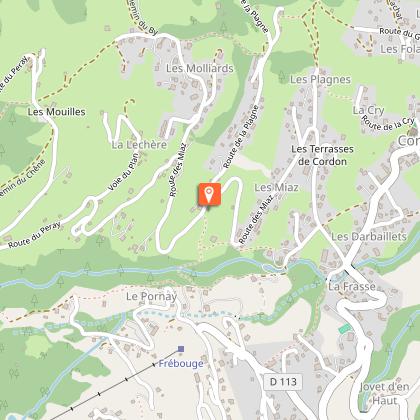
3/ Follow the signs for Le Peray (Perret) along a narrow, slightly steep path to the Plagne farm, which you pass on the downhill side.
4/ Turn right to reach the route de la Plagne (signposted boucle de la Plagne);
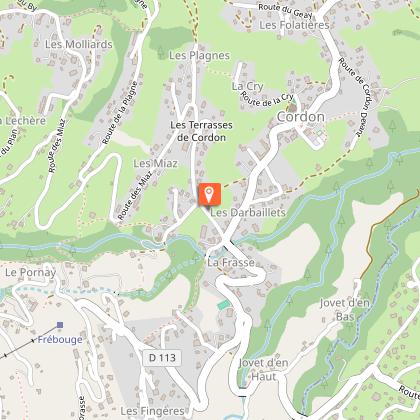
5/ Cross the route des Miaz to reach the torrent, and cross it.
6/ Descend towards La Scie to close the loop in the village center.

Animals

Yes. Dogs must be kept on a leash

Ratings and reviews

To see around
See more
Open
Close
Show
Show
Show
Show
Show
Show
Show
Show
Show
Show
Show
Caution!
We have no information on the difficulty of this circuit. You may encounter some surprises along the way. Before you go, please feel free to inquire more and take all necessary precautions. Have a good trip! 🌳🥾